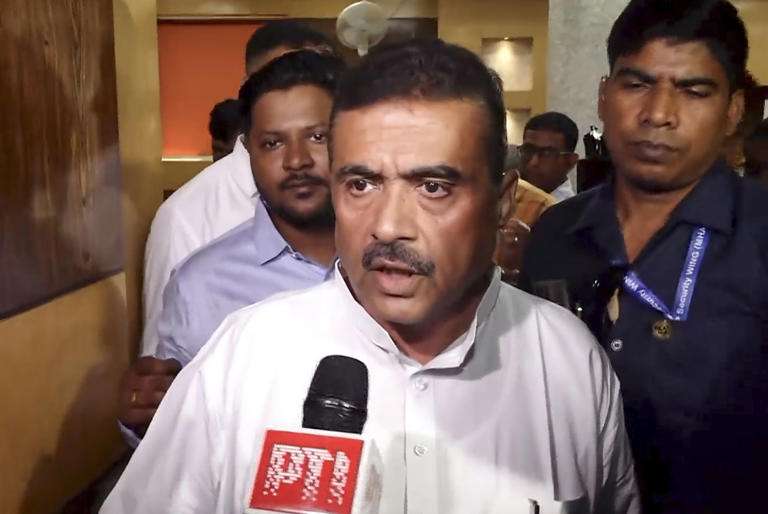
BJP Sweeps Bengal, Mamata Banerjee's TMC Suffers Historic Defeat
The BJP achieved a historic victory in the 2026 West Bengal Assembly Elections, winning 206 seats and unseating Mamata Banerjee's TMC. Key factors included localized campaigns, governance dissatisfaction, and corruption allegations, leading to Banerjee's defeat in Bhabanipur.
Key Highlights
- BJP secured a historic mandate, winning 206 out of 294 seats in West Bengal.
- Mamata Banerjee's TMC suffered a significant defeat, losing power after 15 years.
- Localized BJP campaigns and governance dissatisfaction contributed to the TMC's loss.
- Allegations of corruption and weak governance eroded the TMC's credibility.
- Mamata Banerjee lost her Bhabanipur constituency to BJP's Suvendu Adhikari.
The Bharatiya Janata Party (BJP) has achieved a landmark victory in the 2026 West Bengal Assembly Elections, securing 206 out of 294 seats and marking its first-ever government formation in the state. This decisive win signifies a major shift in the state's political landscape, ending the 15-year rule of Mamata Banerjee's Trinamool Congress (TMC). The BJP's success is attributed to a multi-pronged strategy that included a localized campaign, effectively shedding the 'outsider' tag, and capitalizing on growing dissatisfaction with the incumbent government's performance. Leaders cited the party's focus on booth-level management and slogans like 'Joy Ma Kali' and 'Joy Ma Durga' as crucial elements of their localized approach, moving away from potentially divisive national slogans. Prime Minister Narendra Modi hailed the victory as a triumph of 'good governance' and a testament to the BJP's expanding appeal beyond the Hindi-speaking heartland.
Factors contributing to the TMC's significant defeat include accumulated governance fatigue, allegations of rampant corruption, and a perceived lack of focus on job creation and industrial development. Political analysts suggest that while the TMC had traditionally relied on welfare schemes, these were insufficient to counter the strong anti-incumbency sentiment. The campaign also saw the consolidation of the Hindu vote, a trend that the BJP successfully leveraged. Furthermore, Mamata Banerjee herself faced a personal setback, losing her traditional stronghold of Bhabanipur to Suvendu Adhikari of the BJP, a former TMC heavyweight who had defected to the BJP prior to the elections. This defeat, coming after her loss in Nandigram in the 2021 elections, added to the narrative of a challenging electoral cycle for the TMC supremo.
The BJP's victory was not confined to a single region or demographic; it demonstrated a broad sweep across urban, rural, and mixed constituencies, as well as significant gains in Scheduled Caste (SC) and Scheduled Tribe (ST) dominated areas. The party's performance in migration zones also showed strength, with a notable advantage in areas with higher in-migration. However, the analysis also points to complex electoral dynamics, including potential impacts from voter-roll deletions in closely contested seats, a factor that requires further detailed examination. Despite these nuances, the overall outcome represents a significant political realignment in West Bengal, with the BJP establishing itself as the dominant force.
Frequently Asked Questions
What were the main reasons for Mamata Banerjee's defeat in the 2026 West Bengal elections?
The defeat was attributed to a combination of factors including strong anti-incumbency sentiment after 15 years in power, allegations of corruption and weak governance, and a successful localized campaign by the BJP that capitalized on governance dissatisfaction.
How many seats did the BJP win in the 2026 West Bengal Assembly elections?
The BJP secured a historic victory, winning 206 out of the 294 seats in the West Bengal Assembly.
Did Mamata Banerjee win her constituency in the 2026 West Bengal elections?
No, Mamata Banerjee lost her Bhabanipur constituency to Suvendu Adhikari of the BJP.
What is the significance of the BJP's victory in West Bengal for national politics?
The BJP's win in West Bengal is significant as it establishes the party's dominance in the eastern region and consolidates its national presence, potentially weakening opposition narratives and strengthening the BJP's position ahead of future national elections.
What factors contributed to the BJP's success in West Bengal?
The BJP's success was driven by a localized campaign, effective use of religious and cultural appeals, addressing fears related to illegal immigration, highlighting governance issues, and strong booth-level management, alongside consolidating Hindu votes.