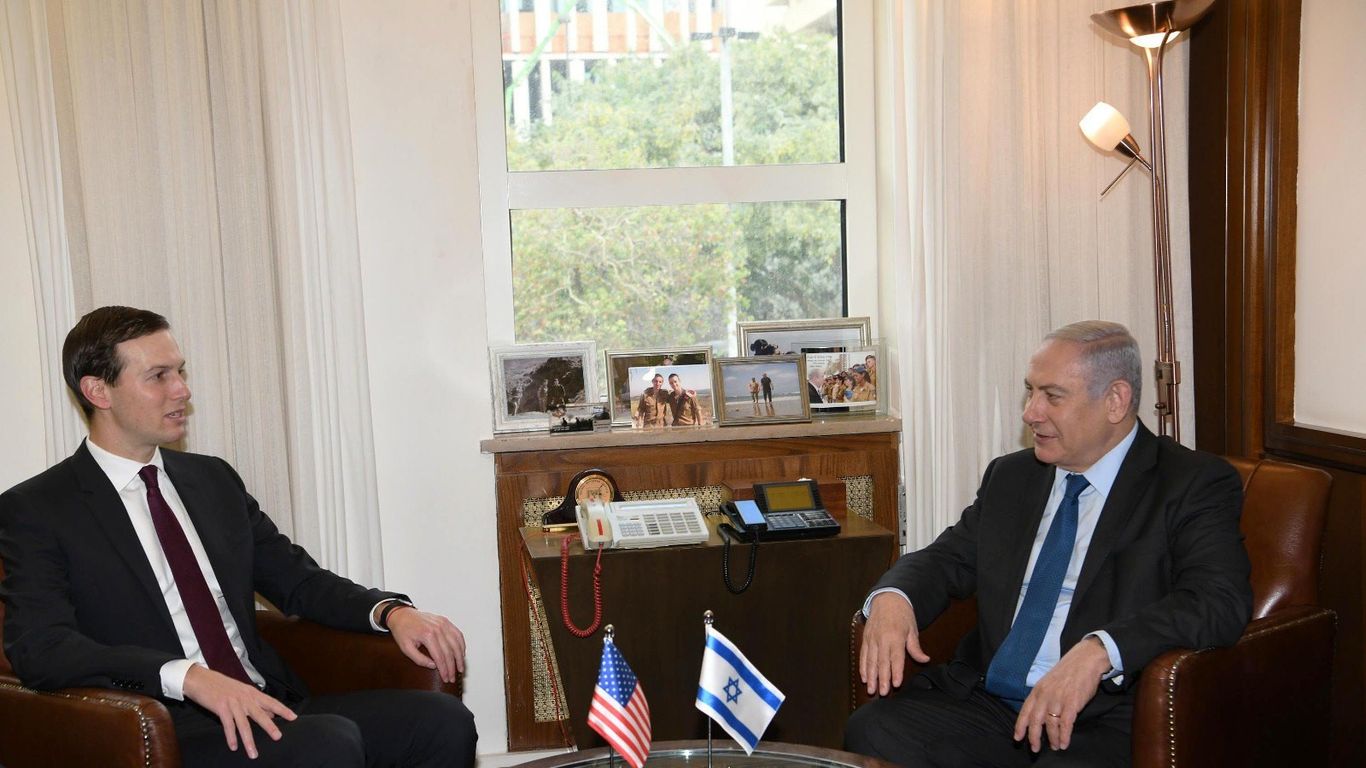
Kushner Holds Gaza Talks with Netanyahu After Rare Hamas Meeting
Jared Kushner, Trump's envoy, met with Hamas leaders in Egypt and then with Israeli PM Netanyahu to advance a stalled Gaza peace plan. While discussions focused on disarmament and reconstruction, no major breakthrough was achieved as both sides maintained key demands, highlighting the persistent challenges in the peace process.
Key Highlights
- Jared Kushner, Trump's envoy, held rare direct talks with Hamas leader in Egypt.
- Kushner then met with Israeli PM Netanyahu to discuss the Gaza peace plan.
- Discussions focused on Hamas disarmament and Israeli troop withdrawal from Gaza.
- No immediate breakthrough emerged as both sides stood firm on key demands.
- The 15-point U.S.-backed plan aims for Gaza demilitarization and reconstruction.
- The meetings signify a continued push for a peace deal amidst ongoing conflict.
Donald Trump's envoy and son-in-law, Jared Kushner, recently engaged in a series of high-stakes diplomatic meetings, first with Hamas leaders in Egypt and subsequently with Israeli Prime Minister Benjamin Netanyahu in Jerusalem, aiming to advance a stalled U.S.-backed peace plan for Gaza. These discussions, occurring around August 16-17, 2026, represent a significant push by the Trump administration to resolve the protracted conflict in the region.
On Sunday, August 16, 2026, Kushner held a rare and unprecedented meeting in Egypt with a Hamas delegation, led by its political bureau chief, Khalil al-Hayya. This direct engagement marked a departure from Washington's longstanding policy of shunning Hamas, which the U.S. designates as a terrorist group. The meeting, also attended by mediating officials from Egypt, Qatar, and Turkey, lasted over two hours and was described as 'positive' by Palestinian sources. The primary objective of the talks was to translate the U.S.-backed Gaza peace plan, particularly its second phase, into concrete and verifiable steps. Key aspects discussed included maintaining the ceasefire between Israel and Gaza, beginning the transfer of governing responsibilities to a National Committee for the Administration of Gaza, ensuring Hamas has no future governing role, facilitating Israeli withdrawals, and deploying an international stabilizing force to the region.
Hamas officials, including Khalil al-Hayya, reportedly stressed during the meeting that the existing agreement for a roadmap to peace was not open to renegotiation and that they had already submitted their position. They emphasized that the ball was now in Israel's court to respond to the agreed-upon terms. Hamas had formally confirmed its acceptance of the roadmap presented by the 'Board of Peace' and mediators, basing its decision on the interests of the Palestinian people and the need for a permanent ceasefire. This meeting also marked at least the second time Khalil al-Hayya had met with Kushner, with an earlier negotiation in October 2025 contributing to a ceasefire and hostage release deal following the October 7, 2023, attacks on Israel.
Following the rare encounter with Hamas, Kushner traveled to Jerusalem, where he met with Israeli Prime Minister Benjamin Netanyahu on Monday, August 17, 2026. The hours-long discussions with Netanyahu were aimed at securing Israel's buy-in for the peace plan, which the prime minister had publicly rejected just a week prior. Netanyahu's office issued a statement indicating 'deep and constructive discussions,' and an agreement to establish two working groups: one focused on the disarmament and demilitarization of Gaza, and another on public health issues such as sanitation and clean water for Gaza's population.
However, despite these talks, Kushner left Jerusalem without a major breakthrough, as both Israel and Hamas remained firm on their core demands. A central sticking point remains the sequencing of obligations under the 15-point plan. The Israeli government maintained its insistence that there would be no withdrawal of the Israel Defense Forces from Gaza before all Hamas weapons, tunnels, and infrastructure are eliminated. Furthermore, Israel reportedly insisted that no redeployment or reconstruction would occur in the Gaza Strip until Hamas was completely disarmed, with the first step being Hamas handing over its weapons to an American general for decommissioning. Conversely, Hamas's acceptance of the roadmap was contingent on Israel fulfilling its prior commitments, including halting attacks and withdrawing its forces to the undefined 'yellow line' dividing the territory.
Kushner, accompanied by Nickolay Mladenov, Director-General of the Board of Peace, and former British Prime Minister Tony Blair, acknowledged the gaps but expressed optimism for progress. He told Fox News that progress towards disarming Hamas and moving forward with the plan could begin within 30 days, with hopes for further steps like filling in tunnels within 60 to 90 days. The Trump administration's 'Board of Peace' was established in the aftermath of the 2025 ceasefire deal that aimed to release hostages seized during the October 7, 2023, attacks. This comprehensive plan, officially titled the 'Comprehensive Plan to End the Gaza Conflict,' was announced by President Trump on September 29, 2025, and signed on October 9, 2025, coming into effect the following day. It calls for an immediate ceasefire, hostage returns, prisoner exchanges, the demilitarization of Gaza, the deployment of an International Stabilization Force, transitional governance by Palestinian technocrats, and large-scale reconstruction.
The overall diplomatic effort faces considerable challenges, particularly given Netanyahu's public rejection of key components of the plan and the upcoming October national election in Israel, where Gaza will be a central issue. The rare direct engagement with Hamas, a group the U.S. traditionally shuns, underscores the urgency and complexity of the situation, with analysts noting it reflects an American recognition of Hamas as an undeniable political force in Palestinian society.
For an Indian audience, stability in the Middle East is of paramount importance due to India's significant energy imports from the region, the large Indian diaspora residing there, and the broader implications for global geopolitical stability. Any progress or setback in the Israeli-Palestinian conflict directly impacts regional security and economic dynamics, making these diplomatic efforts highly relevant.
Frequently Asked Questions
Who is Jared Kushner and what is his role in the Gaza peace efforts?
Jared Kushner is President Donald Trump's son-in-law and envoy for Middle East affairs. He is leading diplomatic efforts to advance a U.S.-backed peace plan for Gaza, which includes negotiating with both Israeli and Palestinian factions like Hamas.
What is the 'rare Hamas meeting' mentioned in the news?
The 'rare Hamas meeting' refers to discussions held on August 16, 2026, in Egypt between Jared Kushner and a Hamas delegation led by Khalil al-Hayya. This was considered rare because the U.S. typically shuns direct engagement with Hamas, which it designates as a terrorist organization.
What are the main objectives of Trump's Gaza peace plan?
The 'Comprehensive Plan to End the Gaza Conflict' aims for an immediate ceasefire, return of all hostages, prisoner exchanges, the demilitarization of the Gaza Strip, deployment of an International Stabilization Force, transitional governance by Palestinian technocrats, and large-scale reconstruction.
What are the primary obstacles to implementing the Gaza peace plan?
Key obstacles include disagreements over the sequencing of obligations, particularly Israel's demand for complete Hamas disarmament before any troop withdrawal or reconstruction, and Hamas's insistence on Israeli adherence to prior commitments. Israeli Prime Minister Netanyahu has also publicly rejected aspects of the U.S.-backed plan.
Why is this news relevant to an Indian audience?
This news is highly relevant to an Indian audience because stability in the Middle East is crucial for India's energy security, due to its significant oil imports from the region. Additionally, a large Indian diaspora resides and works in the Middle East, and any regional conflict has broader geopolitical implications that affect India's foreign policy and economic interests.