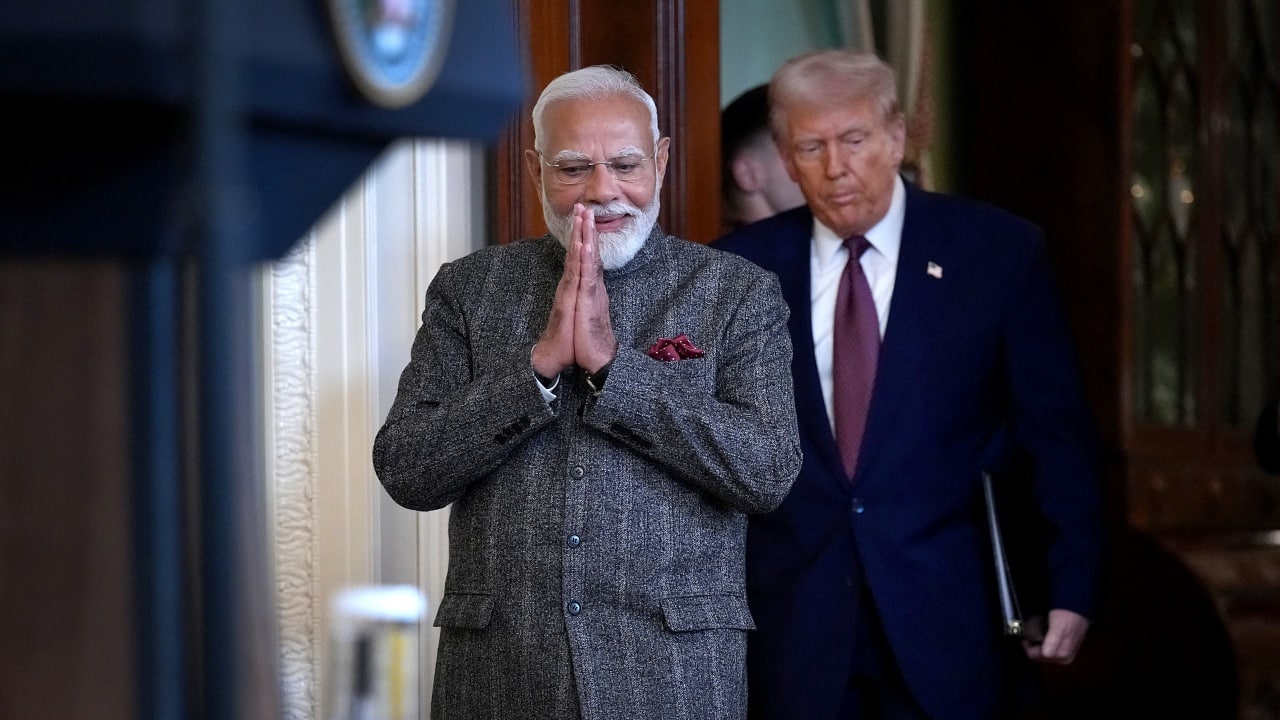
India-US Trade Talks Rescheduled Amid US Tariff Policy Shifts
India and the United States have postponed their chief negotiators' meeting on an interim trade pact, originally set for February 23, 2026. This rescheduling follows a US Supreme Court ruling against former President Trump's emergency tariffs and his subsequent announcement of new global levies, prompting both nations to re-evaluate implications.
Key Highlights
- Chief negotiators' meeting on interim trade pact rescheduled.
- Meeting was originally scheduled to begin on February 23, 2026.
- Rescheduling due to US Supreme Court ruling on tariffs and new tariff announcements.
- Both nations require time to evaluate new trade policy implications.
- Interim trade deal aimed at reducing tariffs between India and US.
India and the United States have jointly decided to postpone a crucial meeting between their chief negotiators, which was slated to finalize an interim trade agreement. The discussions, initially scheduled to commence in Washington D.C. on February 23, 2026, have been deferred to a mutually convenient later date. This significant development comes as both countries seek to thoroughly assess the latest shifts and implications arising from recent U.S. trade policy decisions.
The primary catalyst for this rescheduling is a landmark ruling by the U.S. Supreme Court on February 21, 2026. The Supreme Court delivered a 6-3 decision, asserting that the International Emergency Economic Powers Act (IEEPA) of 1977 does not grant the President the authority to impose broad-based tariffs under emergency powers. Chief Justice John Roberts notably emphasized that such powers predominantly reside with Congress. This ruling represented a substantial setback to former President Donald Trump's economic agenda, particularly his use of emergency powers to levy sweeping import duties on trading partners.
In immediate response to the Supreme Court's verdict, former President Trump, on February 21, 2026, announced plans to implement new tariffs. He declared a 10 percent tariff on all countries, including India, starting February 24, 2026, for a period of 150 days. The following day, February 22, he further announced an increase in these global tariffs to 15 percent. Trump's administration has pivoted to leveraging Section 122 of the Trade Act of 1974 as the revised statutory basis for these new, albeit legally re-routed, protectionist measures. This creates a volatile and uncertain trade policy environment that necessitates careful consideration by both India and the U.S. before proceeding with the finalization of their interim trade pact.
The original meeting was intended to be a three-day session where chief negotiators, led by India's Joint Secretary in the Commerce Ministry, Darpan Jain, would iron out the legal text of the interim trade pact. A framework for this interim agreement had been previously finalized earlier in February 2026, with expectations that the deal could be signed as early as March. Under the proposed interim trade pact, both nations aimed to extend duty concessions to each other on various goods. The U.S. had previously indicated a willingness to reduce reciprocal tariffs on Indian goods from 25 percent to 18 percent and had already eliminated a 25 percent punitive tariff on India for its purchase of Russian crude oil. These discussions were a crucial step towards translating the agreed contours into a legally binding agreement.
Given the current flux in U.S. trade policy, the previous expectations regarding the visit of USTR Greer to India 'next month' (March 2026) and the deal coming into effect in April 2026, as mentioned in related articles, are now subject to significant uncertainty or likely postponement. The focus for both sides is now on evaluating the broader implications of the U.S. Supreme Court's ruling and the subsequent tariff announcements by former President Trump. Officials from both countries have expressed that engagement on trade talks remains on track, but the rescheduling underscores the need for a thorough reassessment of the new geopolitical and economic landscape. This strategic pause is deemed necessary to ensure that the interim trade agreement can be structured effectively within the evolving global trade paradigm.
This development is of high importance to an Indian audience as it directly impacts India's trade relations with one of its largest partners, potentially affecting various sectors of the Indian economy dependent on exports to the U.S. and vice-versa. The volatility in U.S. trade policy also highlights the complexities and challenges in finalizing bilateral trade agreements amidst shifting international political dynamics. The decision to reschedule reflects a pragmatic approach by both nations to ensure the stability and longevity of any future trade accord.
Frequently Asked Questions
Why was the India-US chief negotiators' meeting on the interim trade pact rescheduled?
The meeting was rescheduled primarily due to a recent U.S. Supreme Court verdict against former President Trump's use of emergency powers to impose broad tariffs, and his subsequent announcement of new global tariffs. Both India and the U.S. need time to evaluate the implications of these evolving U.S. trade policies.
When was the meeting originally scheduled to take place?
The chief negotiators' meeting was originally scheduled to begin on February 23, 2026, in Washington D.C., and was planned as a three-day session to finalize the legal text of the interim trade agreement.
What was the U.S. Supreme Court's ruling regarding tariffs?
On February 21, 2026, the U.S. Supreme Court ruled 6-3 that the International Emergency Economic Powers Act (IEEPA) does not authorize the President to impose broad-based tariffs under emergency powers, stating that such authority lies with Congress.
How has former President Trump reacted to the Supreme Court's decision?
Following the Supreme Court's ruling, former President Trump announced new tariffs, including a 10 percent tariff on all countries (including India) starting February 24, 2026, which he later increased to 15 percent. He is now basing these tariffs on Section 122 of the Trade Act of 1974.
What is the significance of this interim trade pact for India?
The interim trade pact is significant for India as it aims to establish duty concessions and reduce tariffs on various goods traded between India and the U.S. It impacts India's economic relationship with a major trading partner and could affect various Indian export sectors.