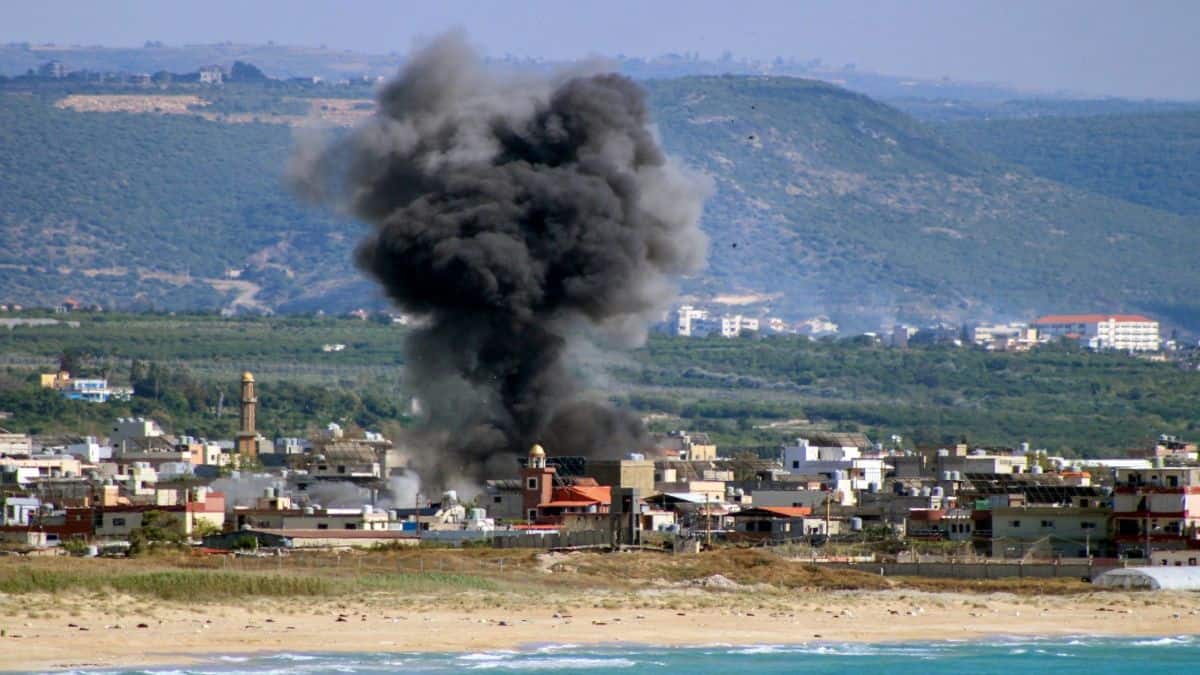
Iran strikes 18 US bases in Kuwait, Bahrain amid escalating regional tensions
Iran has launched retaliatory strikes on 18 US military bases in Kuwait and Bahrain, including key airfields and naval facilities. This escalation follows recent US strikes on Iranian targets and signals a significant breakdown of the fragile ceasefire, raising fears of a wider regional conflict. Both nations have vowed further action, while diplomatic efforts to de-escalate appear strained.
Key Highlights
- Iran targeted 18 US military sites in Kuwait and Bahrain.
- Key bases attacked include Ali Al Salem, Ahmad Al Jaber, and Sheikh Isa.
- Strikes were in retaliation for recent US attacks on Iranian positions.
- The escalation threatens the fragile ceasefire between the US and Iran.
- Kuwait and Bahrain reported air defense activity and urged citizens to take shelter.
- Tensions heighten concerns over global energy supplies and regional stability.
Iran has launched retaliatory strikes targeting 18 key US military bases in Kuwait and Bahrain, escalating the ongoing conflict between the two nations and significantly threatening the fragile ceasefire. The strikes, which involved ballistic missiles and drones, were reportedly aimed at airbases such as Ali Al Salem and Ahmad Al Jaber in Kuwait, and Sheikh Isa Air Base in Bahrain, along with naval facilities and communications infrastructure of the US Fifth Fleet in Bahrain.
These actions are Iran's direct response to recent US strikes on targets in southern Iran, which Tehran claims effectively rendered the April ceasefire "meaningless." The Islamic Revolutionary Guard Corps (IRGC) stated that its forces carried out two waves of operations, vowing a "decisive military response" to American aggression and promising to fight "until the last breath." The military added that Iranian forces are prepared to confront the enemy until it is punished.
The escalation in hostilities began after the downing of a US Apache helicopter near the Strait of Hormuz, which President Donald Trump stated necessitated a US response. Following this incident, the US conducted retaliatory strikes on Iranian military infrastructure. This exchange of fire has severely tested the ceasefire agreed upon in April, raising fears of a return to all-out war in the region.
Bahrain reported that its air defense systems intercepted missile and drone attacks, with the Interior Ministry urging citizens to take shelter and reporting an injury to an 11-year-old girl from falling debris. Kuwait temporarily closed its airspace, stating that its air defense systems were working to intercept hostile targets. Jordan's armed forces also intercepted 20 missiles launched from Iran.
The United States, through US Central Command (CENTCOM), has acknowledged conducting strikes on Iranian military surveillance capabilities, communication systems, and air defense sites. However, US officials have previously downplayed the effectiveness of Iranian attacks, though this has not always aligned with subsequent reports of damage.
Iran's foreign ministry spokesperson accused the US military of a "calculated war crime" for allegedly attacking civilian water infrastructure in Sirik, Iran, which reportedly destroyed water reservoirs serving over 20,000 residents. The US military, however, denied striking warships in the Strait of Hormuz and confirmed commercial ships were transiting the waterway.
President Trump has warned that Iran would "pay the price" for stalling negotiations and has indicated the possibility of further strikes. Defense Secretary Pete Hegseth stated that the US was prepared to "negotiate with bombs" if necessary.
Diplomatic efforts are reportedly ongoing, with Pakistan's foreign ministry stating that its leaders are engaged in mediation to end the war despite the surge in conflict. However, the escalating military actions cast a shadow over these efforts and have led to a sharp increase in oil prices due to concerns about the security of global energy supplies and potential disruptions to maritime trade, particularly around the Strait of Hormuz.
The Times of India, the source of the article, is generally considered a credible news outlet in India, though it has been rated as having a "Mixed" factual reporting record by some analyses.
This news is of high importance and critical urgency due to the potential for a wider regional conflict with global implications, affecting international security and energy markets.
Frequently Asked Questions
What triggered Iran's retaliatory strikes on US bases?
Iran's retaliatory strikes were triggered by recent US airstrikes on Iranian military infrastructure in southern Iran. This action was seen by Tehran as a violation of the fragile ceasefire and a direct response to the downing of a US Apache helicopter near the Strait of Hormuz.
Which US military bases did Iran target?
According to reports, Iran targeted 18 US military sites, including major airbases like Ali Al Salem and Ahmad Al Jaber in Kuwait, and Sheikh Isa Air Base in Bahrain. Naval facilities and communications infrastructure of the US Fifth Fleet in Bahrain were also reportedly hit.
What is the current status of the US-Iran ceasefire?
The fragile ceasefire, which was established in April, has been severely tested and is considered to be in a state of significant breakdown due to the recent exchange of strikes. Both sides have indicated a willingness for further military action, raising fears of a return to full-scale conflict.