PM Modi: Military conflict cannot resolve issues; India backs dialogue
Prime Minister Narendra Modi stated that military conflict is not a solution for any issue, emphasizing India's belief in dialogue and diplomacy. His remarks come amidst escalating tensions in West Asia following US-Israel strikes on Iran and Iran's retaliation. Modi also engaged in diplomatic calls with leaders of Kuwait, Qatar, and Oman, discussing regional stability and the welfare of the Indian community.
Key Highlights
- PM Modi advocates for dialogue and diplomacy over military conflict.
- India expresses grave concern over escalating West Asia tensions.
- Modi spoke with leaders of Kuwait, Qatar, and Oman.
- Safety of Indian nationals in West Asia is a top priority.
- India calls for urgent reform of global institutions.
- The conflict has impacted regional stability and Indian citizens.
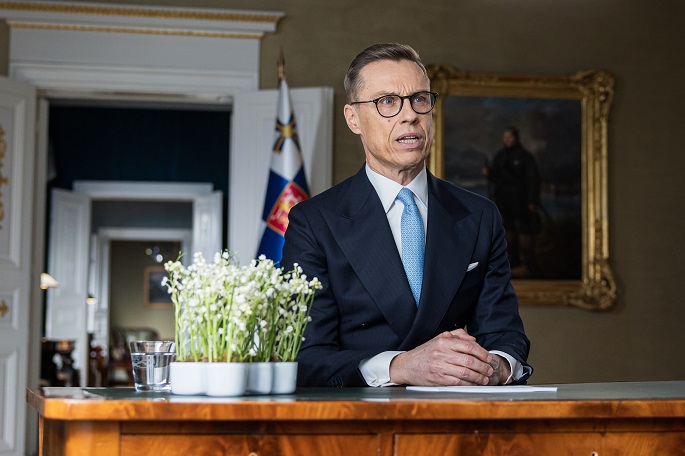
Prime Minister Narendra Modi has unequivocally stated that military conflict cannot resolve any issue, asserting India's firm belief in the principles of rule of law, dialogue, and diplomacy. This significant remark was made during a joint press conference with the visiting President of Finland, Alexander Stubb, on March 5, 2026. The Prime Minister's statement comes at a time when the West Asia region is experiencing a severe escalation of conflict, following joint strikes by the United States and Israel on Iran, and subsequent retaliatory actions by Iran. The intense missile and drone exchanges have shaken the Middle East, leading to widespread concern.
Modi's emphasis on diplomatic solutions was extended to the ongoing conflict in Ukraine as well, highlighting India's consistent stance on peaceful conflict resolution globally. He also noted that in the current era of global instability and uncertainty, India and Europe, as major diplomatic powers, are entering a "golden era" of their relationship, with growing cooperation contributing to global stability, development, and shared prosperity. Both leaders also agreed on the urgent need for reforms in global institutions to better reflect current geopolitical realities. The strategic partnership between India and Finland is also being strengthened in areas like digitalization and sustainability, with the recently concluded India-EU Free Trade Agreement expected to further boost trade, investment, and technological cooperation.
The escalating West Asia crisis has prompted significant diplomatic engagement from India. In the days leading up to this statement, Prime Minister Modi held telephonic conversations with the leaders of several West Asian nations, including the Crown Prince of Kuwait, the Amir of Qatar, and the Sultan of Oman. During these calls, he expressed India's deep concern over the attacks and condemned the violations of their sovereignty and territorial integrity. He stressed the importance of dialogue and diplomacy in restoring regional peace and stability. A recurring theme in these discussions was the welfare and security of the substantial Indian diaspora residing in these Gulf countries. Modi appreciated the leadership of these nations for their continued support and care for the Indian community, ensuring their safety and well-being during this challenging period. This proactive diplomatic outreach underscores India's commitment to maintaining stability in its neighborhood and protecting its citizens abroad.
The conflict escalated dramatically with the US-Israel strikes on Iran, reportedly leading to the death of Iran's Supreme Leader Ayatollah Ali Khamenei, followed by Iran's retaliatory strikes on Israeli and US military targets. The sinking of the Iranian naval ship IRIS Dena off the coast of Sri Lanka by a US submarine on March 4, 2026, further heightened regional tensions and brought the conflict closer to India's immediate vicinity. The article notes that the IRIS Dena had participated in India's International Fleet Review in February 2026, adding a layer of complexity to the situation. India's Ministry of External Affairs has issued statements emphasizing the safety of the approximately one crore (10 million) Indian nationals living in the Gulf region, highlighting potential disruptions to energy supplies and trade routes, and strongly advocating for dialogue and diplomacy to achieve an early end to the conflict. The government has also reviewed measures to assist Indian nationals affected by the developments in West Asia, with Indian missions in the region actively providing support.
The news category is Politics and International Relations. The scope of the news is Global, with significant implications for India. The publication date of the Hindustan Times article is March 5, 2026. The overall tone of the article is factual, reporting on PM Modi's statements and India's diplomatic engagements. The headline, while impactful, accurately reflects PM Modi's core message.
Frequently Asked Questions
What was PM Modi's main message regarding the West Asia conflict?
Prime Minister Narendra Modi emphasized that military conflict cannot resolve any issue and that India believes in resolving disputes through dialogue and diplomacy. He stressed the need for a swift end to conflicts.
With whom did PM Modi discuss the West Asia situation?
PM Modi discussed the escalating situation in West Asia with the President of Finland, Alexander Stubb, and also held telephonic conversations with the leaders of Kuwait, Qatar, and Oman.
What is India's broader stance on international conflicts?
India advocates for peace, stability, dialogue, and diplomacy as the means to resolve all global disputes, including those in Ukraine and West Asia. The country also prioritizes the safety and security of its citizens abroad.
How does the West Asia conflict affect India?
The conflict is a matter of grave concern for India due to its proximity, the presence of about one crore (10 million) Indian nationals in the region, and potential disruptions to trade and energy supply chains. The sinking of an Iranian warship near Sri Lanka also brings the conflict closer to India.