UN Chief Calls for Renewed Political Will to End HIV/AIDS by 2030
UN Secretary-General António Guterres urged global political will to accelerate the fight against HIV/AIDS, aiming to end it as a public health threat by 2030. India reaffirmed its commitment to this goal at a recent High-Level Meeting, highlighting significant domestic progress despite ongoing challenges.
Key Highlights
- UN Chief Guterres calls for urgent political will to end global HIV/AIDS.
- High-Level Meeting on HIV/AIDS held at UN General Assembly on June 22-23, 2026.
- India reaffirms commitment to ending AIDS as public health threat by 2030.
- Significant progress made globally, but 9.2 million people still lack HIV treatment.
- Five acceleration pathways proposed by UN to overcome current challenges.
- Funding cuts and human rights pushbacks threaten hard-won gains in global response.
United Nations Secretary-General António Guterres has issued a powerful call for renewed political will and accelerated action to end the global HIV/AIDS epidemic as a public health threat by 2030. This urgent plea was delivered at the High-Level Meeting on HIV/AIDS, convened by the UN General Assembly on June 22-23, 2026, where Guterres's statement was presented by UN Deputy Secretary-General Amina Mohammed. The meeting aimed to identify concrete solutions and galvanize the necessary political commitment to achieve this ambitious global target.
The Secretary-General acknowledged the substantial progress made over the 45 years since the first reported case of AIDS. He highlighted that global solidarity and resolve have led to a 70% reduction in AIDS-related deaths since their peak in 2004, and a 54% reduction since 2010. Furthermore, new HIV infections have decreased by 40% since 2010, and more than 32 million people living with HIV are currently receiving life-saving antiretroviral therapy (ART). These achievements underscore the effectiveness of sustained political commitment and investments from global partners.
Despite these significant gains, Guterres cautioned that the fight against AIDS is far from over. He noted that as of the end of 2024, approximately 9.2 million people still lack access to vital HIV treatment, underscoring persistent inequalities and gaps in service delivery. Progress is described as uneven, fragile, and increasingly vulnerable to a convergence of crises, including severe funding cuts, rising debt burdens, humanitarian emergencies, and a concerning regression in human rights protections. These challenges threaten to reverse the hard-won gains and derail the 2030 goal if not addressed urgently.
To reinvigorate the global response, Guterres proposed five "essential" acceleration pathways. These include closing the widening gaps in access to HIV prevention, treatment, and care services; ensuring the continued leadership of communities in the HIV response; protecting human rights for all; securing sustainable financing for HIV programmes; and reviving the multilateral spirit that has historically driven successful global health initiatives. These pathways emphasize the need for a comprehensive, rights-based, and community-led approach to overcome the remaining barriers.
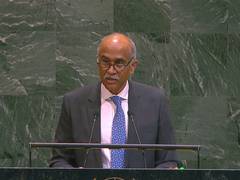
India has prominently reiterated its firm commitment to ending AIDS as a public health threat by 2030. At the same UN High-Level Meeting, India's Permanent Representative to the UN, Ambassador Harish Parvathaneni, delivered a national statement affirming India's support for the draft Political Declaration on HIV/AIDS. Parvathaneni underscored the critical juncture at which the global HIV response stands, acknowledging the progress achieved while highlighting persistent inequalities and financing constraints.
Ambassador Parvathaneni detailed India's robust domestic efforts, particularly through the National AIDS and STD Control Programme (NACP). This program, guided by evidence-based planning, strong community participation, and integrated service delivery, has been instrumental in significantly reducing new HIV infections and AIDS-related deaths within the country. India has also expanded access to a wide array of prevention, testing, treatment, and care services. Notably, India's new annual HIV infections have decreased by 44% since 2010, a rate that outperforms the global reduction of 39% during the same period, as stated by Minister of State for Health and Family Welfare Anupriya Patel in September 2024.
Further demonstrating its commitment, India emphasized the importance of equitable access to affordable medicines, sustainable financing mechanisms, and stronger national ownership of HIV response programmes. The country also highlighted its 'Triple Elimination Strategy,' which focuses on preventing mother-to-child transmission of HIV, syphilis, and hepatitis B through universal antenatal screening and timely treatment. India's stance aligns with the global call for integrated responses to HIV, tuberculosis, and viral hepatitis, recognizing their interconnectedness and the need for comprehensive healthcare solutions.
The 2026 High-Level Meeting on HIV/AIDS and its resultant Political Declaration are seen as crucial for setting the direction of the global HIV response for the next five years, serving as the primary accountability framework for national commitments towards the 2030 target. Leaders and advocates at the meeting stressed that now is not the time for complacency but for renewed determination to finish the job of ending AIDS.
Frequently Asked Questions
What was the main outcome of the recent UN High-Level Meeting on HIV/AIDS?
The main outcome was a strong call from UN Secretary-General António Guterres for renewed political will and accelerated action to end HIV/AIDS as a public health threat by 2030. Member States also considered a new Political Declaration on HIV/AIDS to guide global efforts for the next five years.
What progress has been made in the global fight against HIV/AIDS, and what challenges remain?
Significant progress includes a 70% reduction in AIDS-related deaths since 2004 and a 40% reduction in new infections since 2010, with over 32 million people receiving treatment. However, 9.2 million people still lack access to treatment, and progress is threatened by funding cuts, humanitarian crises, and human rights setbacks.
What is India's role and commitment in the global HIV/AIDS response?
India has firmly committed to ending AIDS as a public health threat by 2030. Its Permanent Representative to the UN, Ambassador Harish Parvathaneni, highlighted India's National AIDS and STD Control Programme, which has significantly reduced new infections (by 44% since 2010) and AIDS-related deaths. India also advocates for affordable medicines and sustainable financing.
What are the five key pathways proposed by the UN to accelerate the HIV fight?
The five essential acceleration pathways proposed by the UN are: closing gaps in access to prevention, treatment, and care; ensuring community leadership; protecting human rights; securing sustainable financing; and reviving multilateral cooperation.