US-Iran Peace Talks Collapse in Islamabad Amid 'War' Tensions
Peace talks between the United States and Iran in Islamabad, mediated by Pakistan, have collapsed. Iranian Foreign Minister Abbas Araghchi departed Pakistan without meeting US envoys, prompting President Trump to cancel his delegation's trip. Araghchi questioned the US's seriousness regarding diplomacy, highlighting ongoing stalemate in efforts to end the two-month-long conflict.
Key Highlights
- Iran's Foreign Minister left Islamabad without meeting US envoys.
- US President Trump cancelled his delegation's trip to Pakistan.
- Araghchi questioned US commitment to diplomacy via social media.
- Pakistan mediated talks aimed at resolving the two-month US-Iran 'war'.
- First round of talks in April failed over nuclear program and Hormuz.
- Strait of Hormuz blockade and sanctions remain major sticking points.
Diplomatic efforts to de-escalate tensions and potentially end the ongoing 'war' between the United States and Iran have suffered a significant setback with the collapse of a planned second round of peace talks in Islamabad, Pakistan. The highly anticipated negotiations, mediated by Pakistan, failed to materialize into direct engagement between the two adversaries, leading to renewed uncertainty in the volatile West Asian region.
The first round of talks, held in Islamabad on April 11 and 12, 2026, marked a historic moment, representing the highest-level direct discussions between the US and Iran since the 1979 Islamic Revolution. These talks, which lasted over 20 hours, ultimately concluded without a breakthrough, with Iran's nuclear program and the US blockade of the Strait of Hormuz being key sticking points. The current conflict, which some reports refer to as a 'war,' began on February 28, 2026, with US-Israeli strikes, exacerbating regional instability and impacting global energy markets due to disruptions in the Strait of Hormuz.
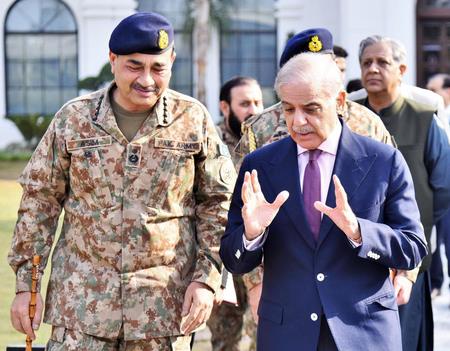
In preparation for the second round, Iranian Foreign Minister Abbas Araghchi arrived in Islamabad on Friday, April 24, 2026. However, Iranian officials, including spokesperson Esmael Baqaei, emphatically stated that no direct meeting was planned with the US delegation during Araghchi's visit. Instead, it was understood that Pakistani officials would act as intermediaries, conveying messages between the two sides. During his time in Islamabad, Araghchi held discussions with senior Pakistani leadership, including Prime Minister Shehbaz Sharif and Army Chief Asim Munir. In these meetings, he conveyed Iran's specific demands and reservations regarding the terms set by the United States for any potential agreement.
Conversely, the White House had initially expressed optimism about direct talks. White House Press Secretary Karoline Leavitt announced on Friday, April 24, 2026, that US Special Envoy Steve Witkoff and President Donald Trump's son-in-law Jared Kushner would travel to Islamabad. Their stated purpose was to 'hear the Iranians out,' suggesting an expectation of direct engagement. US Vice President JD Vance, who led the previous round of talks, was reportedly on standby to join if significant progress was made.
The situation, however, took a sharp turn on Saturday, April 25, 2026. Iranian Foreign Minister Abbas Araghchi departed from Islamabad, Pakistan, even before the US envoys, Witkoff and Kushner, had arrived in the Pakistani capital. Following his departure, Araghchi utilized social media platform X (formerly Twitter) to express Iran's stance. He stated that he had 'shared Iran's position concerning (a) workable framework to permanently end the war' but critically added that he had 'yet to see if the US is truly serious about diplomacy.'
In a swift response, US President Donald Trump announced that he had canceled the trip for his representatives to Islamabad. Speaking to Fox News and later posting on Truth Social, Trump cited 'too much time wasted on traveling, too much work!' He reiterated his long-standing position that Iran could 'call us anytime they want' if they were serious about negotiations. This cancellation underscored the profound diplomatic impasse and the lack of trust between the two nations.
Pakistan has played a crucial, though challenging, mediating role throughout this period. Its consistent diplomatic efforts aimed at bringing Washington and Tehran to the negotiating table were lauded by both sides. Pakistan's Deputy Prime Minister Ishaq Dar and Foreign Minister Abbas Araghchi exchanged views on the ceasefire and ongoing diplomatic efforts. The country has been keen to facilitate a resolution, given the regional implications of the conflict and the strain on its own resources, with parts of Islamabad under strict security lockdown during the high-stakes diplomatic activity.
The core disagreements revolve around Iran's nuclear program, which the US insists must be abandoned, and the US-imposed naval blockade on Iranian ports, a measure Iran demands be lifted before further direct talks. The failure of this latest round of talks signifies a continuation of heightened tensions and a diplomatic stalemate. The situation remains precarious, with global energy markets and regional stability heavily dependent on a potential breakthrough that currently appears distant. The remarks by Araghchi questioning US seriousness reflect the deep-seated mistrust that continues to plague US-Iran relations, making any path to a lasting peace incredibly challenging.
Frequently Asked Questions
Why did the US-Iran peace talks in Islamabad fail?
The peace talks failed because Iranian Foreign Minister Abbas Araghchi left Islamabad without meeting US officials, and shortly thereafter, US President Donald Trump canceled his delegation's trip. Iran maintained that no direct talks were planned, while the US had indicated an expectation for direct engagement. Key sticking points included Iran's nuclear program and the US blockade of the Strait of Hormuz.
What was Iran's key remark after the talks failed?
After leaving Islamabad, Iranian Foreign Minister Abbas Araghchi posted on X (formerly Twitter) that he had 'shared Iran's position concerning (a) workable framework to permanently end the war' but questioned if the US was 'truly serious about diplomacy.'
What role did Pakistan play in these negotiations?
Pakistan acted as a key mediator, hosting both the US and Iranian delegations in Islamabad. Pakistani Prime Minister Shehbaz Sharif and Army Chief Asim Munir met with Iranian Foreign Minister Araghchi, conveying messages between the two sides. Pakistan's efforts were appreciated by Iran for their 'consistent and constructive facilitation role.'
What are the major issues causing the US-Iran conflict and diplomatic stalemate?
The major issues include Iran's nuclear program, which the US seeks to curb, and the US-imposed naval blockade on Iranian ports. Iran insists that the blockade must be lifted for direct talks to proceed. Tensions in the Strait of Hormuz, a critical oil shipping route, also remain a significant point of contention.
When did the 'war' mentioned in the context of these talks begin?
According to the reports, the 'war' between the United States and Iran began on February 28, 2026, with US-Israeli strikes. This conflict forms the backdrop for the diplomatic efforts to achieve a ceasefire and lasting peace.