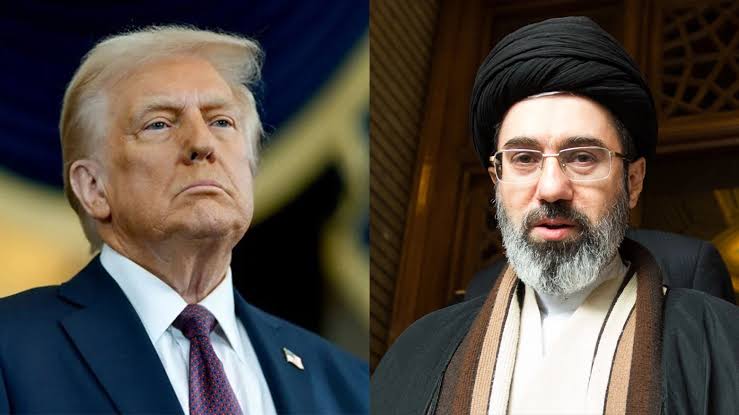
Mojtaba Khamenei: Strike Survival, Succession, and Moscow Treatment
Iran's new Supreme Leader, Mojtaba Khamenei, miraculously survived a US-Israeli missile strike on February 28, 2026, that killed his father, Ayatollah Ali Khamenei. Injured, he was secretly flown to Moscow for surgery, amidst ongoing regional conflict and questions about his public absence.
Key Highlights
- Iran's Supreme Leader Ali Khamenei was killed in a US-Israeli strike on February 28, 2026.
- Mojtaba Khamenei narrowly escaped the attack, sustaining a minor leg injury.
- His wife and son were reportedly killed in the same missile strike.
- Mojtaba Khamenei was officially named Iran's new Supreme Leader on March 8, 2026.
- Reports indicate he was secretly transported to Moscow for surgery and recovery.
- His continued public absence fuels intense speculation about his health and leadership capacity.
In a series of events that have dramatically reshaped the geopolitical landscape of the Middle East, Iran's Supreme Leader, Ayatollah Ali Khamenei, was killed on February 28, 2026, during a joint US-Israeli missile strike. This unprecedented attack, part of what has been referred to as 'Operation Epic Fury' and the broader '2026 Iran war,' targeted the Iranian leadership compound in Tehran, sparking immediate and widespread international ramifications.
The strike, reportedly carried out using advanced 'Blue Sparrow' ballistic missiles, devastated the compound and resulted in numerous casualties among senior Iranian officials and family members present at the time. Among those confirmed dead was the 86-year-old Ayatollah Ali Khamenei, who had ruled Iran for nearly four decades. US President Donald Trump publicly confirmed Khamenei's death shortly after the attack, labeling him 'one of the most evil people in History.'
However, in a remarkable turn of events, Mojtaba Khamenei, the second son of the late Supreme Leader and a key figure in Iran's political future, reportedly cheated death by mere seconds. According to leaked audio from a March 12, 2026, internal meeting of senior clerics and Islamic Revolutionary Guard Corps (IRGC) commanders, Mojtaba Khamenei had stepped out of the compound moments before the missiles struck. Mazaher Hosseini, the head of protocol for Ali Khamenei's office, was purportedly heard stating that it was 'God's will' that Mojtaba had gone out to the yard and was heading back upstairs when the building was hit.
While Mojtaba Khamenei survived the direct impact, he sustained injuries, primarily a minor wound to his leg. Tragically, the strike claimed the lives of several close family members, including his wife, Zahra Haddad-Adel (also referred to as Haddad), and their son, Bagher. Other high-ranking officials, such as Mohammad Shirazi, chief of Khamenei's military bureau, and Mohammad Pakpour, the IRGC chief, were also among the deceased, with accounts describing their bodies as severely disfigured or 'blown to pieces.'
Following days of uncertainty and intense internal deliberations within Iran, Mojtaba Khamenei was formally announced as the new Supreme Leader of Iran on March 8 or 9, 2026, by the Assembly of Experts. His ascension to the top leadership position signaled a continuation of a hardline stance against Western influence and a focus on military resistance, as indicated by his initial written statements.
However, Mojtaba Khamenei's public absence since the strike and his appointment has fueled considerable speculation regarding his true health condition and capacity to lead. While Iranian Foreign Minister Abbas Araghchi claimed he was 'in excellent health' and 'in control of the situation,' other reports, particularly from US officials like President Donald Trump and Defense Secretary Pete Hegseth, suggested he might be 'badly disfigured,' 'wounded,' or even possibly dead. His first message as Supreme Leader was read aloud by a state television anchor, rather than delivered in person, adding to the mystery surrounding his whereabouts.
Amidst these rumors, multiple reports, citing a senior source close to Khamenei and the Kuwaiti newspaper Al-Jarida, revealed that Mojtaba Khamenei was secretly transported to Moscow, Russia, aboard a Russian military plane. The clandestine operation was reportedly undertaken for urgent medical treatment and surgery for his injuries, with him recovering in a secure medical facility within a presidential residence in Moscow. This secret transfer highlights the severity of his injuries and the Iranian regime's concerns about his safety and stability amidst the ongoing conflict and internal tensions.
The death of Ali Khamenei and the subsequent, albeit injured, succession of his son Mojtaba have plunged Iran into a new era of uncertainty. The war with the US and Israel continues, with Iran reportedly maintaining its retaliatory strikes and threatening to close the Strait of Hormuz, a critical global oil transit choke point. The implications of this leadership transition and the ongoing conflict are profound, affecting not only regional stability but also global energy markets and international diplomacy, making it a critical story for audiences worldwide, especially in India given its geopolitical and economic interests in the Middle East.
Frequently Asked Questions
What happened to Iran's former Supreme Leader, Ayatollah Ali Khamenei?
Ayatollah Ali Khamenei was killed on February 28, 2026, during a joint US-Israeli missile strike targeting the Iranian leadership compound in Tehran.
How did Mojtaba Khamenei survive the missile strike?
Mojtaba Khamenei narrowly escaped death by stepping out of the compound moments before it was hit by 'Blue Sparrow' ballistic missiles. He sustained a minor leg injury in the attack.
Who is Iran's new Supreme Leader and when was he appointed?
Mojtaba Khamenei, son of the late Ali Khamenei, was appointed as the new Supreme Leader of Iran on March 8 or 9, 2026, by the Assembly of Experts.
Is Mojtaba Khamenei injured, and where is he receiving treatment?
Reports indicate that Mojtaba Khamenei sustained injuries, including to his leg, during the strike. He was reportedly secretly flown to Moscow, Russia, for surgery and is recovering at a secure medical facility.
What are the broader implications of these events for the Middle East?
The death of Ali Khamenei and the succession of Mojtaba Khamenei, combined with the ongoing US-Israel conflict with Iran, signify a critical escalation in Middle East tensions. This situation has global implications for energy markets, international relations, and regional stability, impacting countries like India significantly.