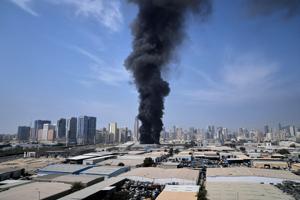
US Embassy Unable to Evacuate Citizens from Israel Amid Escalating War
Amid a widening conflict between the US, Israel, and Iran, the US Embassy in Jerusalem has declared it cannot directly evacuate American citizens from Israel. It has advised citizens to leave via available commercial options or an Israeli Ministry of Tourism shuttle to Egypt, explicitly stating it cannot guarantee safety for those choosing this route. US government personnel are under 'shelter in place' orders.
Key Highlights
- US Embassy unable to directly evacuate citizens from Israel.
- Americans advised to use commercial flights or Taba border crossing.
- US government cannot guarantee safety for self-arranged departures.
- Ben Gurion Airport closed, limiting commercial exit options.
- US government personnel in Israel directed to shelter in place.
- Wider US-Israel-Iran conflict intensifies regional safety risks.
The United States Embassy in Jerusalem has explicitly stated its inability to directly evacuate or assist American citizens in departing Israel, a critical announcement made amid an intensifying regional conflict involving the US, Israel, and Iran. This advisory, issued on March 2 and 3, 2026, directs US citizens to explore commercial flight options or utilize a shuttle service provided by the Israeli Ministry of Tourism to the Taba Border Crossing with Egypt. However, the Embassy underscored that the US government cannot guarantee the safety of individuals choosing to use the Ministry of Tourism's shuttle service.
The overall security situation in the region, particularly in Israel, the West Bank, and Gaza, is described as unpredictable and rapidly changing, with ongoing risks including terrorism and civil unrest. This heightened alert follows significant military developments, including a declared "US-Israeli war against Iran" which has dramatically escalated, leading to missile and drone strikes across the Middle East. The US State Department had already authorized the departure of non-emergency US government personnel and their family members from Mission Israel on February 27, 2026, citing these safety risks.
Further compounding the travel challenges, Ben Gurion Airport has been closed to all civilian flights, and its airspace is not expected to reopen fully in the immediate future. Even when operations resume, they are anticipated to be highly restricted with limited flights. This closure severely curtails commercial departure options, forcing citizens to seek alternative, often less direct, routes out of the country. The US Embassy has highlighted the availability of the Taba Border Crossing to Egypt, which is scheduled to be open 24 hours a day, and indicated limited flight options from airports in Taba and Sharm al-Sheikh, Egypt.
Adding to the gravity of the situation, US government employees and their family members in Israel have been directed to "shelter in place" in and near their residences until further notice. The US Embassy in Jerusalem, along with its Consular Sections in Jerusalem and Tel Aviv, were also closed on March 3, 2026, suspending all passport and consular services. This widespread disruption underscores the severity of the conflict and the direct threat to personal safety.
The broader regional context involves the US State Department urging Americans to immediately depart from more than a dozen Middle Eastern nations, including Bahrain, Egypt, Iran, Iraq, Israel, the West Bank and Gaza, Jordan, Kuwait, Lebanon, Oman, Qatar, Saudi Arabia, Syria, United Arab Emirates, and Yemen, citing "serious safety risks." This urgent call for departure emphasizes the widespread nature of the current crisis. For instance, authorized departures for non-essential US government personnel were also ordered from the US Embassy in Beirut, Lebanon, amidst escalating tensions with Hezbollah and cross-border strikes.
Indian missions in various Gulf countries, including Iran, UAE, Qatar, and Bahrain, have also issued advisories to their nationals, recommending caution and urging them to stay indoors, reflecting the regional impact of the conflict. The Indian Embassy in Beirut specifically advised Indian nationals against traveling to Lebanon and urged those already there to leave due to rising tensions between Israel and Hezbollah. This indicates a coordinated international response to the rapidly deteriorating security landscape in the Middle East, affecting citizens globally. The reports indicate that the conflict was triggered by US-Israeli strikes against Iran on Saturday, which led to retaliatory attacks from Tehran and its allies, including the alleged killing of Iran's supreme leader Ayatollah Ali Khamenei. The conflict has also disrupted oil and natural gas production and supply routes, leading to spikes in oil and gas prices.
Overall, the NDTV article accurately reflects the official US Embassy stance and the critical, evolving security situation in Israel and the wider Middle East. The headline is well-supported by official advisories and corroborated by numerous credible news sources, demonstrating the genuine concern for the safety of American citizens in the region amidst a major international crisis. The inability to guarantee safety or directly evacuate highlights the severe limitations faced by diplomatic missions during such intense conflicts. The recommendation for citizens to enroll in the Smart Traveler Enrollment Program (STEP) is a recurring piece of advice for receiving updates and assistance in emergencies.
Frequently Asked Questions
Why is the US Embassy unable to evacuate its citizens from Israel?
The US Embassy in Jerusalem has stated it is 'not in a position at this time to evacuate or directly assist Americans in departing Israel' due to the ongoing and escalating security situation and conflict in the region, which has led to the closure of Ben Gurion Airport.
What options are US citizens being advised to take to leave Israel?
US citizens are advised to consider leaving Israel via available commercial flights, although Ben Gurion Airport is currently closed. The US Embassy has also highlighted the Israeli Ministry of Tourism's shuttle service to the Taba Border Crossing with Egypt as an option.
Can the US government guarantee the safety of its citizens leaving Israel through recommended routes?
No, the US Embassy has explicitly stated that the US government 'cannot guarantee your safety' if citizens choose to use the Israeli Ministry of Tourism's shuttle to the Taba Border Crossing.
What is the broader context of the security situation in the Middle East?
The current situation stems from a widening 'US-Israeli war against Iran,' which has triggered widespread regional tensions, missile and drone attacks, and significant safety risks across more than a dozen Middle Eastern nations.
Are US government personnel in Israel also leaving the country?
The US State Department authorized the departure of non-emergency US government personnel and their family members from Mission Israel on February 27, 2026. Those remaining are currently under 'shelter in place' orders.