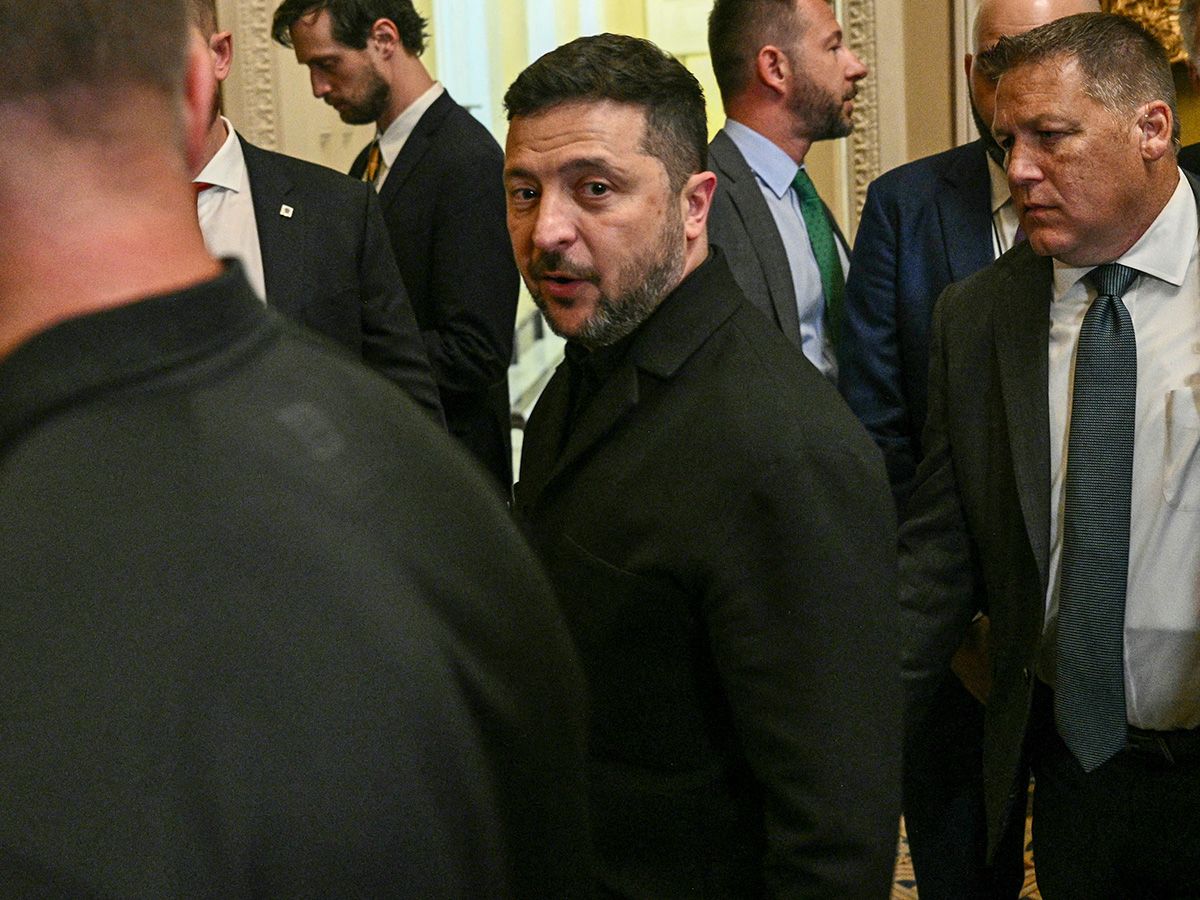
Trump, Zelenskyy Discuss Patriot Production, Russia Peace at White House
US President Donald Trump and Ukrainian President Volodymyr Zelenskyy met at the White House on July 28, 2026, discussing Patriot missile production licenses for Ukraine and efforts to revive peace talks with Russia. While Zelenskyy reported Trump's agreement on licenses, Trump later expressed caution.
Key Highlights
- US President Trump met Ukrainian President Zelenskyy at White House.
- Key discussions focused on Patriot missile production for Ukraine.
- Reviving peace talks with Russia was also a central topic.
- Zelenskyy initially stated Trump agreed to grant Patriot licenses.
- Trump later expressed uncertainty regarding Patriot license approval.
- Meeting occurred amidst ongoing Ukraine-Russia conflict.
On Tuesday, July 28, 2026, United States President Donald Trump hosted Ukrainian President Volodymyr Zelenskyy at the White House for a crucial meeting addressing Ukraine's defense needs and the ongoing conflict with Russia. The high-stakes discussions, which took place in the Oval Office, centered primarily on Ukraine's urgent request for licenses to produce Patriot missile interceptors and efforts to reinvigorate peace talks with Russia.
President Zelenskyy, who had previously met with Trump at a NATO summit earlier in the month in Türkiye's capital, Ankara, arrived in Washington with air defense and diplomatic initiatives as his top priorities. He outlined his objectives in a post on X before his arrival, underscoring the critical need for advanced air defense systems amidst intensified Russian air attacks. Ukraine has faced chronic shortages of Patriot missiles, which are vital for intercepting ballistic missiles targeting Ukrainian cities.
Following their meeting, President Zelenskyy told Fox News' 'Hannity' show that President Trump had indeed 'accepted that he will give us licenses' for Patriot production. He hailed the talks as 'good' and emphasized the importance of local production for quicker and more substantial supply of these crucial interceptors. Zelenskyy also indicated that he subsequently met with executives from major U.S. defense companies to explore potential joint production ventures, expressing hope for co-production to strengthen Ukraine's defense capabilities.
However, the prospect of immediate approval for Patriot missile production licenses faced a degree of uncertainty just two days later. On July 31, 2026, a report by the Financial Times cited President Trump as stating he was 'not sure' whether Washington would grant Ukraine the license, adding, 'we're looking at it.' Trump emphasized that the Patriot is a 'very extraordinary weapon,' and caution is necessary regarding who receives licenses, noting that the U.S. 'doesn't really license equipment.' This statement from President Trump introduced a notable nuance to Zelenskyy's earlier positive announcement, suggesting that the final decision on the Patriot licenses might still be under deliberation or subject to further conditions.
Beyond military aid, the leaders also discussed strategies for reviving peace talks with Russia. President Trump reiterated his focus on bringing an end to the war in Ukraine, stating, 'Very simply put, we want the war in Ukraine with Russia ended. I'm not looking for missiles. We're looking for peace.' He also mentioned that his two envoys, Jared Kushner and Steve Witkoff, would soon make their first visit to Ukraine to advance diplomatic efforts. These diplomatic discussions are crucial as the conflict continues to rage, with both leaders seeking pathways to de-escalation and a lasting resolution.
The meeting at the White House was part of a broader visit by President Zelenskyy to Washington. After their private meeting in the Oval Office, both presidents attended the funeral of U.S. Senator Lindsey Graham, a vocal supporter of Kyiv. This visit underscores the continued importance of U.S. support for Ukraine, not only in terms of military hardware but also in diplomatic engagement and political solidarity. The ongoing war in Ukraine, now in its third year, remains a critical international issue, with global implications for security and geopolitical stability.
It is important to note that President Donald Trump is currently serving his second term as the 45th U.S. President as of July 2026, having signed executive orders related to defense supply chains and critical materials earlier in the month. This context highlights the significance of his direct involvement in discussions concerning Ukraine's defense and diplomatic future.
Frequently Asked Questions
What was the main purpose of the meeting between President Trump and President Zelenskyy?
The primary purpose of the meeting, held at the White House on July 28, 2026, was to discuss Ukraine's request for licenses to produce Patriot missile interceptors and to explore avenues for reviving peace talks to end the conflict with Russia.
Did President Trump agree to grant Ukraine licenses for Patriot missile production?
Ukrainian President Zelenskyy initially stated that President Trump had agreed to grant the licenses. However, President Trump later told the Financial Times that he was 'not sure' about the decision and that the matter was still under review, citing the Patriot as an 'extraordinary weapon' requiring careful consideration.
What was discussed regarding Russia peace talks?
Both leaders discussed efforts to intensify the diplomatic process to end the war in Ukraine. President Trump expressed his desire for the war to conclude and mentioned that his envoys, Jared Kushner and Steve Witkoff, would visit Ukraine soon for diplomatic initiatives.
When did this meeting take place and what was President Trump's role?
The meeting between President Trump and President Zelenskyy took place on July 28, 2026, at the White House. Donald Trump is currently serving as the 45th President of the United States in July 2026.
Why is Patriot missile production important for Ukraine?
Patriot missile interceptors are crucial for Ukraine's defense as they are the only weapon system in its arsenal capable of effectively downing Russian ballistic missiles, which have been used extensively in attacks on Ukrainian cities. Ukraine has faced chronic shortages of these systems.