Iran Warns Invaders of 'Hell' on Its Shores Amidst Heightened Tensions
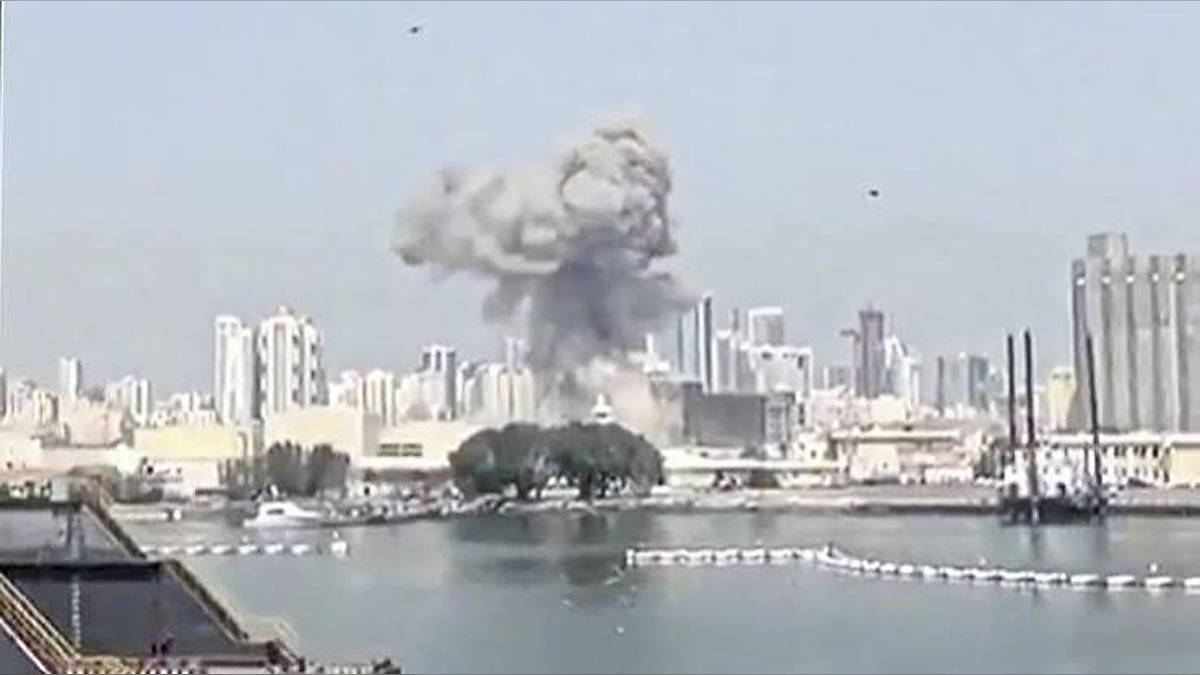
Iran's Rear Admiral Habibollah Sayyari issued a stern warning that any attempt by foreign forces to land on Iranian soil would transform the country's coastlines into an inescapable "hell" for invaders. This statement comes amidst escalating tensions and a renewed exchange of military threats and strikes between Iran and the United States. Sayyari emphasized the nation's strong defense posture, integrating the Army, IRGC, and popular forces, while accusing the US of psychological warfare.
Key Highlights
- Iranian coasts to become 'hell' for invaders, warns senior commander.
- Any foreign troop landing on Iranian soil will face inescapable 'hell'.
- Statement comes amid escalating US-Iran military tensions and strikes.
- Commander highlights integrated defense involving Army, IRGC, and popular forces.
- Accusations of US psychological warfare and failed invasion plans.
- Iran's territorial integrity is a red line, says Rear Admiral Sayyari.
In a stark declaration that echoes Iran's firm stance on its territorial sovereignty, Rear Admiral Habibollah Sayyari, the Deputy Chief of Iran's Army for Coordination, has warned that any foreign force attempting to land troops on Iranian soil would be met with an insurmountable defense, turning the nation's coastlines into an inescapable "hell" for invaders. Sayyari's pronouncements, made during a televised interview on Wednesday, July 8, 2026, underscore the heightened military tensions currently characterizing the relationship between Iran and the United States. The remarks follow a series of retaliatory strikes and renewed military threats exchanged between the two nations, signaling a significant escalation in their ongoing conflict.
Admiral Sayyari emphasized the formidable and unified defense capabilities of Iran, stating that the nation's armed forces, including the conventional Army, the Islamic Revolutionary Guard Corps (IRGC), law enforcement, the Basij militia, and the general populace, stand prepared to repel any aggression. He asserted that the enemy would no longer even contemplate landing forces on Iran's shores, as they would find themselves in a hell from which there would be no escape. Sayyari explicitly addressed the United States, accusing President Donald Trump of making "false claims" about destroying Iran's naval forces and of seeking to pave the way for troop deployments along the Makran coast and in the Strait of Hormuz.
The commander framed Iran's soil as a non-negotiable "red line" for its 90 million people, suggesting that an enemy could only succeed in landing forces if all Iranians were dead. He also accused the US of engaging in psychological warfare through repeated public statements intended to intimidate the Iranian people, while asserting that Iran's borders are secure and its territorial integrity would be defended at all costs. Sayyari dismissed claims of Iran's naval weakness, suggesting that Trump's rhetoric was a precursor to attempts to project power into strategic areas like Kharg Island and the Strait of Hormuz, endeavors he claimed had already failed.
While acknowledging potential technological disparities between Iran and its adversaries, Sayyari highlighted the nation's pride in its indigenous capabilities and its ongoing efforts to bridge any gaps. He stressed that in terms of patriotism and love for country, Iran remains second to none, urging confidence in the armed forces. The broader geopolitical context is marked by the collapse of a US-Iran memorandum of understanding (MOU) and a cycle of escalating military actions, including US strikes on over 80 Iranian targets in response to attacks on commercial vessels in the Strait of Hormuz. Iran, in turn, has threatened to close the Strait entirely and to retaliate with overwhelming force, vowing to strike two enemy targets for every Iranian target hit. The situation remains volatile, with significant implications for regional stability and global energy security, particularly concerning maritime traffic through the vital Strait of Hormuz. The article from PressTV, which is known for its state-affiliated reporting, accurately reflects the statements made by Rear Admiral Sayyari, aligning with reports from other news agencies. The claims made by the commander are primarily rhetorical and part of Iran's established deterrence strategy, emphasizing its resolve to defend its territory.
Frequently Asked Questions
What did Iran's Rear Admiral Habibollah Sayyari warn about?
Rear Admiral Habibollah Sayyari warned that any foreign force attempting to land on Iranian soil would face an inescapable 'hell' on Iran's coastlines.
What is the current state of US-Iran relations?
Tensions are high, marked by retaliatory military strikes and the collapse of a US-Iran memorandum of understanding. Both sides have issued renewed threats.
How does Iran plan to defend its shores?
Iran plans to use an integrated defense strategy involving its Army, the IRGC, law enforcement, the Basij militia, and the general populace to repel any invasion attempts.
What is the significance of the Strait of Hormuz in this conflict?
The Strait of Hormuz is a critical chokepoint for global oil and gas transit. Tensions and potential blockades in this waterway have significant implications for international energy markets and regional stability.