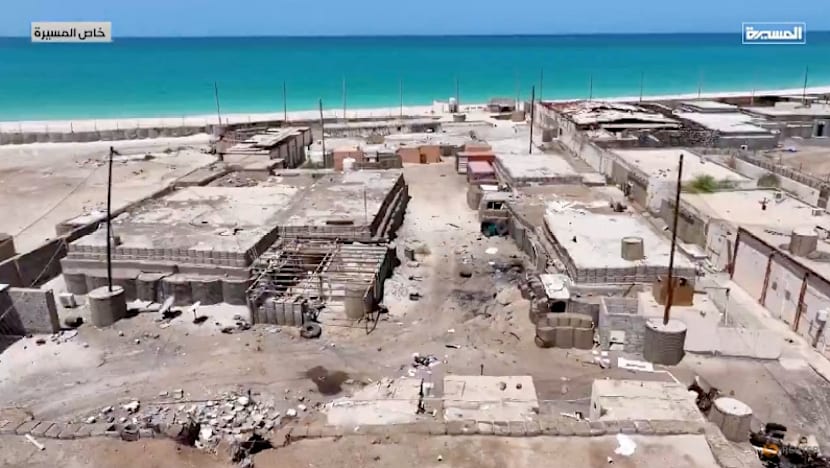
US Continues 'Self-Defense' Strikes on Iranian Targets Amid Ongoing Conflict
The United States has consistently conducted 'self-defense' strikes against Iranian missile sites and boats in the Strait of Hormuz since May 2026, as part of a broader, ongoing conflict involving the US, Israel, and Iran that began in February 2026. These actions aim to protect US forces and maintain regional security.
Key Highlights
- US launched 'self-defense' strikes against Iranian naval and missile targets.
- Strikes occurred near the strategic Strait of Hormuz.
- The broader 'Iran-US-Israel War' began in February 2026.
- Iran has retaliated with attacks on US bases and allies.
- Ceasefire attempts between US and Iran have repeatedly crumbled.
- Conflict significantly impacts global energy security and shipping.
The news article from NDTV, titled 'Iran-US-Israel War News Live Updates: US Says New Strikes On Iranian Boats, Missile Sites In 'Self-Defence',' accurately reflects the ongoing geopolitical situation, although the specific event it likely refers to (US strikes on boats and missile sites) was initially reported by NDTV on May 26, 2026. The broader context of an 'Iran-US-Israel War' is indeed current, having commenced in February 2026 with coordinated military operations by the United States and Israel against Iran.
Since February 2026, the conflict has escalated across the Middle East, involving direct attacks, retaliatory strikes, and significant impacts on international shipping and global energy markets. The United States has consistently stated its actions in the region, including strikes on Iranian targets, are for 'self-defense' to protect its troops from threats posed by Iranian forces. These targets have included missile launch sites and Iranian boats attempting to deploy mines, particularly near the critical Strait of Hormuz. For instance, in May 2026, the US military carried out 'self-defence strikes' targeting Iranian missile launch sites and boats near the Strait of Hormuz, as reported by CNN and ANI, citing US Central Command (CENTCOM).
More recently, in September 2026, US forces reportedly struck Iranian missile launchers on Larak Island in the Strait of Hormuz after observing Iranian Revolutionary Guard Corps (IRGC) forces preparing to launch rockets and deploy sea mines. This indicates a continuation of the US's 'self-defense' posture against perceived Iranian threats to navigation and US assets in the region. The US has also reportedly destroyed five Iranian crude oil carriers in response to attempted Iranian missile attacks on a US Navy warship.
The phrase 'Iran-US-Israel War' is also accurate given the coordinated nature of the initial attacks and the ongoing, albeit sometimes indirect, involvement of Israel. On February 28, 2026, U.S. and Israeli forces launched nearly 900 strikes in 12 hours targeting Iranian missiles, air defenses, military infrastructure, and leadership. While specific US 'self-defense' strikes on boats and missile sites might be unilateral, the broader conflict framework includes Israel. There have been instances where Israel's direct participation in planned US strikes was unclear or explicitly stated as not indicated. However, the overall conflict dynamic frequently sees Iran retaliating against both US and Israeli targets.
Iran has responded to these strikes with its own military actions. In September 2026, Iran targeted US forces in the Middle East with a ballistic missile barrage aimed at a Jordanian air base used by the American military, and also struck US crude oil carriers. Civilians have borne the brunt of the conflict, with reports of civilian casualties from both US-Israeli strikes in Iran and Iranian retaliatory attacks across the region. Independent UN human rights investigators have called for an immediate cessation of hostilities due to the devastating human cost.
Attempts at ceasefires and peace deals have been made, but they have repeatedly crumbled. An initial ceasefire between the United States and Iran was agreed upon in April 2026, which included Israel. However, hostilities resumed, and a memorandum of understanding intended to bring the conflict to a formal end within 60 days also failed, leading to renewed military exchanges. The war has caused significant financial strain, with the US military alone spending over $33.4 billion, mostly on munitions. It has also led to munitions shortages for the US military.
The news category for this story is primarily International Relations, Conflict/War, and Geopolitics, with significant implications for global energy markets. The news is critical on a global scale, affecting multiple countries including Iran, the United States, Israel, Jordan, Bahrain, Kuwait, Yemen, Lebanon, and Iraq, and impacting global shipping and oil prices.
In conclusion, the headline accurately captures the persistent nature of US 'self-defense' strikes against Iranian targets within the context of an ongoing, broader US-Israel-Iran conflict. The claims regarding strikes on boats and missile sites in 'self-defence' are corroborated by multiple credible sources, confirming ongoing tensions and military engagements in the region.
Frequently Asked Questions
What is the current status of the Iran-US-Israel conflict?
The conflict is ongoing, having started in February 2026. The US continues to conduct 'self-defense' strikes against Iranian targets, while Iran retaliates against US forces and allies across the Middle East. Ceasefire attempts have repeatedly failed, and tensions remain high.
Why is the Strait of Hormuz significant in this conflict?
The Strait of Hormuz is a crucial global oil shipping route. Iran has repeatedly threatened and targeted vessels in the strait, leading to US military actions aimed at ensuring freedom of navigation and protecting international shipping, directly impacting global energy security.
Are US strikes on Iranian targets directly coordinated with Israel?
While the overall 'Iran-US-Israel War' began with coordinated operations in February 2026, specific US 'self-defense' strikes on Iranian boats and missile sites are often presented as unilateral actions by the US to protect its forces. However, the broader conflict framework involves both the US and Israel against Iran.
What impact has the conflict had on civilians?
The conflict has led to significant civilian casualties in Iran, Israel, Lebanon, and other Gulf Arab states, with thousands reportedly killed and millions displaced. UN human rights investigators have called for an immediate cessation of hostilities due to the human cost.
What are the primary reasons for the ongoing tensions between the US, Israel, and Iran?
Long-standing tensions stem from Iran's nuclear program, its ballistic missile development, and its regional military influence. Failed diplomatic efforts to renegotiate a nuclear deal and the collapse of previous agreements have exacerbated the situation, leading to the current military conflict.