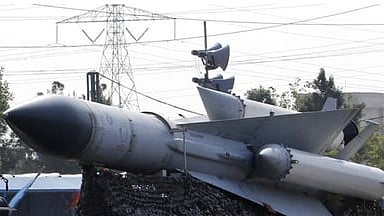
Iran Unveils New Underground Missile Base Amid Rising US Tensions
Iran's Islamic Revolution Guards Corps (IRGC) has unveiled a new underground missile base, emphasizing enhanced ballistic capabilities and a shift to an offensive military doctrine. This development comes amidst escalating tensions with the United States and ongoing diplomatic efforts for nuclear talks.
Key Highlights
- IRGC unveiled a new underground missile base on February 4, 2026.
- Iran declares a shift to an offensive military doctrine post-Israel war.
- Unveiling coincides with high US-Iran tensions and military buildup.
- Iranian officials highlight upgraded ballistic capabilities and deterrence.
- Tehran warns of regional conflict if US makes any 'mistake'.
- Nuclear talks between Iran and US are scheduled amidst disputes.
Iran's Islamic Revolution Guards Corps (IRGC) on Wednesday, February 4, 2026, officially unveiled a new underground missile base, a move reported by the semi-official Fars news agency and corroborated by multiple international outlets, including CGTN and AWANI International. This significant development underscores Iran's continuous efforts to bolster its military capabilities amidst heightened tensions with the United States and other regional adversaries. The base was revealed during a visit by high-ranking military officials, including Chief of Staff of the Iranian Armed Forces Abdolrahim Mousavi and Seyed Majid Mousavi, commander of the IRGC's Aerospace Division.
During the unveiling, Iranian military leaders asserted a crucial shift in the nation's military doctrine, moving from a defensive to an offensive posture. This change, they stated, follows a 12-day war with Israel in June of last year (2025). This conflict saw Iran fire salvos of ballistic missiles into Israel, leading to casualties and significant damage, though Israel reportedly destroyed a considerable portion of Iranian missile launchers. Tehran's commanders reiterated their readiness for any adversarial action and warned that any 'mistake' by the United States would ignite a regional conflict, a clear message delivered amid Washington's intensified military presence near Iran.
The unveiling of the new missile base is set against a backdrop of complex and strained relations between Iran and the United States. Nuclear talks between the two nations are slated to resume on Friday in Oman, following disputes over the venue and agenda. While the US aims for a comprehensive agreement addressing Iran's ballistic missile program, nuclear activities, and regional support for militant groups, Iran has consistently maintained that its defensive capabilities and missile program are non-negotiable. The ongoing military buildup by the US in the Gulf, including the deployment of aircraft carrier strike groups, further exacerbates these tensions.
Iran's missile program is one of the largest in the Middle East, primarily based on North Korean and Russian designs, with reported assistance from China. The country has a history of developing and showcasing underground military facilities, including drone bases and air force bases. For instance, Iran unveiled an underground drone base in May 2022 and its 'Eagle 44' underground Air Force base in February 2023. These subterranean complexes are designed to protect military assets from potential strikes and ensure retaliatory capabilities. Iran has also showcased its 'missile cities' in the past, with state television broadcasting images of underground tunnels filled with various ballistic missiles. Reports indicate that Iran continues to develop underground missile depots with transport and firing systems, as well as subterranean missile production and storage centers.
The unveiled base is said to house upgraded ballistic missiles, enhancing Iran's deterrence power across all technical dimensions. Iran has previously announced the successful firing of a ballistic missile from underground in 2020 and has unveiled advanced missiles like the Khaibar, with a 2,000 km range, and its first domestically made hypersonic ballistic missile in June 2023. Hypersonic missiles, capable of flying at least five times the speed of sound on complex trajectories, pose significant challenges for interception.
The timing of this unveiling, just before critical talks with the US, appears to be a strategic move by Iran to project strength and leverage its military advancements. It signals Tehran's resolve to continue its missile development, which it views as essential for its national security and deterrence against the US and Israel. The country's network of regional proxies, including Hezbollah, Houthis, and various militias, also forms a crucial part of its deterrence strategy, capable of engaging adversaries across the region.
The international community, particularly the US and its allies, views Iran's ballistic missile program as a significant threat to regional stability and a potential delivery mechanism for nuclear weapons, despite Iran's denial of seeking atomic bombs. The ongoing disputes over Iran's nuclear program, its missile capabilities, and its regional influence remain central to the complex geopolitical landscape of the Middle East. The revelation of this new underground missile base further complicates these dynamics, emphasizing Iran's unwavering commitment to its military advancements in the face of external pressures.
Frequently Asked Questions
When did Iran unveil the new underground missile base?
Iran's Islamic Revolution Guards Corps (IRGC) unveiled the new underground missile base on Wednesday, February 4, 2026.
What is the significance of this new missile base?
The new base signifies Iran's continuous enhancement of its ballistic missile capabilities and its stated shift from a defensive to an offensive military doctrine, which is intended to boost its deterrence power amidst regional and international tensions.
How does this relate to US-Iran tensions?
The unveiling comes amidst high tensions between Washington and Tehran, with an intensified US military presence in the Gulf and ongoing, complex nuclear talks. Iran views its missile program as a crucial deterrent against the US and Israel.
Has Iran unveiled similar facilities before?
Yes, Iran has a history of revealing underground military facilities, including drone bases (May 2022) and an Air Force base (February 2023), as part of its strategy to protect assets and project military strength.
What is Iran's stance on its missile program in ongoing talks?
Iran maintains that its defensive capabilities and ballistic missile program are essential for its national security and are non-negotiable in any talks with the United States or other international parties.