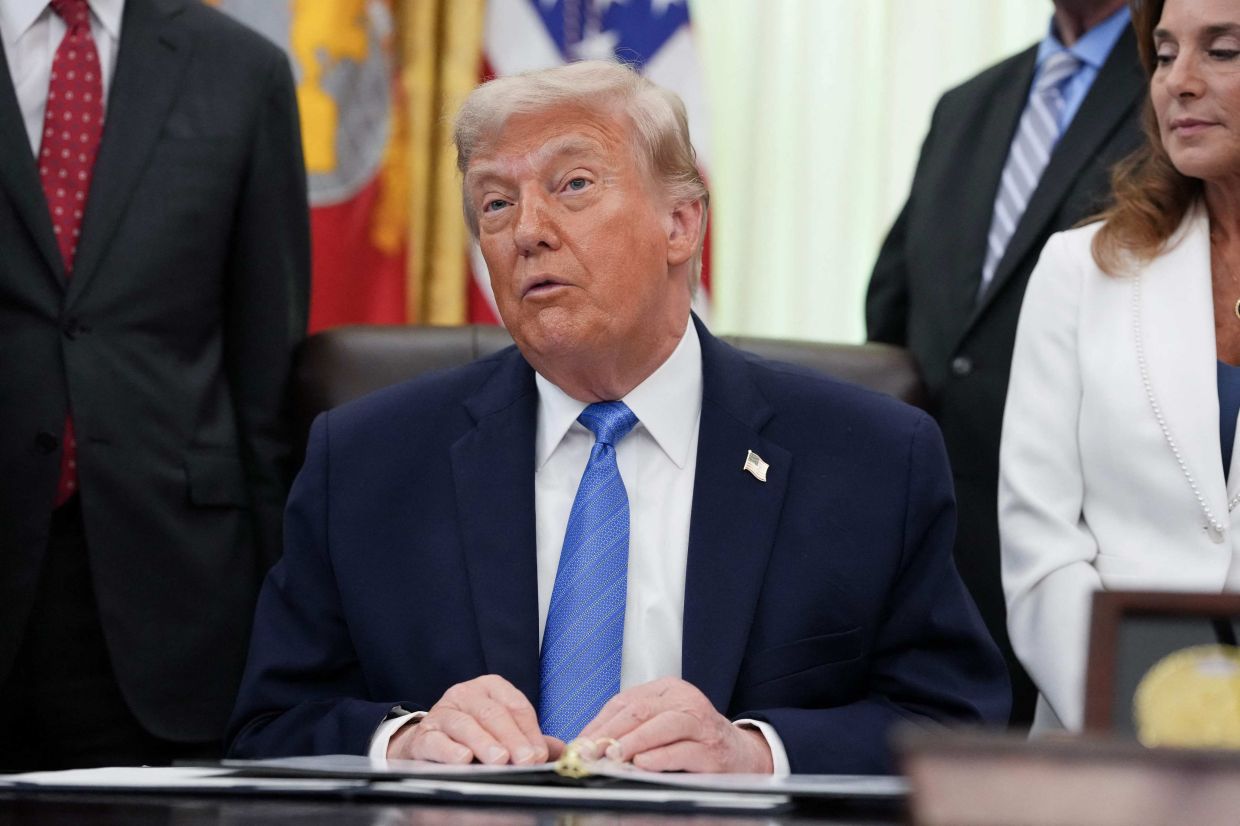
Judge strikes down Trump's $100,000 H-1B visa fee
A U.S. federal judge has struck down a $100,000 fee imposed by the Trump administration on new H-1B visas, deeming it an unlawful tax. The ruling, which has nationwide effect, came in response to a lawsuit filed by 20 states, asserting that the executive branch exceeded its authority without congressional authorization. This decision offers relief to numerous companies and foreign workers, particularly from India, who rely on the H-1B program.
Key Highlights
- Federal judge declared Trump's $100,000 H-1B visa fee unlawful.
- The fee was deemed an unauthorized tax, exceeding executive authority.
- The ruling follows a lawsuit by 20 states challenging the fee.
- The decision impacts companies and H-1B visa holders, especially from India.
A significant legal battle concerning the H-1B visa program culminated on June 8, 2026, when U.S. District Judge Leo T. Sorokin struck down the Trump administration's controversial $100,000 fee on new H-1B visas. The ruling, which carries nationwide effect, found the fee to be an unlawful tax that lacked authorization from Congress. This decision was the outcome of a lawsuit filed by a coalition of 20 states, arguing that the executive branch had overstepped its authority in imposing such a charge. The H-1B visa program is crucial for U.S. companies, particularly in the technology sector, to hire skilled foreign workers, with a significant majority of beneficiaries being from India.
President Donald Trump had announced the substantial fee increase in September 2025, with the proclamation aiming to deter foreign workers from taking American jobs and to prioritize high-skilled, high-wage talent. The administration's rationale was that the H-1B program had been exploited to replace, rather than supplement, American workers, thereby harming U.S. economic and national security interests. The proclamation relied on specific sections of the Immigration and Nationality Act (INA) to justify its authority. The fee was significantly higher than the typical application costs, which ranged from $2,000 to $5,000, making it prohibitively expensive for many employers. This substantial increase had led to widespread confusion and several lawsuits challenging its legality.
Judge Sorokin's ruling emphasized that the $100,000 payment was in substance and application a tax, regardless of how it was labeled. He concluded that there were no statutory powers authorizing the Trump administration to implement such a tax on H-1B petitions. The court's decision aligned with the plaintiffs' argument that Congress must clearly delegate such authority for the executive branch to impose financial burdens. The U.S. Chamber of Commerce had also filed a lawsuit challenging the fee hike, and an earlier ruling in Washington D.C. had initially upheld the fee, creating a divided legal landscape before this nationwide ruling.
The Department of Homeland Security (DHS) expressed disagreement with the ruling, calling it "blatant judicial activism" and defending the administration's immigration reforms. However, the appeals court later denied the government's motion to stay the lower court's order, effectively keeping the fee struck down while the government's appeal is pending.
The implications of this ruling are substantial for the tech industry and Indian professionals. Indian IT companies, which heavily rely on the H-1B visa program, faced potential erosion of profit margins and a need to recalibrate costs due to the fee hike. The ruling provides relief by removing this significant financial barrier. The H-1B program, with its annual cap of 65,000 visas (plus an additional 20,000 for those with advanced U.S. degrees), is a critical pathway for foreign talent in specialized occupations, particularly in STEM fields. Approximately 70-75% of H-1B visas have been approved for Indian nationals in recent years, highlighting the program's importance to India's workforce talent pool.
It is important to note that recent developments in August 2026 indicate that the Department of Homeland Security has expanded the scope of existing fees for H-1B and L-1 visa extension petitions, requiring larger employers to pay an additional $4,000 for H-1B extensions and $4,500 for L-1 extensions, effective September 9, 2026. This separate rule impacts ongoing visa renewals for companies with significant foreign workforces, though it is distinct from the $100,000 fee for new petitions that was struck down by the court.
Frequently Asked Questions
Why was the $100,000 H-1B visa fee struck down?
A U.S. federal judge struck down the fee, ruling it was an unlawful tax that President Trump's administration did not have the authority from Congress to impose. The judge found that the executive branch exceeded its authority.
Who challenged the $100,000 H-1B visa fee?
A coalition of 20 states, led by California, filed a lawsuit challenging the fee, arguing that it was an overreach of executive power.
What is the H-1B visa program and who does it affect?
The H-1B visa program allows U.S. employers to temporarily hire foreign workers in specialized occupations. It is particularly important for the U.S. tech industry and significantly impacts professionals from India, who constitute a large percentage of H-1B visa holders.
What is the current status of the $100,000 H-1B visa fee?
As of the latest reports, a federal judge has struck down the fee. While the government appealed, an appeals court denied a stay, meaning the fee remains struck down pending further appeals. Separately, new rules in August 2026 have increased fees for H-1B and L-1 visa extensions for large employers.