Pakistan Minister's 'Cut Off Hands' Threat Over Indus Waters Sparks Tensions
Pakistan's Climate Change Minister Musadik Malik issued a severe threat, stating that any attempt to obstruct Pakistan's share of Indus waters would result in having "hands cut off." This statement escalates tensions with India, which had suspended the Indus Waters Treaty in April 2025 after a terror attack.
Key Highlights
- Pakistani minister threatened "cut off hands" over Indus water share.
- India suspended Indus Waters Treaty in April 2025 after terror attack.
- Pakistan claims India controls water flow, threatening food security.
- Indus Waters Treaty is a 1960 agreement brokered by the World Bank.
- Pakistan reiterates treaty is legally binding despite India's suspension.
- Tensions rise as Pakistan prepares to present treaty case to global experts.
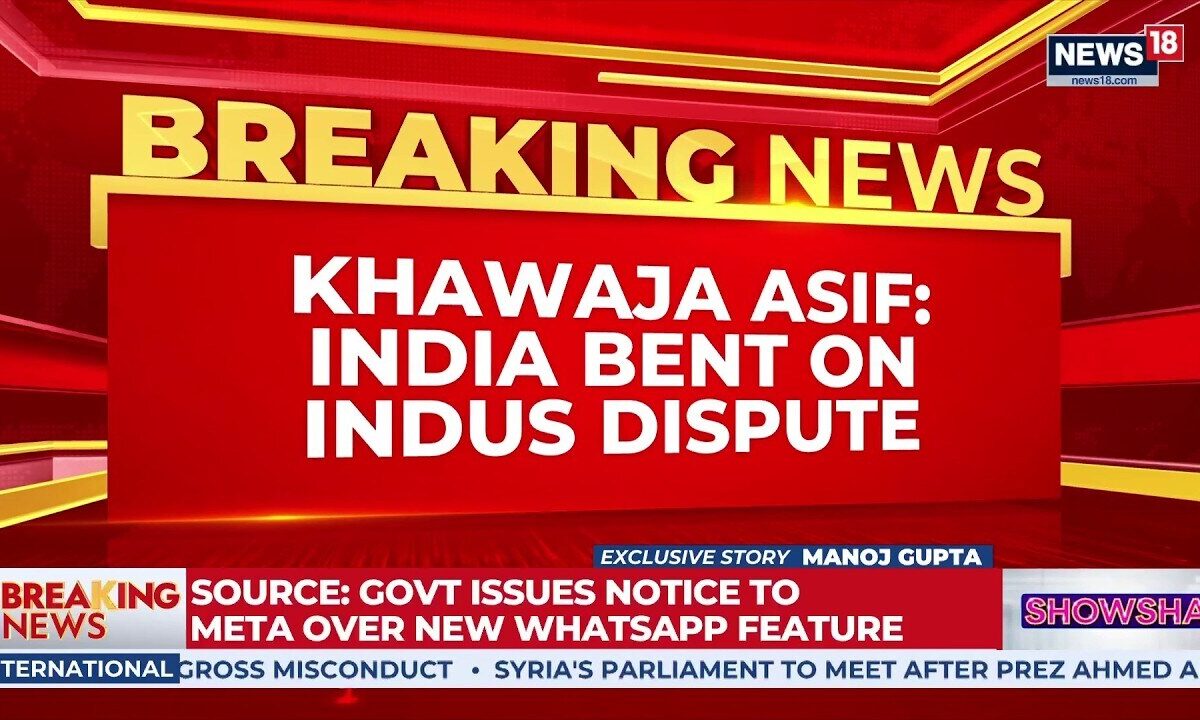
Tensions between India and Pakistan have escalated following a provocative statement by Pakistan's Climate Change Minister, Musadik Malik, who threatened to "cut off those hands" that attempt to claim or obstruct Pakistan's share of water under the Indus Waters Treaty (IWT). This fiery rhetoric comes amidst the ongoing dispute over the IWT, which India placed in abeyance in April 2025, following a significant terror attack in Pahalgam, Jammu and Kashmir, that claimed the lives of 26 people. Malik's statements, made at a press conference, alleged that India, as the upper riparian, controls Pakistan's water supply, likening it to a "tap controlled by the prime minister of a neighbouring country." He emphasized the critical role of agriculture in Pakistan, noting that 40-50% of the country's population depends on it for their livelihood, and warned that controlling water resources threatens the nation's food security, employment, and economy. Malik asserted that Pakistan would "protect ourselves" and has "proved that if anyone lays a hand over our share of water, we'll cut off that hand." This aggressive stance from Pakistan follows a similar warning from Pakistan's Defence Minister, Khawaja Asif, who had previously stated that Pakistan might resort to military action if its water security was threatened. Pakistan's Information Minister, Attaullah Tarar, also stated that the Indus Waters Treaty is legally binding and cannot be unilaterally revoked or amended, and Pakistan is preparing to present its case on the treaty's legal and technical aspects to global experts. India, on the other hand, maintains that its suspension of the treaty is a response to Pakistan's alleged support for cross-border terrorism and will remain in effect until Pakistan takes credible action to dismantle terrorist infrastructure. The Ministry of External Affairs in India has characterized Pakistan's remarks as "desperate attempts to cover up its own failings" and to divert attention from human rights abuses. The Indus Waters Treaty, brokered by the World Bank in 1960, governs the sharing of water from the Indus River system between India and Pakistan. Under the treaty, India has rights to the eastern rivers (Ravi, Beas, Sutlej), while Pakistan receives most of the waters of the western rivers (Indus, Jhelum, Chenab). Despite numerous conflicts and periods of high tension, the treaty has largely been adhered to, with most disputes resolved through legal mechanisms. However, India's decision to suspend its participation in April 2025 marked a significant strain on the decades-old agreement, leading to Pakistani accusations of "water weaponization." While Pakistan insists the treaty remains valid and legally binding, India has reiterated its stance, viewing the suspension as part of its broader fight against terrorism. The recent pronouncements from Pakistani ministers indicate a hardening of their position and a readiness to employ strong rhetoric amidst the unresolved water dispute, further complicating the already volatile relationship between the two nuclear-armed neighbors.
Frequently Asked Questions
What is the Indus Waters Treaty?
The Indus Waters Treaty is a water-sharing agreement signed in 1960 between India and Pakistan, brokered by the World Bank. It governs the distribution of water from the Indus River system, allocating the eastern rivers to India and the western rivers primarily to Pakistan.
Why did India suspend the Indus Waters Treaty?
India announced it would hold the Indus Waters Treaty in abeyance in April 2025 following a terror attack in Pahalgam, Jammu and Kashmir, which killed 26 civilians. India cited national security concerns and Pakistan's alleged support for cross-border terrorism as reasons for the suspension.
What was the statement made by Pakistan's Climate Change Minister?
Pakistan's Climate Change Minister, Musadik Malik, threatened that Islamabad would "cut off those hands" that attempt to obstruct or claim Pakistan's share of water under the Indus Waters Treaty. He accused India of controlling Pakistan's water supply and warned of severe consequences.
What is Pakistan's response to India's suspension of the treaty?
Pakistan maintains that the Indus Waters Treaty remains legally valid and binding and cannot be unilaterally revoked or suspended. Pakistan has stated its intention to present its case regarding the treaty to international experts.