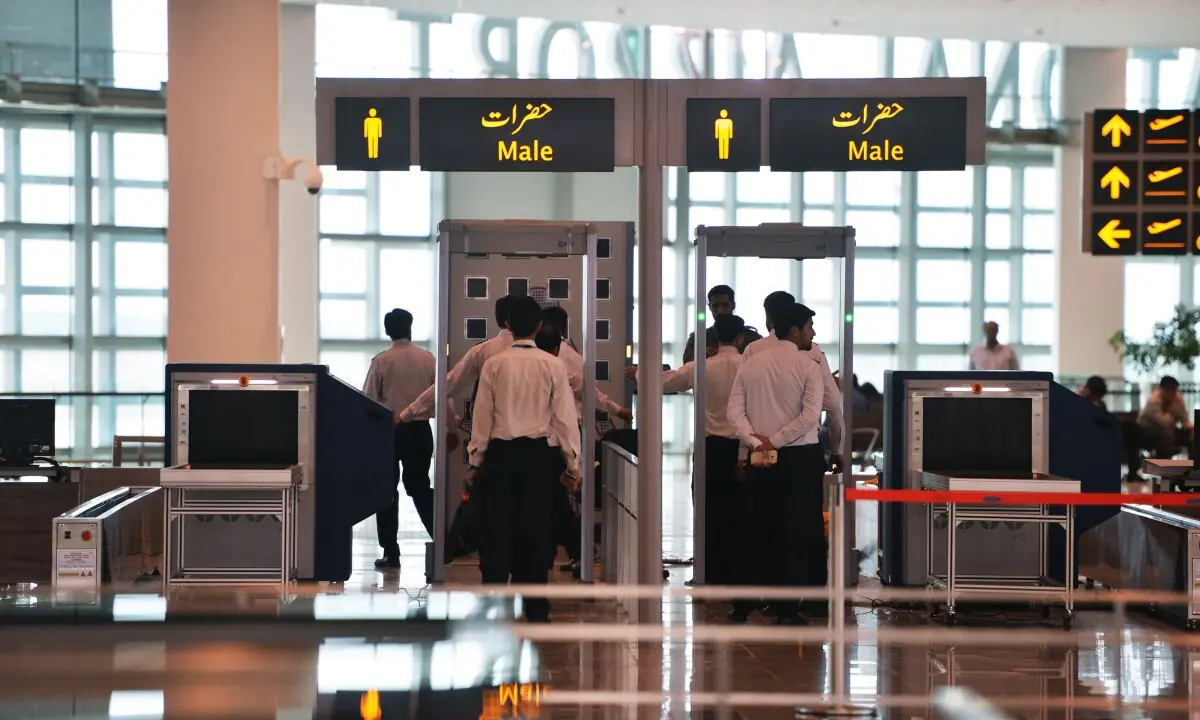
DR Congo suspends flights to Ebola-hit Bunia amid outbreak
The Democratic Republic of Congo has temporarily suspended all passenger flights to and from Bunia, the capital of Ituri Province, which is the epicenter of the current Ebola outbreak. This measure aims to curb the rapid spread of the Bundibugyo virus, which has led to a significant increase in suspected cases and deaths. The World Health Organization has declared the outbreak a Public Health Emergency of International Concern.
Key Highlights
- DR Congo suspends passenger flights to Bunia due to Ebola outbreak.
- Bunia, Ituri Province, is the epicenter of the current Bundibugyo virus outbreak.
- The suspension is a measure to control the rapid spread of the virus.
- WHO has declared the outbreak a Public Health Emergency of International Concern.
The government of the Democratic Republic of Congo (DRC) has imposed a temporary suspension on all passenger flights to and from Bunia, the capital of the northeastern Ituri Province. This decision comes as Bunia is the epicenter of an escalating Ebola outbreak, caused by the Bundibugyo virus. The Ministry of Transport announced the suspension, stating that no aircraft will be permitted to land at or depart from Bunia Airport until further notice. All commercial, private, and special flights are included in this ban, though humanitarian, medical, and emergency flights may be authorized with special approval from aviation and health authorities.
The Ebola outbreak, declared in Ituri Province on May 15, 2026, has rapidly spread, leading the World Health Organization (WHO) to revise its risk assessment for the DRC to "very high" at the national level, while maintaining a "high" risk at the regional level and "low" at the global level. As of May 23, 2026, the DRC has reported nearly 750 suspected cases and 177 suspected deaths. Among these, 83 confirmed cases and nine confirmed deaths have been recorded. The Bundibugyo virus, responsible for this outbreak, is a rarer strain of Ebola for which no licensed vaccine or specific treatment currently exists. Treatment relies on supportive care, managing symptoms such as fever, headache, vomiting, and diarrhea, and providing intensive supportive therapy.
The outbreak is unfolding in a complex environment characterized by insecurity, mass displacement, and deep mistrust of outside authorities, exacerbated by rumors and misinformation. This challenging context, coupled with frequent cross-border travel and population mobility, increases the risk of further transmission. Incidents of violence against health facilities have also occurred, with treatment centers being set on fire by angry relatives who were denied access to the bodies of deceased family members for traditional burial rituals. These actions not only disrupt response efforts but also lead to the escape of suspected cases into the community, further complicating containment.
The WHO has declared the outbreak a Public Health Emergency of International Concern (PHEIC), emphasizing the need for coordinated international response and cooperation. The United Nations and various international organizations are actively involved in supporting the DRC and neighboring Uganda, which has also reported confirmed cases. Efforts include deploying emergency personnel, funding, supplies, technical expertise, and reinforcing surveillance, laboratory testing, and infection prevention and control measures.
For India, the situation is being closely monitored. Indian authorities have issued advisories for travelers and reinforced surveillance measures. While the direct risk of Ebola transmission to India is considered low due to strict border protocols, health experts stress the importance of continued vigilance and preparedness, especially given international travel connectivity. The Bundibugyo strain is rare, and India's Council of Medical Research has listed it among pathogens requiring heightened surveillance. The country has experience in managing rare infectious diseases, having handled its only known Ebola case in 2014.
The Xinhua News Agency, the source of this article, is a state-run news agency of China. While it is a major global news provider, it has been rated as having a left bias and questionable factual reporting by media analysis organizations, often publishing one-sided pro-government propaganda. Therefore, its reporting should be cross-referenced with other credible sources.
Frequently Asked Questions
What is the current situation regarding the Ebola outbreak in the Democratic Republic of Congo?
As of May 23, 2026, the Democratic Republic of Congo is experiencing a significant Ebola outbreak, particularly in Ituri Province, with Bunia as the epicenter. The outbreak is caused by the Bundibugyo virus, and the World Health Organization has declared it a Public Health Emergency of International Concern.
Why have passenger flights to Bunia been suspended?
Passenger flights to and from Bunia have been temporarily suspended by the DRC government to help curb the rapid spread of the Ebola virus. This measure aims to limit movement into and out of the outbreak's epicenter.
What is the Bundibugyo virus?
The Bundibugyo virus is a rare strain of the Ebola virus. Unlike some other Ebola strains, there is currently no licensed vaccine or specific treatment available for Bundibugyo virus disease. Treatment focuses on supportive care to manage symptoms and improve patient survival rates.
What is the global risk posed by this Ebola outbreak?
While the risk to the Democratic Republic of Congo is assessed as "very high" nationally and "high" regionally, the World Health Organization has stated that the global risk of spread remains "low." This assessment is based on current data and containment efforts.
How is India preparing for potential Ebola risks?
Indian authorities are closely monitoring the situation and have issued advisories for travelers. Surveillance measures at ports of entry are being reinforced. Although the direct risk to India is considered low, experts emphasize the importance of vigilance and preparedness due to international travel.