Amarnath Yatra 2026: Army Deploys Advanced Anti-Drone, Radar & Anti-Aircraft Systems
The Indian Army, in collaboration with other security agencies, has implemented a robust, technology-driven security shield for the Amarnath Yatra 2026. This includes advanced anti-drone systems, radars, and anti-aircraft guns to counter potential aerial threats and ensure pilgrim safety along the challenging routes in Jammu and Kashmir. These measures are part of a comprehensive multi-layered security plan.
Key Highlights
- Integrated Drone Detection and Interceptor Systems deployed.
- New Low Level Lightweight Radars enhance aerial surveillance.
- L-70 and ZU anti-aircraft guns provide close-range air defense.
- Multi-agency coordination for seamless security operations.
- Routes and camps under continuous aerial and CCTV surveillance.
- Security measures bolstered against terror threats and drone attacks.
Ahead of the annual Amarnath Yatra, set to commence on July 3, 2026, and conclude on August 28, the Indian Army, in close coordination with the Central Reserve Police Force (CRPF), Jammu and Kashmir Police, and other security agencies, has established an extensive and technologically advanced security shield across the pilgrimage routes in Jammu and Kashmir. This comprehensive security arrangement is designed to safeguard the lakhs of devotees embarking on this revered Himalayan journey.
The core of the security strategy involves a multi-layered aerial surveillance and anti-drone grid. Key deployments include the Integrated Drone Detection and Interceptor System (IDDIS), which has been redeployed after its successful use in the previous year's yatra. The IDDIS boasts both 'soft-kill' capabilities, neutralizing hostile drones by jamming their communication and navigation systems, and 'hard-kill' capabilities, which can physically destroy or bring down rogue drones, potentially using laser-based interception technology.
In a significant technological enhancement for this year, the Low Level Lightweight Radar (LLLR) has been deployed for the first time during the Amarnath Yatra. This radar system is designed to detect low-flying aerial objects, including drones, and operates in two surveillance modes, capable of identifying targets at ranges between 20 and 50 kilometers. Additionally, L-70 and ZU anti-aircraft guns have been strategically positioned at key locations along the routes. These land-to-air weapon systems provide crucial close-range air defense, capable of protecting areas with a radius of approximately five kilometers.
The security measures extend beyond aerial threats to cover ground-level vulnerabilities. Nearly 100 transit camps established along the twin routes—the traditional 48-km Pahalgam route in Anantnag district and the shorter 14-km Baltal route in Ganderbal district—are under continuous aerial surveillance. Surveillance systems, including CCTV cameras with facial recognition capabilities, have also been installed on strategically located high ridges to maintain a close watch over vulnerable areas and monitor movement along the routes. The J&K Police has also introduced a QR-based verification initiative called 'PEHCHAAN' for registered service providers to enhance credential verification, even in areas with limited internet access.
Security agencies have also launched 'Operation Shiva,' described as a massive multi-layered security plan aiming to prevent terrorist attacks and instill confidence among pilgrims. This operation involves thousands of personnel from the Indian Army, CRPF, Jammu and Kashmir Police, Border Security Force (BSF), and other central armed police forces deployed across the yatra routes. Road opening parties, K-9 squads, bomb disposal teams, and dedicated anti-drone units are stationed along the highways and at base camps, with no-fly zones declared over sensitive stretches. Special water-security units of the CRPF are also conducting 24-hour patrols on Dal Lake to ensure the safety of tourists and pilgrims.
Threat assessments ahead of the Yatra indicate concerns about 'sticky bombs' and drone-dropped payloads, including weapons, explosives, and narcotics. Intelligence inputs also suggest that Pakistan-backed terror organizations like Lashkar-e-Toiba and Jaish-e-Mohammad might target 'soft civilian locations' instead of the heavily guarded pilgrimage routes to generate maximum national and international attention, prompting security agencies to widen surveillance beyond traditional yatra corridors. Consequently, security forces are maintaining 24x7 domination, including night surveillance, on all major roads and vulnerable stretches.
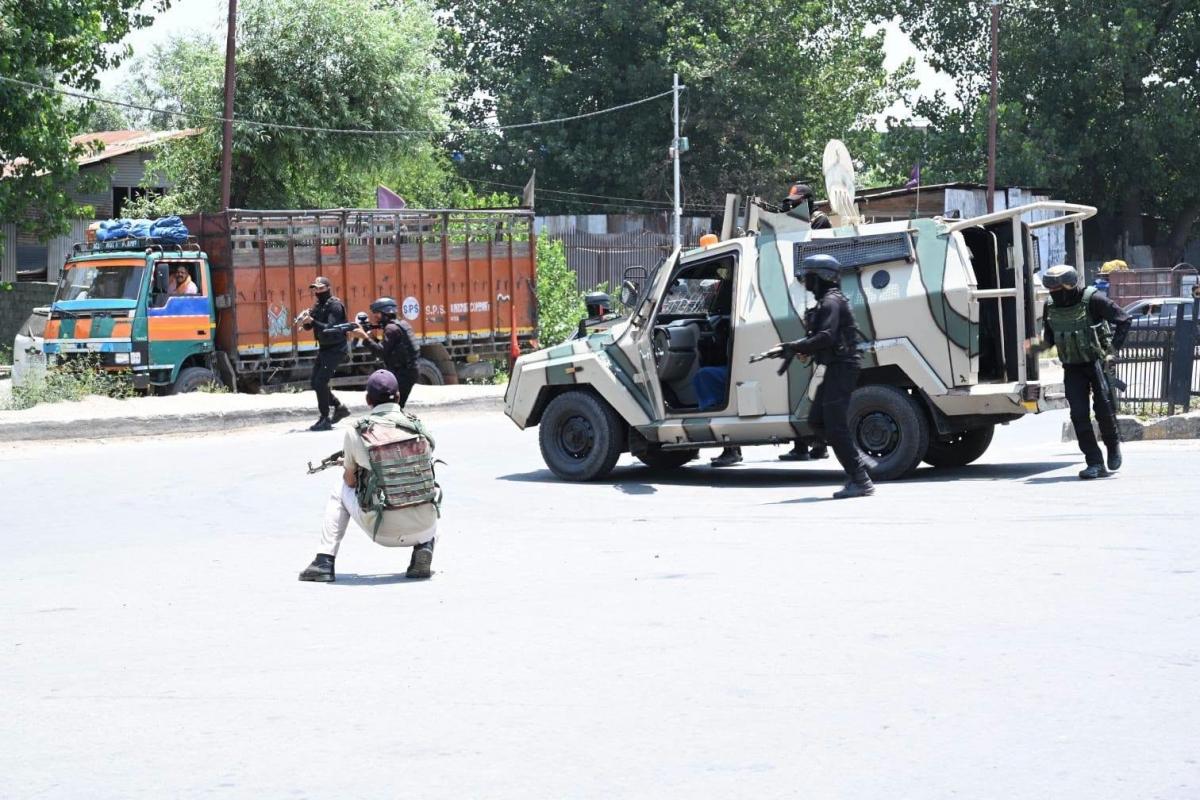
Intensive anti-terror mock drills are being conducted across Jammu and Kashmir to assess preparedness levels and strengthen response mechanisms for any potential threat or emergency. These drills involve joint participation from various security and disaster management agencies, including the Indian Army, CRPF, J&K Police, SDRF, SOG Ramban, and CISF, ensuring coordinated emergency preparedness. Mountain rescue teams of the J&K Police and paramilitary forces are also deployed in vulnerable high-altitude areas.
Union Home Minister Amit Shah has personally directed agencies to ensure an impregnable multi-layered security grid, emphasizing greater use of drones and monitoring technology. The enhanced security measures demonstrate the Army's evolving approach to countering both conventional and emerging aerial threats while safeguarding one of India's most significant annual religious pilgrimages.
Frequently Asked Questions
What advanced security measures are in place for the Amarnath Yatra 2026?
For Amarnath Yatra 2026, a multi-layered security grid has been established, featuring an Integrated Drone Detection and Interceptor System (IDDIS), Low Level Lightweight Radars (LLLR) for the first time, and L-70 and ZU anti-aircraft guns. This is complemented by continuous aerial and CCTV surveillance, facial recognition systems, and RFID tracking.
Which security agencies are involved in securing the Amarnath Yatra?
The security for the Amarnath Yatra is a collaborative effort involving the Indian Army, Central Reserve Police Force (CRPF), Jammu and Kashmir Police, Border Security Force (BSF), and other central armed police forces. They work in close coordination to ensure pilgrim safety.
What are the primary threats addressed by the enhanced security for the Yatra?
The enhanced security measures primarily address threats from drones, potential 'sticky bombs,' and drone-dropped payloads. Intelligence assessments also indicate a risk of Pakistan-backed terror groups targeting 'soft civilian locations' beyond the direct pilgrimage routes.
When is the Amarnath Yatra taking place in 2026?
The annual Amarnath Yatra for 2026 is scheduled to commence on July 3 and will conclude on August 28.
What is 'Operation Shiva' in the context of Amarnath Yatra security?
'Operation Shiva' is a massive multi-layered security plan rolled out by security agencies in Jammu and Kashmir. Its objective is to prevent terrorist attacks and instill confidence among the pilgrims by deploying an extensive security network across all vulnerable areas, including highways, mountains, forests, and base camps.