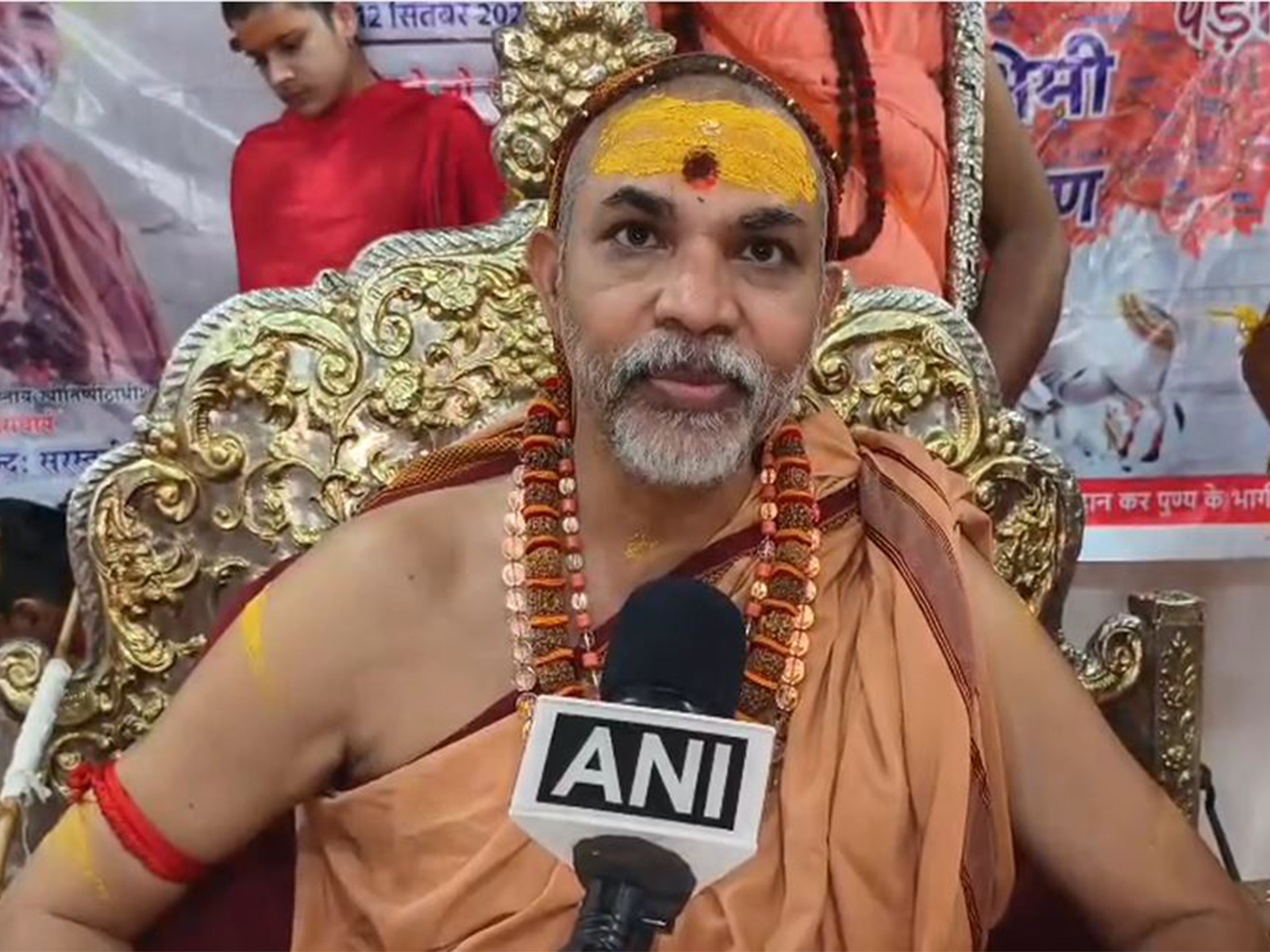
UP Court Orders FIR Against Swami Avimukteshwaranand in Sexual Exploitation Case
A special POCSO court in Prayagraj, Uttar Pradesh, has ordered the registration of an FIR against Swami Avimukteshwaranand Saraswati and his disciple, Swami Mukundanand Giri, concerning allegations of sexual exploitation of minors. The court directed the Jhoosi police station to file the case and initiate a thorough investigation. The order follows a complaint filed by Ashutosh Brahmachari Maharaj, who presented evidence and statements from two minor victims. Swami Avimukteshwaranand has denied the allegations, attributing them to a conspiracy against his activism.
Key Highlights
- Prayagraj POCSO court orders FIR against Swami Avimukteshwaranand.
- Allegations of sexual exploitation of minors are being investigated.
- Two minor victims' statements were recorded by the court.
- Ashutosh Brahmachari Maharaj filed the complaint.
- Swami Avimukteshwaranand denies the allegations.
A significant legal development has occurred in Uttar Pradesh, where a special Protection of Children from Sexual Offences (POCSO) court in Prayagraj has ordered the registration of a First Information Report (FIR) against Swami Avimukteshwaranand Saraswati and his disciple, Swami Mukundanand Giri. The charges pertain to alleged sexual exploitation of minors. The court, presided over by Additional District Judge (POCSO Act) Vinod Kumar Chaurasia, directed the Station House Officer of Jhoosi police station to promptly file the FIR and commence a comprehensive investigation into the matter. The directive came after a petition was filed under Section 173(4) of the CrPC by Ashutosh Brahmachari Maharaj, the head of the Shri Krishna Janmabhoomi Mukti Nirman Trust and Shakumbhari Peethadhishwar. Maharaj accused the ashram of systematic child sexual abuse, claiming that minors were allegedly coerced into such acts under the guise of 'guru seva' at a facility in Varanasi. To substantiate these claims, the court recorded the video-graphed statements of two minor victims on February 13. These testimonies, along with a police report, formed the basis of the court's decision to order the FIR, after the court had reserved its judgment on February 13. Ashutosh Brahmachari Maharaj hailed the court's order as a victory for justice and announced plans for a foot march from Prayagraj to Varanasi to expose what he termed institutionalized abuse within ashrams. He has positioned this as a crusade against such exploitation. Swami Avimukteshwaranand, through his legal representatives, has denied all allegations, stating that the accusations are fabricated and part of a conspiracy to discredit his activism, particularly his campaigns for cow protection. He has expressed confidence in the judiciary but also voiced concerns about the investigation process, demanding a high-level inquiry. The case has garnered considerable attention, partly due to Swami Avimukteshwaranand's prominent status and recent involvement in other controversies. Notably, he had recently staged an 11-day sit-in protest after claiming he was prevented from taking a ritual dip at the Sangam during the Magh Mela in Prayagraj. He had also publicly urged Uttar Pradesh Chief Minister Yogi Adityanath to ban beef exports and declare the cow as 'Rajya Mata'. The controversy surrounding the Magh Mela incident involved a dispute over his travel arrangements and alleged crowd management issues caused by his supporters. The administration had also questioned his use of the title of Shankaracharya of Jyotish Peeth, citing a pending civil appeal in the Supreme Court. The current legal action marks a significant escalation of his troubles, bringing serious criminal charges into the spotlight. The court's order emphasizes that the investigation must be conducted fairly, independently, and expeditiously, with strict adherence to the provisions of the POCSO Act, particularly concerning the protection of victims' identities and dignity. This development underscores the increasing scrutiny of religious institutions and their adherence to legal and ethical standards in India, especially concerning the protection of vulnerable individuals. The unfolding of this case will be closely watched, with potential implications for both the accused religious leader and the broader landscape of spiritual organizations in the country. The initial police report, which apparently did not satisfy the court, led to the direct order for an FIR, indicating a perceived lack of adequate action by the local police prior to the court's intervention. The timeline of events began with the filing of the complaint on January 28, followed by the recording of victim statements on February 13, the court reserving its judgment, and finally, the order for FIR registration on February 21. The legal proceedings highlight the critical role of the judiciary in addressing allegations of abuse, especially when initial complaints might face administrative hurdles or delays.
Frequently Asked Questions
What is the main allegation against Swami Avimukteshwaranand?
Swami Avimukteshwaranand Saraswati and his disciple, Swami Mukundanand Giri, are accused of sexual exploitation of minors. This led to a special POCSO court in Prayagraj ordering the registration of an FIR against them.
Who filed the complaint against Swami Avimukteshwaranand?
The complaint was filed by Ashutosh Brahmachari Maharaj, the head of the Shri Krishna Janmabhoomi Mukti Nirman Trust and Shakumbhari Peethadhishwar.
What action has the court taken?
A special POCSO court in Prayagraj has ordered the Jhoosi police station to register an FIR against Swami Avimukteshwaranand and his disciple and to conduct a thorough investigation into the allegations.
Has Swami Avimukteshwaranand responded to the allegations?
Yes, Swami Avimukteshwaranand has denied the allegations, stating they are false and part of a conspiracy against his activism.
What is the significance of the POCSO court's order?
The order signifies that the court found sufficient grounds based on initial evidence, including statements from two minor victims, to proceed with a formal investigation into serious allegations of sexual exploitation of children.