Israel Security Cabinet Discusses Lebanon Ceasefire Amid Escalating Conflict
Israel's security cabinet convened on April 15, 2026, to discuss a potential ceasefire with Lebanon, according to a senior Israeli official and reports citing Reuters. This meeting occurs amid intensified cross-border fighting with Hezbollah and ongoing U.S. mediation efforts aimed at de-escalating the broader regional conflict.
Key Highlights
- Israeli cabinet met on April 15, 2026, for Lebanon ceasefire talks.
- Discussions follow intense border clashes between Israel and Hezbollah.
- United States is actively mediating between Israel and Lebanon.
- A previous November 2024 ceasefire agreement collapsed recently.
- India has expressed deep concern over civilian casualties.
- Hezbollah's disarmament remains a key point of contention.
The Israeli security cabinet convened on Wednesday, April 15, 2026, at 8 p.m. (1700 GMT) to discuss a possible ceasefire with Lebanon. This significant development was reported by Reuters, citing a senior Israeli official, and subsequently corroborated by multiple international news outlets, including Iran International, Telegraph India, Jewish News, LBCI, and bloomingbit. The discussions are taking place against a backdrop of severely escalating conflict along the Israel-Lebanon border, primarily involving the Israeli military and the Iran-backed militant group Hezbollah.
The current hostilities intensified significantly following the broader conflict that erupted in October 2023 and saw an Israeli invasion of Lebanon in October 2024. This prolonged period of fighting has led to considerable casualties and displacement on both sides. Lebanon's Ministry of Public Health, for instance, reported that Israeli attacks in Lebanon since early March 2026 have killed at least 1,888 people and wounded over 6,000. Conversely, Hezbollah's consistent rocket, drone, and mortar attacks have caused widespread damage and forced some 60,000 Israelis to evacuate their homes in northern Israel.
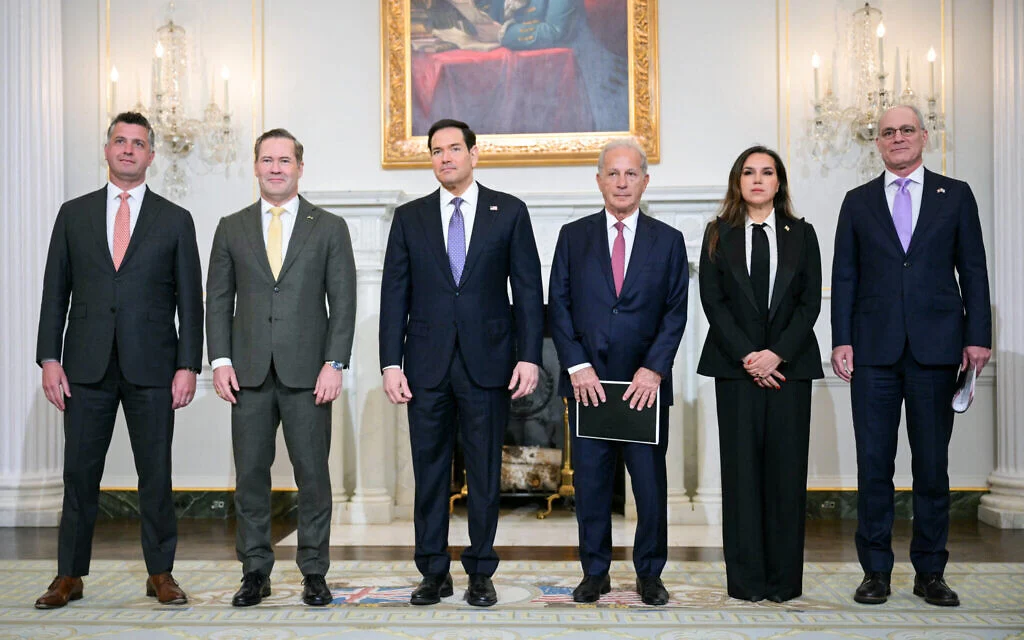
The United States has been a central player in attempts to de-escalate the conflict, with diplomatic efforts including direct talks between Israeli and Lebanese representatives. On April 14, 2026, Lebanon and Israel began their first direct diplomatic talks in decades in Washington, mediated by the U.S. Secretary of State Marco Rubio. These talks were spurred by the latest conflict between Israel and Hezbollah. While Lebanon has called for a ceasefire, the withdrawal of Israeli forces, the release of Lebanese prisoners, and the return of displaced persons, Israel has largely framed these discussions as peace talks focused on disarming Hezbollah. Despite the ongoing diplomatic efforts, significant gaps remain, especially concerning Hezbollah's disarmament and Lebanon's ability to enforce any future agreement.
A previous U.S.-brokered ceasefire agreement was signed on November 27, 2024, by Israel, Lebanon, and five mediating countries, including the United States. This agreement mandated a 60-day halt to hostilities, requiring Israel to withdraw its forces from Southern Lebanon and Hezbollah to withdraw its forces to north of the Litani River. A five-country monitoring panel, led by the United States, was established to oversee its implementation. However, this fragile ceasefire reportedly collapsed in February 2026, with continued violations by both sides. Israel accused Hezbollah of ongoing attacks, while Lebanon claimed over 15,400 violations of its sovereignty by Israeli forces, including airstrikes and ground incursions, between the November 2024 ceasefire and the March 2026 war.
The United Nations Interim Force in Lebanon (UNIFIL) plays a crucial role in the region, established to confirm Israeli withdrawal, restore peace, and assist the Lebanese government. Its mandate was expanded after the 2006 conflict to monitor the cessation of hostilities and support the Lebanese armed forces. India is a significant troop-contributing country to UNIFIL, underscoring its vested interest in the region's peace and security.
India has consistently voiced deep concern over the escalating situation and the humanitarian impact. On April 10, 2026, India's Ministry of External Affairs spokesperson, Randhir Jaiswal, expressed profound concern over the increasing civilian casualties from Israeli airstrikes in Lebanon, emphasizing the critical importance of civilian protection, adherence to international law, and respect for sovereignty and territorial integrity. India had previously welcomed the November 2024 ceasefire decision, echoing its stance on de-escalation, restraint, and a return to dialogue and diplomacy.
Adding another layer of complexity, the current tensions are also intertwined with a broader, fragile ceasefire between the United States and Iran, which took effect recently. While Pakistani mediators and Tehran indicated that this truce covered Lebanon, both Washington and Tel Aviv have denied this interpretation, leading to further disagreement on the scope of de-escalation efforts. The continuing rocket attacks from Hezbollah into northern Israel, even as diplomatic talks commence, highlight the profound challenges in achieving a lasting peace. The current security cabinet meeting therefore represents a critical juncture in the ongoing efforts to address the severe and long-standing conflict between Israel and Lebanon.
The overall situation remains highly volatile, with both sides engaged in military operations and diplomatic maneuvering. The international community, including India, is closely monitoring these developments due to the potential for wider regional destabilization and humanitarian crisis. The resolution of the conflict hinges on complex negotiations involving the withdrawal of forces, the disarmament of non-state actors, and adherence to international agreements, all of which have proven historically difficult to achieve.
Frequently Asked Questions
What is the primary reason for the Israeli security cabinet meeting?
The Israeli security cabinet met on April 15, 2026, to discuss a possible ceasefire with Lebanon amidst intensified cross-border fighting with Hezbollah.
What is the current state of the conflict between Israel and Lebanon?
The conflict is marked by ongoing intense cross-border exchanges of fire between the Israeli military and Hezbollah, including rocket attacks by Hezbollah and Israeli airstrikes and ground operations.
What role is the United States playing in the conflict?
The United States is actively mediating between Israel and Lebanon, having facilitated direct diplomatic talks that began on April 14, 2026, aimed at de-escalating the conflict and resolving border disputes.
Was there a previous ceasefire, and what happened to it?
Yes, a U.S.-brokered ceasefire agreement was signed in November 2024, but it reportedly collapsed in February 2026 due to continued violations and disagreements over its implementation, particularly regarding Hezbollah's disarmament.
What is India's stance on the Israel-Lebanon conflict?
India has expressed deep concern over the escalating violence and civilian casualties, emphasizing the importance of civilian protection, international law, and respecting territorial integrity. India also contributes troops to UNIFIL, highlighting its investment in regional peace and security.