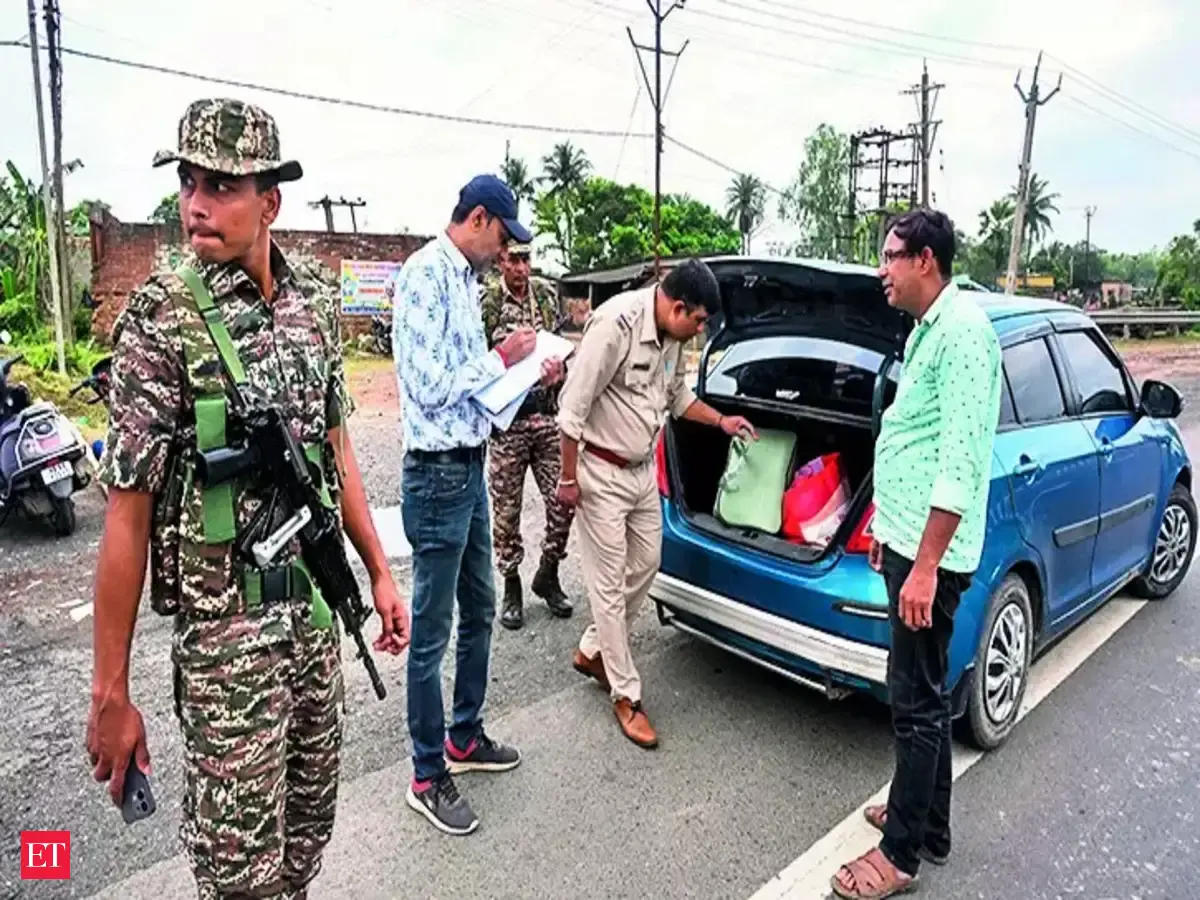
ECI Likely to Publish West Bengal Supplementary Voter List Today
The Election Commission of India (ECI) is expected to release the first supplementary voter list for West Bengal today, March 23, 2026, as part of the Special Intensive Revision (SIR) exercise. This crucial update affects millions of voters ahead of the upcoming Assembly elections in April 2026.
Key Highlights
- ECI to publish West Bengal's first supplementary voter list on March 23, 2026.
- List follows Special Intensive Revision (SIR) exercise, impacting millions.
- Over 60 lakh names initially under adjudication after final roll on Feb 28.
- Adjudication process involved judicial officers, resolving 27 lakh cases by March 20.
- West Bengal Assembly Elections scheduled for April 23 and 29, 2026.
- SIR process was contentious, challenged by state government in Supreme Court.
The Election Commission of India (ECI) was poised to release the first supplementary voter list for the poll-bound state of West Bengal on the evening of March 23, 2026. This announcement, reported by The Hindu as part of its 'Assembly Elections LIVE updates', signified a critical development in the electoral preparations for the state's upcoming Assembly polls. The supplementary list is a direct outcome of the ongoing Special Intensive Revision (SIR) exercise of electoral rolls, a comprehensive and often contentious process aimed at updating and verifying voter information.
The SIR exercise itself has been a subject of significant scrutiny and debate. It entails a de novo, or 'from scratch,' verification of voters, a departure from the routine annual revisions. Following the publication of the final electoral roll on February 28, 2026, a substantial number of names—over 60 lakh (6 million)—were categorized as being 'under adjudication'. These cases required further verification and resolution, leading to a period of uncertainty for a considerable portion of the electorate. The adjudication process involved the engagement of numerous judicial officers, with reports indicating that over 700 such officers were involved in resolving these cases. By March 20, 2026, approximately 27 lakh (2.7 million) cases had been successfully disposed of.
Credible sources beyond The Hindu, including DD News, The Indian Express, MillenniumPost, and News18, have consistently corroborated the ECI's intensive efforts in revising the voter lists for West Bengal. These reports confirm the schedule and the logistical challenges involved in updating such a massive electoral database. For instance, DD News on March 20, 2026, initially stated the supplementary list might be published that day, later updating that its release was pushed to Monday, March 23, 2026, aligning with The Hindu's report. The Indian Express, on March 18, 2026, also noted the expectation of the list being published by the end of that week, which would include March 23.
The contentious nature of the SIR process was highlighted by allegations from the Trinamool Congress (TMC), whose chairperson Mamata Banerjee reportedly suggested a deliberate slowdown in the process, potentially inconveniencing voters. Furthermore, the state government had even challenged the SIR exercise in the Supreme Court, raising questions about its methodology and the credibility of its outcomes. The ECI, in turn, had accused the state administration of non-cooperation. This indicates a political environment charged with tension and mistrust surrounding the electoral preparations. Concerns were also raised about a significant drop in the total number of voters from 7.04 crore (70.4 million) to 6.44 crore (64.4 million) between the revised rolls published on February 28 and an announcement on March 15, with 58 lakh entries marked as dead, absent, shifted, or duplicate, without a detailed public break-up.
The publication of the supplementary list is a vital step as West Bengal prepares for its Legislative Assembly elections, which are scheduled to be held in two phases on April 23 and April 29, 2026. The counting of votes for these elections is slated for May 4, 2026. The updated voter roll is fundamental for ensuring that all eligible citizens can exercise their democratic right to vote and that the electoral process is fair and transparent. The ECI's commitment to releasing this list, despite the logistical and political hurdles, underscores the importance of an accurate and inclusive electoral database for democratic integrity. The list, upon its release, was expected to be made publicly available, with copies sent to district election officers and displayed at polling booths across the state, ensuring transparency and accessibility for voters to verify their inclusion.
Frequently Asked Questions
What is the Special Intensive Revision (SIR) of voter lists?
The Special Intensive Revision (SIR), also referred to as Special Integrated Revision, is a comprehensive exercise undertaken by the Election Commission of India (ECI) to thoroughly update and verify electoral rolls. Unlike routine annual revisions, SIR often involves a 'de novo' (from scratch) verification process to ensure the highest accuracy of voter data.
Why is the supplementary voter list important for West Bengal?
The supplementary voter list is crucial for West Bengal as it incorporates the names of newly eligible voters and those whose cases were resolved after being initially marked 'under adjudication' during the SIR exercise. Its publication ensures that all eligible citizens have the opportunity to vote in the upcoming Assembly elections.
When are the West Bengal Assembly Elections scheduled?
The West Bengal Legislative Assembly Elections are scheduled to be held in two phases on April 23 and April 29, 2026. The votes for these elections will be counted on May 4, 2026.
What happens if a voter's name is not on the supplementary list?
If a voter's name is not on the final or supplementary list after the adjudication process, they may have avenues for redressal. In the past, tribunals have been constituted under the supervision of the Calcutta High Court to hear appeals from electors who believe their names were excluded without valid reason.
What was the controversy surrounding the SIR process in West Bengal?
The SIR process in West Bengal was controversial due to its extensive nature, a large number of names placed 'under adjudication' (over 60 lakh initially), and allegations from the ruling Trinamool Congress of deliberate slowdowns. The state government also challenged the ECI's exercise in the Supreme Court, citing concerns over the process and a significant drop in the total number of voters.