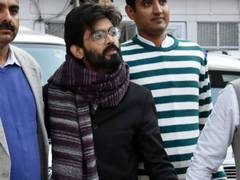
Umar Khalid, Sharjeel Imam Seek Bail in Delhi Riots Conspiracy Case
Activists Umar Khalid and Sharjeel Imam have filed fresh bail applications in a Delhi court concerning the 2020 Delhi Riots 'larger conspiracy' case, citing prolonged incarceration and lack of trial progress. The court has requested a response from Delhi Police, with the next hearing scheduled for July 4, 2026.
Key Highlights
- Umar Khalid and Sharjeel Imam filed fresh bail pleas.
- Bail sought in 2020 Delhi Riots 'larger conspiracy' case.
- Citing nearly six years of incarceration without trial progress.
- Supreme Court's recent observations on UAPA bail influenced pleas.
- Delhi court issued notice to police, hearing on July 4, 2026.
Activists Umar Khalid and Sharjeel Imam have once again approached a Delhi court, filing fresh applications for regular bail in connection with the 2020 North East Delhi riots 'larger conspiracy' case (FIR 59/2020). The bail pleas were submitted around June 13, 2026, to Additional Sessions Judge Dr. Sumedh Sethi (also reported as Sumedh Saini in some instances) of the Karkardooma Courts, who subsequently issued notice to the Delhi Police, seeking their response. The matter is now listed for further hearing on July 4, 2026.
The core argument presented by both Imam and Khalid revolves around their prolonged incarceration for nearly six years without any substantial progress in the trial proceedings. They contend that arguments on the framing of charges remain incomplete, which constitutes a violation of their fundamental right to personal liberty. Sharjeel Imam's application specifically highlighted that more than six months have passed since the Supreme Court rejected his previous bail plea in January 2026, yet the trial has seen no meaningful advancement.
Their fresh applications are strategically timed and influenced by recent developments in the Supreme Court. While the Supreme Court had dismissed the bail pleas of both Khalid and Imam in January 2026, citing a prima facie case against them under Section 43D(5) of the Unlawful Activities (Prevention) Act (UAPA), a coordinate bench of the apex court has since questioned the interpretation adopted in earlier rulings. This questioning of previous interpretations, particularly regarding the balance between UAPA restrictions and prolonged detention, has provided a new ground for their current bail applications.
Notably, in January 2026, the Supreme Court had granted bail to five other co-accused in the same case – Gulfisha Fatima, Meeran Haider, Shifa Ur Rehman, Mohd Saleem Khan, and Shadab Ahmed. Furthermore, in a more recent development, the Supreme Court granted six months' interim bail to two other accused, Tasleem Ahmed and Khalid Saifi. The apex court also referred the broader legal question of whether long incarceration and trial delays can justify bail, even under UAPA restrictions, to a larger bench to be constituted by the Chief Justice of India. These developments suggest an evolving judicial perspective on the stringent bail conditions under UAPA when confronted with significant trial delays, which Khalid and Imam are now leveraging in their arguments.
The Delhi riots 'larger conspiracy' case, registered as FIR 59/2020 by the Delhi Police Special Cell, involves serious charges under both the Indian Penal Code (IPC) and the UAPA. The prosecution alleges that the accused, including Khalid and Imam, were part of a larger conspiracy behind the communal violence that erupted in North East Delhi in February 2020. This violence, which occurred amidst protests against the Citizenship (Amendment) Act (CAA) and the proposed National Register of Citizens (NRC), resulted in 53 deaths and over 700 injuries. The accused have consistently denied these allegations.
Umar Khalid was arrested in September 2020, and Sharjeel Imam in January 2020, both having spent close to six years in judicial custody. Their previous bail pleas had been denied by both the trial court and the Delhi High Court before reaching the Supreme Court. The current renewed effort for bail underscores the protracted nature of the legal proceedings and the challenges faced by individuals accused under stringent anti-terror laws like UAPA. The court's decision on July 4, 2026, after considering the Delhi Police's response, will be a significant development in this high-profile and politically sensitive case.
The arguments for bail are largely anchored on the principle that 'bail is the rule, jail is the exception', even in UAPA cases, especially when the trial is significantly delayed. They are also relying on subsequent Supreme Court rulings, such as those in Syed Iftikhar Andrabi vs NIA and Tasleem Ahmed vs State (Govt of NCT of Delhi), which they contend have clarified the legal position on granting bail despite long incarceration under the UAPA. The outcome of these fresh bail applications will be closely watched, given its implications for civil liberties and the application of anti-terror laws in India.
Frequently Asked Questions
Why have Umar Khalid and Sharjeel Imam filed fresh bail applications?
They have filed fresh bail applications primarily citing their prolonged incarceration of nearly six years without significant progress in the trial of the Delhi Riots 'larger conspiracy' case. They argue that arguments on framing of charges are still incomplete, impacting their right to liberty.
What is the 'Delhi Riots larger conspiracy case'?
The 'larger conspiracy case' (FIR 59/2020) refers to allegations by the Delhi Police that a premeditated conspiracy led to the communal violence in North East Delhi in February 2020. Khalid and Imam are accused of being 'masterminds' behind these riots, which occurred during protests against the CAA-NRC.
What was the Supreme Court's previous stance on their bail?
In January 2026, the Supreme Court had dismissed their previous bail pleas, stating that there was a prima facie case against them under the Unlawful Activities (Prevention) Act (UAPA). However, the same court later granted bail to other co-accused and referred a broader legal question on UAPA bail in cases of prolonged detention to a larger bench.
When is the next hearing for their bail applications?
The Delhi court, specifically Additional Sessions Judge Dr. Sumedh Sethi of Karkardooma Court, has listed the matter for further hearing on July 4, 2026, after seeking a response from the Delhi Police.
What law are they primarily charged under?
Umar Khalid and Sharjeel Imam are primarily charged under various provisions of the Indian Penal Code (IPC) and the stringent Unlawful Activities (Prevention) Act (UAPA), which is an anti-terror law.