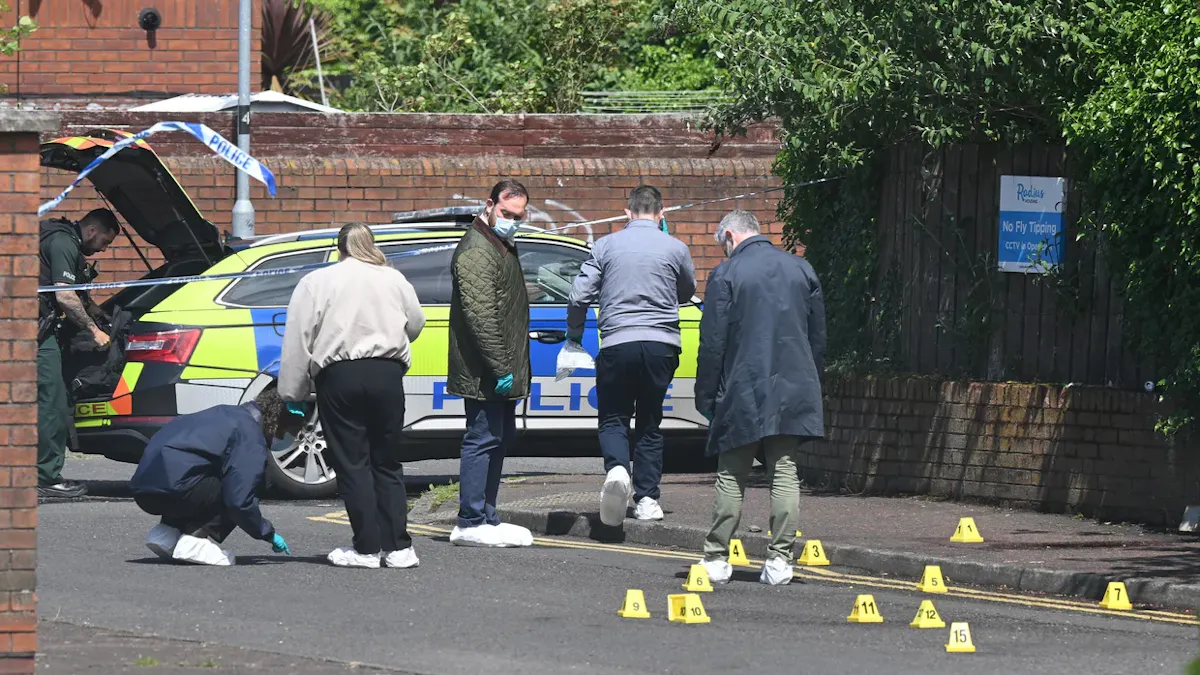
Belfast riots erupt after knife attack: buildings, cars torched
Massive unrest broke out in Belfast following a brutal knife attack. Anti-immigration protesters set buildings and vehicles ablaze, and some residents reported homes being targeted. The violence escalated after graphic videos of the stabbing circulated online, amplified by far-right activists. Police have arrested a suspect and are investigating.
Key Highlights
- Violence erupted in Belfast after a brutal knife attack.
- Protesters set fire to buildings, cars, and a bus.
- Some reports indicate homes were targeted and residents displaced.
- The unrest was fueled by anti-immigration sentiment and online mobilization.
- A suspect has been arrested and charged with attempted murder.
- Political leaders have condemned the violence and called for calm.
Massive unrest gripped Belfast on June 9, 2026, following a brutal knife attack the previous evening. Protests, fueled by anti-immigration sentiment and amplified by far-right activists and social media, escalated into widespread rioting. Demonstrators set fire to numerous vehicles, including a bus, and torched buildings across the city. Reports also emerged of homes being targeted, with residents forced to flee due to the escalating violence. Some eyewitness accounts described masked men breaking down doors and setting fires in residential areas, leading to panic and displacement. The stabbing incident, which occurred late on Monday night in north Belfast, involved a man in his 40s who sustained serious injuries to his face, neck, and back. A graphic video of the attack circulated widely online, drawing condemnation from UK Prime Minister Keir Starmer, who described it as "sickening." Police swiftly arrested a 30-year-old Sudanese man on suspicion of attempted murder. He was subsequently charged with attempted murder, possession of a bladed article, and making threats to kill, and was due to appear in court. While the attack was not initially treated as terrorism, investigations into the motive were ongoing. The unrest in Belfast mirrored a pattern of protests and riots that have occurred in the UK in response to immigration issues and high-profile criminal cases, particularly those involving migrants. Political leaders from various parties, including Northern Ireland's First Minister Michelle O'Neill and Secretary of State Hilary Benn, condemned the violence, labeling it as 'thuggery' and 'disgusting cowardice.' They urged for calm and for the police to be allowed to conduct their investigation without interference, emphasizing that such actions only harm communities and endanger innocent lives. The events in Belfast highlighted the highly charged political issue of immigration in the UK, with populist parties leveraging public concerns. The BBC reported that a crowd of around 100 masked protesters, including teenagers, had kicked in doors and broken windows in east Belfast. Some residents reported that cars set alight on the road had caught fire to their houses, while masked men bashed down doors. Fire services were active throughout the night, responding to numerous incidents. The violence also led to calls for increased security and specific protocols to prevent future unrest, with some schools reporting that children and families had fled Northern Ireland following previous anti-migrant riots. The Hindustan Times article accurately captured the core events, including the knife attack, the subsequent protests, the arson, and the targeting of properties. It also correctly identified the escalating violence and the anti-immigration undertones. The term 'migrants 'evicted'' accurately reflected reports of residents being forced from their homes. The overall reporting aligns with credible news outlets covering the incident. The news is specific to the United Kingdom.
Frequently Asked Questions
What triggered the unrest in Belfast?
The unrest in Belfast was triggered by a brutal knife attack that occurred on the night of June 8, 2026. Graphic videos of the attack circulated widely online, leading to anti-immigration protests that escalated into riots.
What kind of damage occurred during the riots?
During the riots, protesters set fire to numerous vehicles, including buses and cars. Buildings were also torched, and there were reports of homes being targeted, with residents forced to flee.
Who was arrested in connection with the stabbing?
A 30-year-old Sudanese man was arrested in connection with the knife attack. He was subsequently charged with attempted murder and other offenses.
What was the alleged motive behind the protests?
The protests were largely fueled by anti-immigration sentiment. Far-right activists amplified calls for demonstrations following the stabbing, linking it to broader concerns about immigration policies.
What was the response from political leaders?
Political leaders, including UK Prime Minister Keir Starmer and Northern Ireland's First Minister Michelle O'Neill, condemned the violence, urged for calm, and called for the police investigation to proceed unhindered.