Zambia: 476,000-Year-Old Wooden Structure Rewrites Human History
Archaeologists discovered a 476,000-year-old wooden structure at Kalambo Falls, Zambia, predating Homo sapiens. This find challenges existing theories about early human intelligence and settled lifestyles, suggesting advanced woodworking capabilities much earlier than previously believed.
Key Highlights
- World's oldest known wooden structure discovered at Kalambo Falls, Zambia.
- Dated at least 476,000 years old, predating Homo sapiens by over 100,000 years.
- Challenges theories of early hominin nomadic lifestyles and technological capabilities.
- Evidence of deliberate shaping and joining of logs for structural purposes.
- Discovery sheds new light on the 'Stone Age' narrative, hinting at a 'Wood Age'.
- Exceptional preservation due to waterlogged conditions at the site.
A groundbreaking archaeological discovery at Kalambo Falls, on the border of Zambia and Tanzania, has unveiled the world's oldest known wooden structure, dating back at least 476,000 years. This monumental find, initially reported in the journal Nature, significantly predates the emergence of Homo sapiens by over 100,000 years, fundamentally reshaping our understanding of early human ingenuity and capabilities.
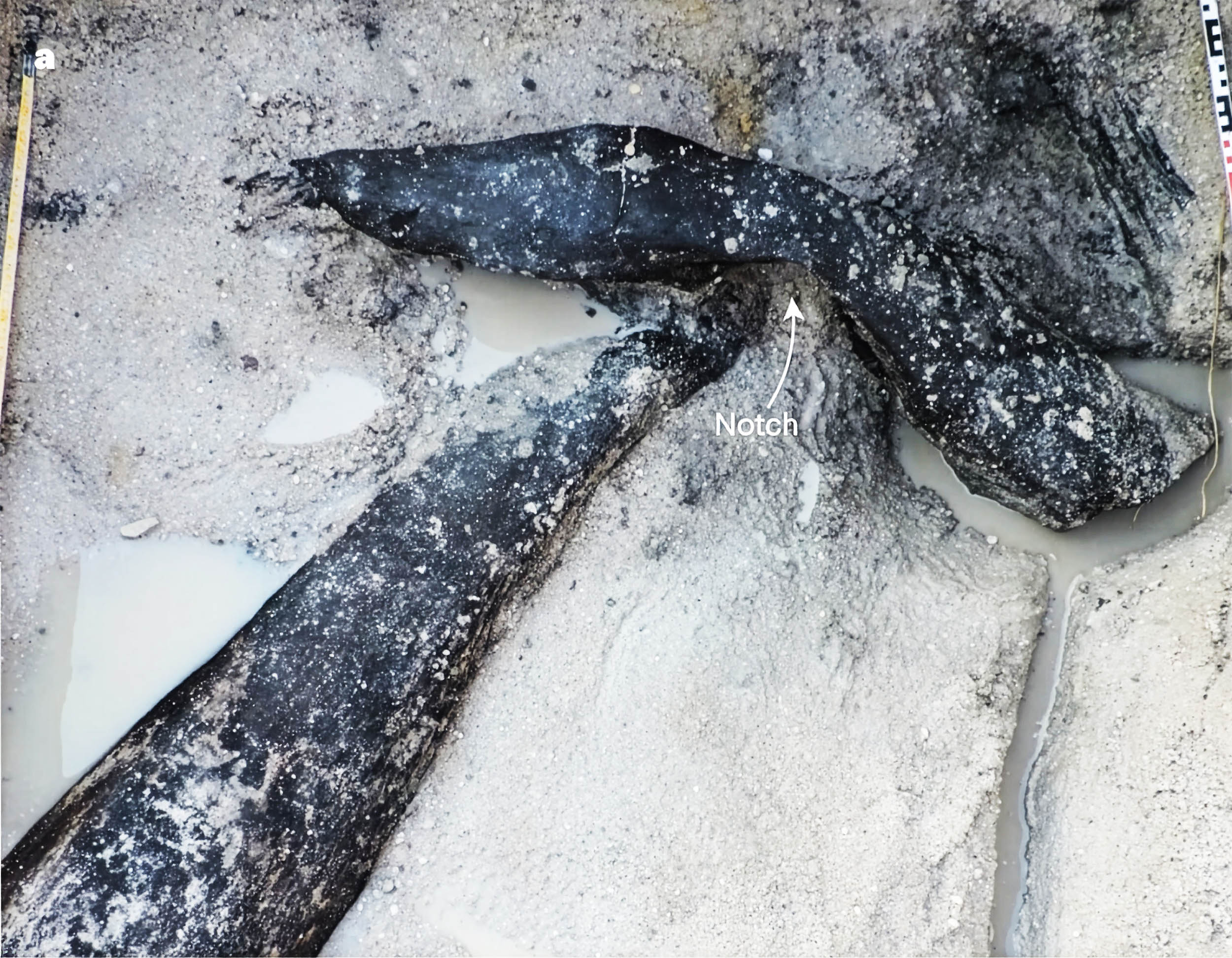
The structure consists of two interlocking logs, meticulously shaped and joined, suggesting intentional construction rather than natural formation. Expert analysis of stone tool cut-marks on the wood provides clear evidence that these early hominins deliberately crafted and fitted the logs together, likely forming the foundation of a platform or a part of a dwelling. This level of complex woodworking demonstrates a sophistication in planning and abstract thought previously not attributed to hominins of such an ancient period.
The site of Kalambo Falls itself is a region of immense archaeological significance, with evidence of continuous human occupation spanning hundreds of thousands of years. Previous excavations in the 1950s and 1960s by archaeologist John Desmond Clark had uncovered wooden artifacts, but the dating techniques available at the time could not ascertain their true age and significance. Modern luminescence dating, employed by Professor Larry Barham from the University of Liverpool and Professor Geoff Duller from Aberystwyth University, finally provided the astonishing age of these wooden relics. The remarkable preservation of the wood, which typically decays over long periods, is attributed to the permanently high water levels and fine sediment at the Kalambo Falls site, creating oxygen-deprived conditions ideal for organic material conservation.
This discovery directly challenges the long-held view that Stone Age hominins were primarily nomadic hunter-gatherers with limited technological prowess beyond stone tools. The presence of a settled, constructed environment implies a more sedentary lifestyle, where early humans exploited the abundant resources of the Kalambo Falls area, including a perennial water source and surrounding forests providing food. The ability to construct durable structures suggests a capacity to transform their environment to meet specific needs, whether for creating elevated platforms to keep food dry, building walkways, or even establishing rudimentary dwellings.
Professor Barham, who led the 'Deep Roots of Humanity' research project, emphasized the profound implications of this find, stating that it changes how we perceive our early ancestors. He suggests moving beyond the label 'Stone Age' to acknowledge the significant role wood played in their lives and technological development. The discovery highlights a potential bias in the archaeological record, where the durable nature of stone tools has historically overshadowed the likely widespread use of perishable materials like wood. This suggests that much of early human technological innovation, particularly involving wood, may have simply been lost to time due to decay.
While no hominin remains have been definitively linked to this specific structure at Kalambo Falls, the age of the structure places its builders as an archaic hominin species, possibly *Homo heidelbergensis*, known to have existed in Africa around that period. This challenges the notion that only anatomically modern humans were capable of such complex architectural endeavors. The discovery not only adds a new dimension to our understanding of human evolution but also underscores the importance of continued archaeological investigation in environments conducive to the preservation of organic materials. The Kalambo Falls site is now considered even more critical, with efforts underway to propose it for UNESCO World Heritage status.
This news is of global significance, as it redefines a crucial chapter in human prehistory and technological development, offering a rare glimpse into the unexpected capabilities and creative intelligence of our ancient ancestors.
Frequently Asked Questions
What is the significance of the 476,000-year-old wooden structure found at Kalambo Falls?
This wooden structure is the oldest known of its kind, challenging the long-held belief that early hominins were solely reliant on stone tools and led a purely nomadic existence. It demonstrates complex planning, advanced woodworking skills, and potentially a more settled lifestyle much earlier than previously thought, predating Homo sapiens by over 100,000 years.
Where was this ancient wooden structure discovered?
The structure was discovered at the Kalambo Falls archaeological site, located on the border between Zambia and Tanzania, at the southeast end of Lake Tanganyika.
How was the age of the wooden structure determined?
The age of the wooden structure, approximately 476,000 years old, was determined using advanced luminescence dating techniques, specifically optically stimulated luminescence (OSL), which can date much further back in time than radiocarbon dating.
Which hominin species likely built this structure?
While no specific hominin remains were found directly associated with the structure, its age (predating Homo sapiens) suggests it was built by an archaic hominin species, possibly Homo heidelbergensis, a species known to have existed in Africa around that period.
Why is the preservation of wood from such an ancient period so rare and important?
Wood typically decays quickly, leaving little trace in the archaeological record. The exceptional preservation of these wooden artifacts at Kalambo Falls is due to the unique waterlogged conditions and fine sediment that created an oxygen-deprived environment, preventing decomposition. This rarity makes the discovery crucial for understanding the full scope of early human technological capabilities, which may have been underestimated due to the perishable nature of wood.