India's First Digital Census in 2027: Key Details and Preparations
India is set to conduct its first fully digital Census in 2027, deploying over 3.2 million enumerators with handheld devices. This transformative exercise, delayed from 2021, will feature real-time data collection, self-enumeration, and caste enumeration for the first time since 1931.
Key Highlights
- India's Census 2027 to be fully digital, replacing paper methods.
- Over 3.2 million enumerators will use handheld devices for data collection.
- Census Management and Monitoring System (CMMS) to enable real-time tracking.
- Caste enumeration to be included for all communities after 1931.
- Citizens will have the option for self-enumeration through an online portal.
- Conducted in two phases: House Listing (April-Sept 2026) and Population Enumeration (Feb 2027).
India is embarking on a monumental transformation with its upcoming decennial Census 2027, poised to be the nation's first fully digital population count. This ambitious undertaking marks a decisive shift from traditional paper-based enumeration methods to a technologically advanced system, promising enhanced accuracy, efficiency, and timeliness in data collection and dissemination.
At the core of this digital revolution is the Census Management and Monitoring System (CMMS), a dedicated web-based platform engineered to orchestrate one of the world's largest administrative exercises. This centralized system will replace clipboards and carbon copies with handheld devices, geotagged mapping tools, and a centralized web-based command platform. The CMMS is designed to facilitate end-to-end management of census operations, including user creation, training modules, houselisting block (HLB) creation, and the allocation of enumerators and supervisors.
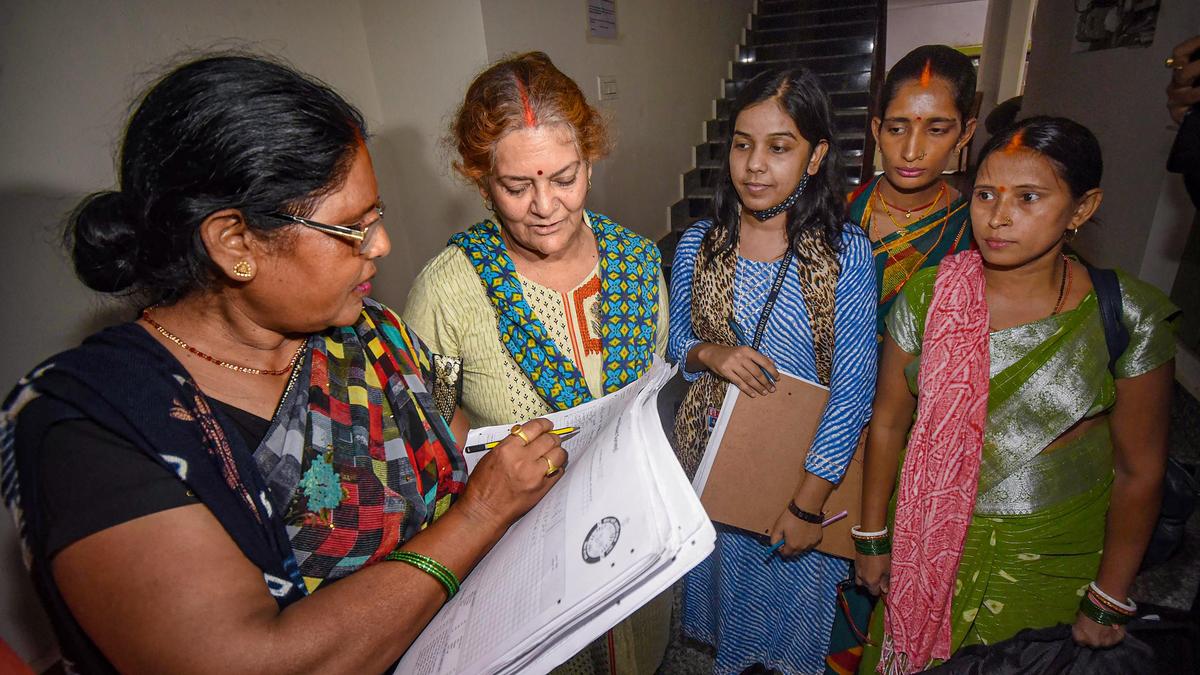
Approximately 3.2 million field functionaries, comprising enumerators and supervisors (also referred to as 32 lakh), will be deployed across the country. These enumerators will capture granular demographic, social, and economic data from hundreds of millions of households using specialized mobile applications on handheld devices, including their personal smartphones. These mobile apps are being developed to be compatible with both Android and iOS operating systems and will support multiple regional languages to ensure inclusivity. The data collected through these digital means will be transmitted, aggregated, and validated through the CMMS architecture, which is expected to significantly reduce the time required for compilation and error correction.
The Census 2027 will be conducted in two distinct phases. The first phase, the House Listing and Housing Census, is scheduled to run from April to September 2026. During this phase, enumerators will collect information on 33 key parameters related to housing conditions, household amenities, and assets. The second phase, Population Enumeration, will follow in February 2027, with a reference date of March 1, 2027, for most parts of the country. For snow-bound and difficult-to-access regions such as Ladakh, Jammu and Kashmir, Himachal Pradesh, and Uttarakhand, the population enumeration will be conducted in September 2026, with a reference date of October 1, 2026, accounting for geographical and climatic challenges.
Several innovative features are being introduced in this digital census. For the first time in India's census history, citizens will have the option of self-enumeration through a secure online portal. This allows participants to fill in their own details online, which can then be verified by enumerators during their field visits. Another crucial addition is the real-time monitoring capability provided by the CMMS, enabling supervisors and district census officers to track enumeration progress, identify gaps, and ensure timely completion.
Furthermore, the 2027 Census will introduce geo-tagging of all buildings, both residential and non-residential. Enumerators will use Digital Layout Mapping (DLM) to assign unique latitude-longitude coordinates, linking buildings to Houselisting Blocks (HLBs) on a Geographic Information System (GIS) map. This spatial data integration is expected to enhance data integrity, help delineate boundaries with greater precision, and reduce overlaps and omissions, creating a valuable digital spatial archive for future planning and development.
Significantly, the Census 2027 will include caste enumeration for all communities across India for the first time since the 1931 Census. This decision, approved by the Union Cabinet, marks a notable change in data collection, utilizing a code directory methodology within the mobile application to ensure consistency in caste data. The Union Cabinet has also approved a substantial budget of ₹11,718 crore for conducting the Census 2027, reflecting the scale and importance of this national exercise.
Originally slated for 2021, the decennial exercise was postponed due to the unprecedented challenges posed by the COVID-19 pandemic. The comprehensive nature of this digital census, aiming to collect demographic, social, and economic data, is expected to address a data gap that has persisted for over a decade, with government schemes and planning initiatives often relying on 2011 population figures. By leveraging digital technology, the Census 2027 aims to provide clean, machine-readable, and actionable data much faster than previous censuses, enabling evidence-based governance and improving the targeting and effectiveness of welfare schemes in critical sectors like health, education, urban planning, and employment.
The government has also emphasized the importance of data security and privacy, assuring that robust encryption and security protocols will be in place, and that census data will be used strictly for statistical purposes as mandated by law. This digital transformation represents a critical step towards the modernization of India's census process, promising a more accurate, efficient, and timely reflection of the nation's population for policymaking and development.
Frequently Asked Questions
What are the key features of India's Census 2027?
India's Census 2027 will be the first fully digital census, utilizing handheld devices, mobile applications, and a centralized Census Management and Monitoring System (CMMS) for real-time data collection and monitoring. It will also introduce a self-enumeration option for citizens and include caste enumeration for all communities.
When will the Census 2027 be conducted?
The Census 2027 will be conducted in two phases: the House Listing and Housing Census from April to September 2026, followed by the Population Enumeration in February 2027 for most regions. Snow-bound areas will have population enumeration in September 2026.
How many enumerators will be involved in Census 2027 and what devices will they use?
Approximately 3.2 million (32 lakh) field functionaries, including enumerators and supervisors, will be deployed. They will use handheld devices, including their personal smartphones, equipped with dedicated mobile applications for data collection.
Will caste data be collected in Census 2027?
Yes, for the first time since 1931, the Census 2027 will include caste enumeration for all communities across India. This decision was approved by the Union Cabinet.
What is the Census Management and Monitoring System (CMMS)?
The CMMS is a dedicated web-based platform designed to manage and monitor the entire Census 2027 operations in real-time. It enables data transmission, aggregation, validation, and facilitates the management of various census activities, replacing manual record-keeping.