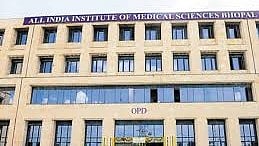
Bhopal AIIMS: Nurse held for allegedly injecting child patient with formalin
A three-year-old cancer patient at AIIMS Bhopal died under suspicious circumstances after allegedly being injected with formalin by a nurse. An FIR has been registered, and investigations are underway to determine the exact cause of death and accountability.
Key Highlights
- Child cancer patient died at AIIMS Bhopal.
- Nurse allegedly administered formalin injection.
- FIR registered against hospital staff.
- Formalin is a hazardous chemical.
- Investigation into the death is ongoing.
A tragic incident has come to light at the All India Institute of Medical Sciences (AIIMS) in Bhopal, where a three-year-old child undergoing treatment for cancer has died under highly suspicious circumstances. The primary allegation centers around a nurse who is accused of injecting the young patient with formalin, a chemical known for its hazardous properties and typically used for preserving biological samples or in mortuary work.
The news, first reported by The Indian Express and corroborated by other national media outlets such as India Today and The Hitavada, has sent shockwaves through the medical community and the public. The child, who was battling cancer, reportedly succumbed to complications following the alleged injection. While the exact sequence of events leading to the child's death is still under investigation, the administration of formalin to a living patient, especially a child, is a grave concern.
Following the incident, an First Information Report (FIR) has been officially registered against the hospital staff. This legal action signifies the seriousness with which the authorities are treating the matter. The FIR is likely to be filed under relevant sections of the Indian Penal Code pertaining to negligence, causing death by negligence, and potentially other charges depending on the findings of the investigation. The police and internal hospital inquiry committees are expected to meticulously examine all aspects, including medical records, witness testimonies, and the actions of the healthcare providers involved.
Formalin, also known as formaldehyde solution, is a potent chemical that can be highly toxic if ingested, inhaled, or injected. Its use in medical settings is typically restricted to specific applications like tissue fixation and sterilization. Administering it to a patient, particularly a vulnerable child, raises immediate questions about medical protocol adherence, professional negligence, and the safety measures in place at the institution.
AIIMS Bhopal, being a premier government medical institution, is expected to uphold the highest standards of patient care and safety. The alleged lapse, if proven, points to a serious dereliction of duty and a potential breakdown in the hospital's internal oversight mechanisms. The institution's administration has reportedly assured full cooperation with the investigating agencies and has initiated its own internal probe.
The death of a child under such circumstances highlights the critical importance of stringent checks and balances in healthcare facilities. It also underscores the need for continuous training and strict adherence to standard operating procedures for all medical personnel. Families entrusting their loved ones to hospitals expect a safe and healing environment, and incidents like this can severely erode that trust.
As the investigation progresses, further details are expected to emerge regarding how the formalin was accessed, the rationale behind its alleged administration, and whether any other hospital staff members were involved or negligent in their duties. The medical fraternity in India and patient advocacy groups are likely to closely monitor the developments, seeking justice for the deceased child and demanding accountability from those responsible. This incident serves as a grim reminder of the potential consequences when medical ethics and safety protocols are compromised.
The legal proceedings will aim to establish the facts, determine culpability, and ensure that such a catastrophic event does not recur. The outcome of the investigation will have significant implications for AIIMS Bhopal and may lead to stricter regulations and enhanced safety protocols across healthcare institutions nationwide. The focus remains on uncovering the truth and ensuring that justice is served for the young victim and their grieving family. The precise cause of death will be a key element, with post-mortem examination reports playing a crucial role in the investigation. The role of supervisors and the availability of such hazardous chemicals within patient care areas will also be scrutinized.
Frequently Asked Questions
What is formalin and why is it considered hazardous?
Formalin is an aqueous solution of formaldehyde, a strong-smelling gas. It is commonly used as a preservative for biological specimens and in mortuaries. It is hazardous because it is toxic, a known carcinogen, and can cause severe irritation to the skin, eyes, and respiratory system. Direct injection into a living being can have extremely dangerous, even fatal, consequences.
What action has been taken by the authorities?
An FIR (First Information Report) has been registered against the hospital staff, including the nurse accused of administering the injection. Police investigations are underway to ascertain the exact circumstances of the child's death and to determine accountability.
What is AIIMS Bhopal?
AIIMS Bhopal (All India Institute of Medical Sciences Bhopal) is a premier government medical college and hospital located in Bhopal, Madhya Pradesh, India. It is one of the Institutes of National Importance established by the Ministry of Health and Family Welfare.
What are the potential consequences for the accused nurse and the hospital?
If found guilty, the accused nurse could face severe legal penalties, including imprisonment, depending on the charges proven in court. The hospital, AIIMS Bhopal, could face scrutiny, potential regulatory action, and reputational damage. Internal inquiries may also lead to disciplinary actions against staff and revisions in safety protocols.