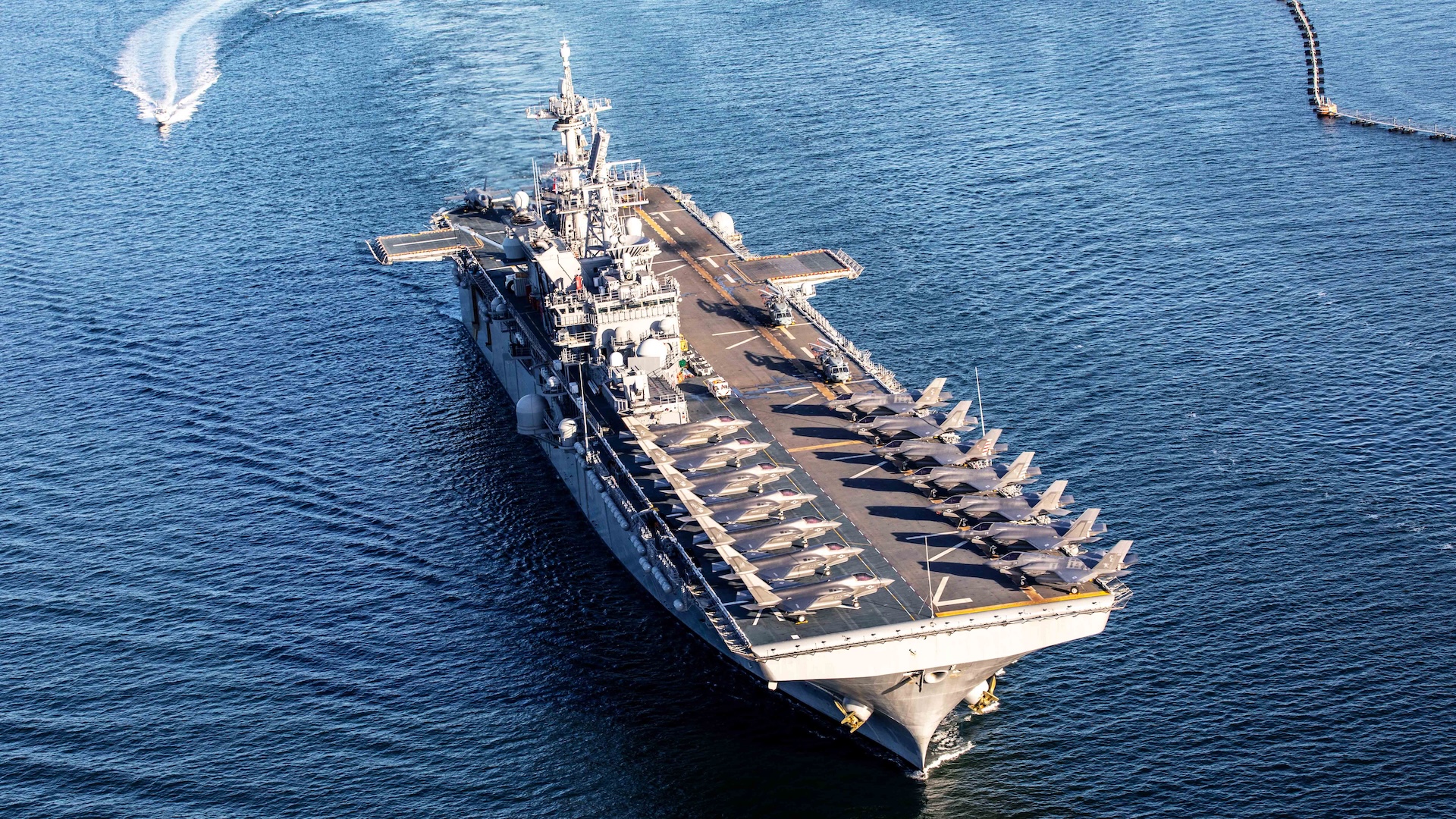
US Deploys Low-Cost LUCAS Drones from Naval Ship Against Iran
The United States has deployed its new Low-cost Uncrewed Combat Attack System (LUCAS) drones from the USS Santa Barbara in the Arabian Gulf. These drones, reverse-engineered from Iran's Shahed-136, offer an affordable counter to the adversary's cheap, one-way attack drones and have seen their first combat use in strikes against Iranian military infrastructure.
Key Highlights
- US launches LUCAS drones from USS Santa Barbara in Arabian Gulf.
- LUCAS is a low-cost, one-way attack drone, reverse-engineered from Iran's Shahed-136.
- First combat use of LUCAS occurred in 'Operation Epic Fury' against Iran.
- Aims to address the cost-exchange problem posed by cheap Iranian drones.
- LUCAS can be launched from various platforms including ships, ground vehicles, and catapults.
- The drone system was developed by SpektreWorks in cooperation with the US military.
The United States Navy has recently unveiled and deployed its new Low-cost Uncrewed Combat Attack System (LUCAS) drone, marking a significant shift in its strategy to counter the proliferation of inexpensive, one-way attack drones, particularly those employed by Iran. The Times of India reported on the first-ever launch of a LUCAS drone from a naval ship, specifically the USS Santa Barbara, in the Arabian Gulf. This deployment comes amidst ongoing US-led military campaigns against Iran, with American and Israeli forces conducting coordinated strikes against Iranian military infrastructure.
The LUCAS drone is a reverse-engineered derivative of the Iranian-designed HESA Shahed-136, a 'kamikaze' or 'suicide' drone that has seen extensive use by Iran and its proxies, as well as by Russia in Ukraine. The Pentagon revealed details about the LUCAS system, emphasizing its low cost, with units ranging from $10,000 to $55,000, in stark contrast to the multi-million dollar Patriot missiles typically used to intercept such threats. This cost disparity has been a critical challenge for US and allied forces, who face an economically unsustainable 'cost-exchange problem' when using expensive interceptors against cheap drones.
The first confirmed combat use of the LUCAS drone occurred in February 2026, as part of 'Operation Epic Fury,' a US-led air campaign against Iran. During these strikes, LUCAS drones were used alongside traditional airstrikes to target key Iranian military assets, including command-and-control facilities, air defense systems, missile launch sites, and drone bases. US Central Command (CENTCOM) described LUCAS as a low-cost, one-way attack drone designed to deliver 'American-made retribution' and overwhelm adversaries with a large number of inexpensive but lethal unmanned aircraft.
Manufactured by Arizona-based SpektreWorks, LUCAS drones are slightly smaller than the Shahed-136, measuring about 10 feet long with an 8-foot wingspan, and can carry approximately 40 pounds (18 kilograms) of explosives. They are capable of autonomous navigation with a range of about 500 miles (800 km) and can be launched using various mechanisms, including pneumatic catapults, rocket boosters, mobile ground systems, and indeed, from naval ships like the USS Santa Barbara. Some reports suggest LUCAS may utilize SpaceX Starshield, a military version of Starlink, for enhanced communications.
The deployment of LUCAS signifies a strategic shift by the US military towards scalable and affordable drone warfare, directly addressing the lessons learned from conflicts where adversaries have effectively used swarms of low-cost drones. While LUCAS is an offensive 'kamikaze' drone, the US is also pursuing other low-cost counter-drone systems, such as the Merops interceptor drone (developed under Project Eagle), which has shown high effectiveness against Shahed-type drones in Ukraine. These dual approaches highlight the urgency with which the US and its allies are working to establish a layered defense against the evolving drone threat.
The context of this development is a broader escalation of tensions in the Middle East, with Iranian-made drones having previously harassed and attacked US Navy ships. The introduction of LUCAS is expected to provide a more sustainable and cost-effective method for the US military to engage and neutralize drone threats, thereby preserving more expensive munitions for higher-value targets. This technological response is a critical development in modern warfare, aiming to regain tactical advantage in an increasingly drone-centric battlefield.
Frequently Asked Questions
What is the LUCAS drone?
LUCAS stands for Low-cost Uncrewed Combat Attack System. It is a one-way attack drone developed by the United States military, notably by SpektreWorks, and is specifically designed to be a low-cost countermeasure to drones like Iran's Shahed-136.
How is the LUCAS drone related to Iran's Shahed drones?
The LUCAS drone is a reverse-engineered version of the Iranian-designed Shahed-136. The US military developed it to provide a cost-effective solution to the threat posed by the Shahed's low cost and widespread use.
When and where was the LUCAS drone first used in combat?
The LUCAS drone was first used in combat in February 2026, during 'Operation Epic Fury,' a US-led air campaign targeting Iranian military infrastructure. It was launched from naval ships, including the USS Santa Barbara, in the Arabian Gulf.
Why is the development of LUCAS significant for modern warfare?
LUCAS represents a strategic shift towards more affordable and scalable drone warfare. It addresses the 'cost-exchange problem' where expensive traditional air defense systems are used against inexpensive enemy drones, making counter-drone operations more economically sustainable for the US and its allies.
What is the USS Santa Barbara and why is its role important in this news?
The USS Santa Barbara (LCS-32) is a Littoral Combat Ship of the US Navy. Its role is important because it was the platform from which the LUCAS drone was first launched from a naval ship in the Arabian Gulf, demonstrating the system's deployability from various maritime assets.