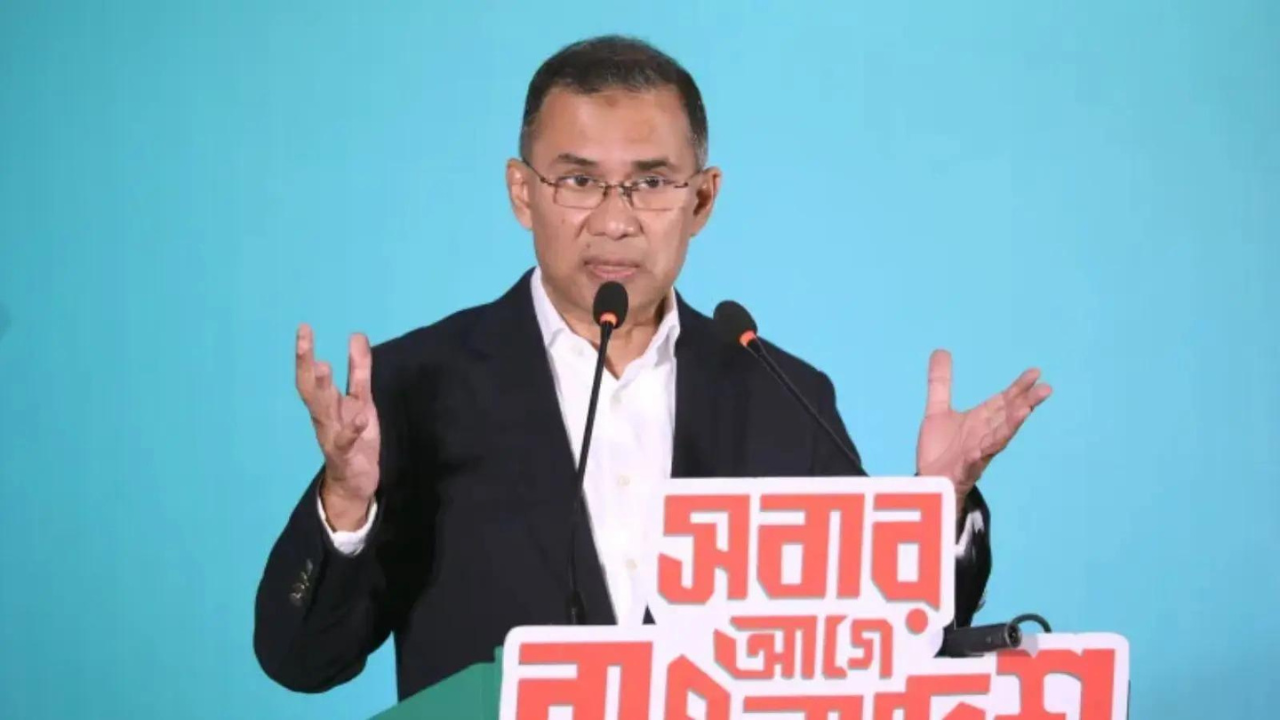
Bangladesh PM's Aide Held at Delhi Airport, Sparks Diplomatic Row
Zahed Ur Rahman, a senior adviser to Bangladesh Prime Minister Tarique Rahman, was held for over two hours at Delhi's IGI Airport on June 14, 2026, due to a security watchlist flag. He subsequently returned to Dhaka without completing his visit, prompting Bangladesh to summon India's Deputy High Commissioner and express 'deep disappointment', highlighting diplomatic tensions.
Key Highlights
- Bangladesh PM's aide Zahed Ur Rahman held at Delhi IGI Airport.
- Detention lasted over two hours, reportedly due to security watchlist.
- Rahman was cleared but chose to return to Dhaka, citing 'humiliation'.
- Bangladesh summoned Indian diplomat to express 'deep disappointment'.
- Incident comes amid sensitive India-Bangladesh bilateral relations.
- Aide was traveling on a regular passport for an IORA meeting.
A significant diplomatic incident unfolded on Sunday, June 14, 2026, when Zahed Ur Rahman, the Adviser on Policy and Strategy Affairs to Bangladesh Prime Minister Tarique Rahman, was detained for approximately two and a half hours at New Delhi's Indira Gandhi International (IGI) Airport by Indian immigration authorities. The incident, which led to Rahman's decision to return to Dhaka without continuing his official visit, has sparked 'deep disappointment' in Bangladesh and resulted in a formal diplomatic protest to India.
Zahed Ur Rahman had arrived in New Delhi to lead Bangladesh's delegation to the 28th Meeting of the Committee of Senior Officials of the Indian Ocean Rim Association (IORA), scheduled for June 15-16. According to various media reports, his name was flagged during a routine security check, indicating he was on a 'security-related watchlist'. Indian sources privy to the matter reportedly suggested that the watchlist entry stemmed from Rahman's history of making critical and 'combative comments' about India, particularly on his YouTube channel, 'Zahed's Take', which is blocked in India.
Despite the Bangladesh High Commission in New Delhi having formally informed India's Ministry of External Affairs (MEA) through a diplomatic note about Rahman's visit, and Bangladesh High Commissioner M Riaz Hamidullah reportedly having spoken to Indian officials beforehand, the detention occurred. While other members of his delegation cleared immigration without issues, Rahman remained at the checkpoint. Sources in Dhaka stated that Rahman, who holds the rank of a State Minister in the Bangladesh Nationalist Party (BNP) government, felt 'humiliated' by the treatment he received, including being made to sit with other passengers despite his official status.
After approximately two and a half hours, Indian authorities eventually granted him clearance to enter the country, reportedly offering a 'one-time exemption' after the discrepancy was identified. However, by this point, Rahman had decided not to proceed with his visit. He chose to return to Dhaka, flying via Colombo. Bangladeshi Foreign Minister Khalilur Rahman publicly termed the incident 'unexpected' and 'unfortunate'.
In response to the incident, Bangladesh's foreign ministry summoned India's Deputy High Commissioner Pawan Badhe on Monday, June 15, 2026, to formally convey its 'deep disappointment' over the treatment of its senior official. This diplomatic démarche underscores the sensitivity surrounding bilateral ties, particularly given the recent change in government in Bangladesh, with the BNP-led administration coming to power earlier this year. The incident marks the first such occurrence involving a high-ranking official from the new Bangladeshi government, further adding a layer of complexity to the evolving relationship between New Delhi and Dhaka.
Details also emerged regarding Rahman's travel documents: he was reportedly travelling on a regular Bangladeshi passport with a SAARC visa sticker, rather than a diplomatic passport. Some Indian officials suggested that if the Indian side had been formally notified of his travel with a regular passport and the SAARC visa, steps could have been taken to address the watchlist issue beforehand. However, Bangladeshi reports emphasized that official notification of his visit as head of delegation had indeed been provided.
The detention and subsequent diplomatic fallout come at a period when India-Bangladesh relations are already navigating a complex phase. Recent issues include ongoing 'push-in' incidents along the border and broader geopolitical realignments in South Asia, including Dhaka's expanding engagement with other regional powers. The incident involving Zahed Ur Rahman is a stark reminder of the delicate balance required in diplomatic engagements and highlights the need for clearer communication and adherence to protocol, especially when high-ranking officials are involved.
Frequently Asked Questions
Who is Zahed Ur Rahman and what is his role?
Zahed Ur Rahman is the Adviser on Policy and Strategy Affairs to Bangladesh Prime Minister Tarique Rahman. He holds the rank of a State Minister in the current Bangladesh Nationalist Party (BNP)-led government.
Why was Zahed Ur Rahman held at Delhi's IGI Airport?
He was held by Indian immigration authorities because his name appeared on a 'security-related watchlist' during a routine security check. Indian sources indicate this was due to his history of making critical or 'anti-India statements' on various platforms, including his YouTube channel.
What was the diplomatic fallout of this incident?
Bangladesh expressed 'deep disappointment' over the incident and formally summoned India's Deputy High Commissioner Pawan Badhe to register a protest. Bangladesh's Foreign Minister termed the episode 'unexpected' and 'unfortunate'.
Did Zahed Ur Rahman eventually enter India?
Although he was eventually cleared to enter India after approximately two and a half hours, Zahed Ur Rahman decided to return to Dhaka via Colombo, reportedly feeling 'humiliated' and 'disappointed' by the treatment he received.
What is the broader context of India-Bangladesh relations surrounding this event?
The incident occurs at a sensitive juncture in India-Bangladesh relations, particularly as a new Bangladesh Nationalist Party (BNP)-led government recently came to power. This marks a new phase in bilateral ties, amidst other ongoing discussions and potential tensions.