US-Iran War Escalates: Bunker Busters Hit Isfahan, Tanker Attacked
An ongoing US-Iran war, with Israel's involvement, intensified with a reported bunker-buster strike on Iran's Isfahan. Concurrently, a Kuwaiti oil tanker was attacked near Dubai, escalating regional tensions and driving global oil prices to record highs. Former US President Trump has also issued fresh threats against Iran's energy infrastructure.
Key Highlights
- US-Israel-Iran war confirmed, crossing the one-month mark.
- US reportedly used bunker buster bombs on Isfahan ammunition depot.
- Kuwaiti oil tanker attacked near Dubai port; no spills or injuries reported.
- Global oil prices, particularly Brent crude, surge to record highs.
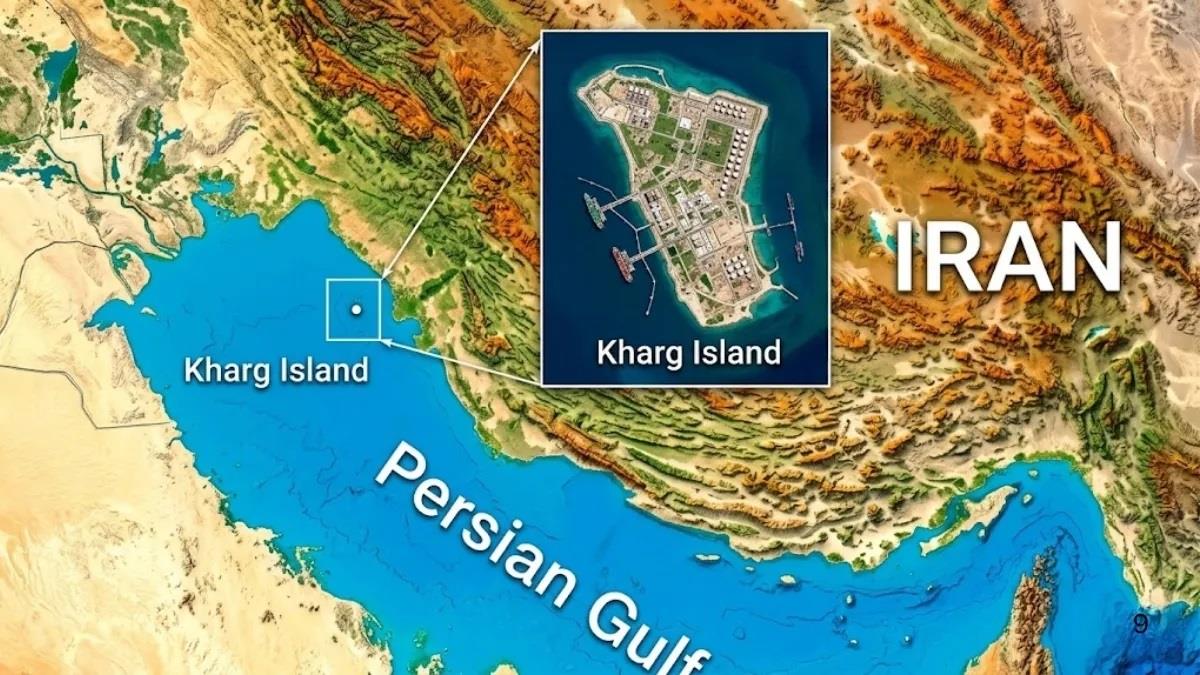
- Former President Trump threatens Iran's energy infrastructure, including Kharg Island.
- Regional disruptions continue, impacting shipping and security in the Gulf.
The Middle East is currently gripped by an escalating conflict, widely referred to as the US-Iran War, which has reportedly involved Israel and crossed the one-month mark since its commencement around February 28, 2026. This ongoing war has led to significant regional disruptions, impacting global energy markets and maritime security.
A major development reported on March 31, 2026, is the alleged use of 2,000-pound bunker buster bombs on a large ammunition depot in Isfahan, Iran. Hindustan Times and India Today, citing a Wall Street Journal report, confirmed that US officials indicated a large-scale airstrike targeted fortified infrastructure in Isfahan with extensive use of bunker-buster and armor-piercing munitions. This follows earlier reports from June 2025 regarding similar strikes by US B-2 bombers using GBU-57 bunker busters on Iran's nuclear facilities, including those in Isfahan, Fordow, and Natanz, during the Trump administration.
Simultaneously, a fully loaded Kuwaiti oil tanker, the Al-Salmi, was attacked near the Dubai port on March 30-31, 2026. Multiple news outlets, including Al Jazeera, CNN, The Times of India, The Indian Express, and The Economic Times, reported that Iran struck the tanker, causing a fire and damaging its hull. While firefighting teams successfully contained the blaze and all 24 crew members were reported safe with no injuries, Kuwait Petroleum Corporation warned of a possible oil spill, underscoring the severe risks to maritime security and the environment in the crucial Gulf region.
The escalating conflict has had a profound impact on global energy markets. Brent crude futures, the international benchmark, touched $115 a barrel and are on track for a staggering 59% increase in March, marking its largest monthly gain ever. This surge in oil prices is directly attributed to the ongoing Middle East tensions and threats to shipping routes, particularly the Strait of Hormuz, a vital chokepoint for a significant portion of the world's oil supply.
Former US President Donald Trump has been a prominent figure in the ongoing discourse surrounding the conflict. On March 30, 2026, Trump renewed his threats against Iran, stating that if a deal to end the war is not reached soon and the Strait of Hormuz is not immediately reopened, the US would consider 'blowing up and completely obliterating all of their Electric Generating Plants, Oil Wells and Kharg Island (and possibly all desalinization plants!).' These threats, conveyed through social media and interviews, have further heightened fears of escalation, despite his administration simultaneously claiming to be engaged in direct and indirect negotiations with Iran.
Amidst these developments, other regional players are also actively involved. Israel has reportedly pushed into southern Lebanon to counter Iran-backed Hezbollah fighters, and reports suggest that at least three United Nations peacekeepers have been killed in the region. Iran's Foreign Minister also issued a warning to Saudi Arabia to eject US forces from its territory, claiming Iranian attacks target only aggressors.
The Mint article's claim that Trump shared a video showing massive explosions aligns with previous instances where his administration released test footage of bunker-buster bombs to substantiate claims of successful strikes on Iranian facilities in June 2025. While a specific new video share by Trump for the latest Isfahan incident on March 31, 2026, isn't universally detailed across all contemporaneous reports, the general action of Trump sharing or referencing such videos in the context of Iranian strikes is historically consistent.
The overall situation indicates a highly volatile and complex geopolitical landscape, with significant implications for international relations, global energy security, and regional stability. The news is highly relevant to an Indian audience due to the global impact on oil prices and India's strategic interests in the Middle East.
Frequently Asked Questions
What is the current status of the US-Iran conflict?
As of March 31, 2026, the US-Iran conflict, with Israel's involvement, has escalated into an active war that has been ongoing for over a month. It involves military strikes, threats against infrastructure, and attacks on maritime vessels.
Were bunker buster bombs actually used in Iran?
Yes, reports citing US officials via The Wall Street Journal indicate that the United States carried out a large-scale airstrike on a major ammunition depot in Isfahan, Iran, on March 30, 2026, using bunker-buster and armor-piercing munitions.
What happened to the Kuwaiti oil tanker near Dubai?
A fully loaded Kuwaiti oil tanker, the Al-Salmi, was attacked by Iran near the Dubai port on March 30, 2026. The attack caused a fire and damaged its hull, though all crew members were reported safe and no oil spill occurred immediately.
How has the conflict impacted global oil prices?
The ongoing US-Iran conflict has caused global oil prices to surge dramatically. Brent crude futures, the international benchmark, have seen a significant increase in March 2026, on track for its largest monthly gain ever, due to the heightened tensions and threats to oil shipping routes.
What are former President Trump's recent threats regarding Iran?
Former US President Donald Trump threatened on March 30, 2026, to 'completely obliterate' Iran's Electric Generating Plants, Oil Wells, and Kharg Island if a deal to end the war is not reached soon and the Strait of Hormuz is not immediately reopened.