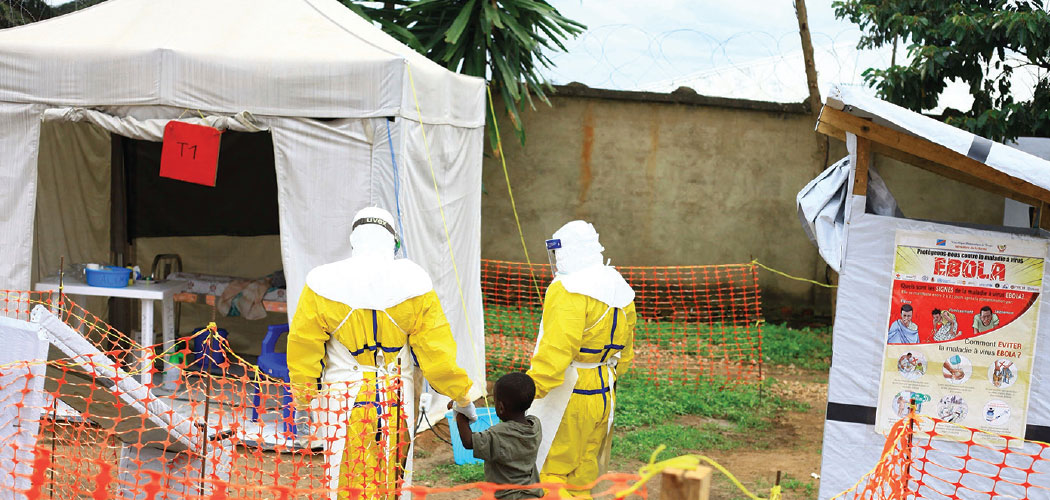
New Ebola Outbreak Confirmed in DR Congo's Ituri Province
The Democratic Republic of Congo is experiencing a new Ebola outbreak in its eastern Ituri province, with Africa CDC reporting 246 suspected cases and 80 deaths. The Bundibugyo strain, for which no vaccine is available, has been identified, raising concerns about regional spread as Uganda confirms an imported case. This marks the DRC's 17th Ebola outbreak amid challenging security and population movement.
Key Highlights
- New Ebola outbreak confirmed in DR Congo's Ituri province.
- 246 suspected cases and 80 deaths reported, primarily in Mongwalu and Rwampara.
- Outbreak caused by the Bundibugyo strain, lacking a licensed vaccine.
- Uganda confirms an imported case, raising concerns about regional transmission.
- Africa CDC and WHO are scaling up response efforts and coordinating regionally.
- Insecurity and population movement complicate containment efforts in Ituri.
A new Ebola outbreak has been confirmed in the eastern Ituri province of the Democratic Republic of Congo (DRC), with Africa's top public health agency, the Africa Centres for Disease Control and Prevention (Africa CDC), reporting 246 suspected cases and 80 deaths as of May 15-16, 2026. This latest health crisis is concentrated primarily in the gold-mining towns of Mongwalu and Rwampara, with additional suspected infections identified in the provincial capital of Bunia.
The initial reports from Africa CDC indicated 246 suspected cases and 65 deaths, with four deaths among laboratory-confirmed cases. However, the World Health Organization (WHO) has also reported a total of 80 community deaths suspected to be due to Ebola Bundibugyo, aligning with the higher death toll mentioned in some news outlets, including The Times of India and The Indian Express. Preliminary laboratory tests conducted at the Institut National de Recherche Biomédicale (INRB) in Kinshasa have detected the Ebola virus in 13 of 20 samples, confirming the outbreak.
A critical aspect of this outbreak is the identification of the Bundibugyo strain of the Ebola virus. Unlike the more common Zaire strain, for which effective vaccines like rVSV-ZEBOV are available, there is currently no licensed vaccine for the Bundibugyo strain. This poses a significant challenge for containment and treatment efforts and underscores the severity of the situation.
Health officials are particularly concerned about the high risk of further spread due to several factors. Ituri province is characterized by intense population movement, especially in urban areas and those associated with mining activities, which can facilitate rapid virus transmission. Furthermore, the ongoing insecurity and activity by armed groups, such as the Islamic State-linked Allied Democratic Forces, in the region create operational challenges for surveillance, contact tracing, and the delivery of healthcare and vaccination campaigns. The province's proximity to the borders of Uganda and South Sudan significantly increases the potential for cross-border transmission.
Indeed, Uganda has already confirmed an imported case linked to the DRC outbreak. A 59-year-old Congolese man, who was admitted to a hospital in Kampala, died after testing positive for Ebola Bundibugyo. While Ugandan authorities have stated no local transmission has been detected within its borders so far, this incident highlights the urgent need for robust regional coordination and enhanced cross-border surveillance.
Both Africa CDC and the WHO are rapidly scaling up their support to the DRC government. Africa CDC has called for an urgent high-level coordination meeting with health authorities from the DRC, Uganda, South Sudan, and other international partners to reinforce surveillance, preparedness, and response efforts. The WHO has deployed emergency teams to Ituri province and is working with national and provincial health authorities to strengthen outbreak control measures. The Congolese government has activated emergency coordination mechanisms, although a formal declaration of a health emergency was still anticipated as of May 16, 2026.
This marks the DRC's 17th recorded Ebola outbreak since the virus was first identified in the country in 1976. The nation has a long history of battling the disease, with its deadliest outbreak between 2018 and 2020 claiming nearly 2,300 lives. The ongoing challenges of conflict, limited infrastructure, and a highly mobile population make each outbreak a complex public health emergency. The current outbreak, involving a less common strain without a readily available vaccine, underscores the critical need for an immediate and coordinated international response to prevent a wider regional crisis. The average fatality rate for Ebola is around 50%, but this can vary depending on the specific outbreak and the availability of supportive treatment.
Frequently Asked Questions
What is the current situation of the Ebola outbreak in DR Congo?
As of May 2026, the Democratic Republic of Congo is experiencing a new Ebola outbreak in its eastern Ituri province. The Africa Centres for Disease Control and Prevention (Africa CDC) reports 246 suspected cases and 80 deaths.
Which strain of Ebola is causing this outbreak and is there a vaccine?
The current outbreak in DR Congo is caused by the Bundibugyo strain of the Ebola virus. Unlike the Zaire strain, there is currently no licensed vaccine available for the Bundibugyo strain.
Has the Ebola outbreak spread to other countries?
Yes, Uganda has confirmed an imported case of Ebola linked to the outbreak in DR Congo. A Congolese man who traveled to Uganda died after testing positive for the Bundibugyo strain. There is a high risk of further regional spread due to population movement across borders.
What challenges are impacting the response to the Ebola outbreak?
Response efforts are significantly challenged by insecurity in Ituri province, including ongoing conflict and armed groups. Additionally, dense urban populations, mining activities leading to high population mobility, and limited infrastructure complicate surveillance, contact tracing, and healthcare delivery.
What are international organizations doing to help?
The Africa CDC has convened an urgent high-level meeting with health authorities from DR Congo, Uganda, South Sudan, and international partners to strengthen cross-border surveillance and response. The World Health Organization (WHO) is also rapidly scaling up support, deploying emergency teams, and assisting national and provincial health authorities with outbreak control measures.