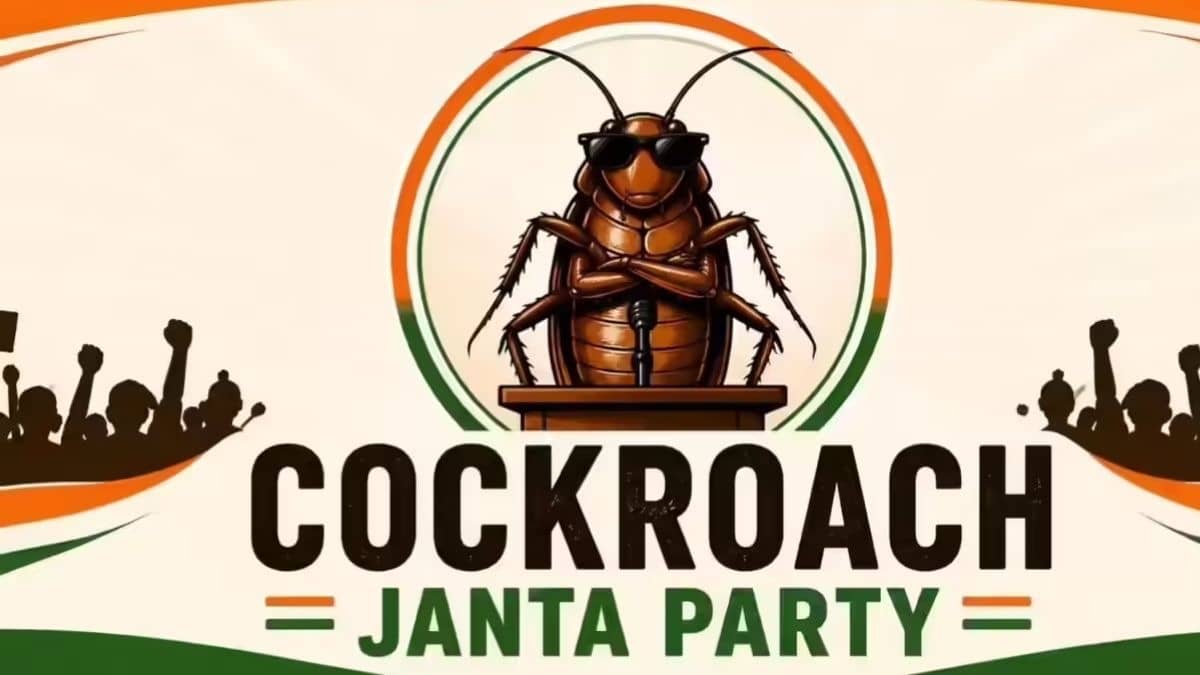
Indian Chief Justice's 'Cockroach' Remark Sparks Satirical Political Movement
India's Chief Justice Surya Kant's controversial 'cockroach' remark about unemployed youth ignited widespread satire and led to the formation of the online 'Cockroach Janta Party' by Abhijeet Dipke, reflecting growing youth frustration with the political system.
Key Highlights
- Chief Justice Surya Kant called unemployed youth 'cockroaches'.
- Remark sparked widespread outrage and online satire among Gen Z.
- Abhijeet Dipke founded the satirical 'Cockroach Janta Party'.
- CJP quickly gained tens of thousands of online registrations.
- The movement highlights youth frustration over unemployment.
- Justice Kant later clarified his remarks, but outrage continued.
A controversial remark by Chief Justice of India, Surya Kant, likening unemployed youth to 'cockroaches' and 'parasites' during an open court hearing, has triggered a significant wave of satire and protest across India, leading to the formation of a unique online political movement: the 'Cockroach Janta Party' (CJP). The incident, which occurred on a Friday, saw Justice Kant stating that 'youngsters like cockroaches' who are unemployed or lack a place in a profession 'start attacking everyone,' including becoming 'media, social media, RTI activists and other activists.'
The comment quickly went viral, sparking outrage, particularly among India's Gen Z internet users who are grappling with high unemployment rates, inflation, and social divides. Many interpreted the remark as a dismissal of their struggles and a broader commentary on the state of democratic institutions in the country.
In response to the escalating criticism, Justice Kant issued a clarification, stating that his original observation was directed at individuals acquiring fraudulent degrees to enter professions like law and media, and not at the country's youth in general, whom he called 'the pillars of a developed India.' However, this clarification did little to quell the widespread discontent.
The day after Justice Kant's initial remark, 30-year-old Abhijeet Dipke, a political communication strategist and recent public relations graduate from Boston University, posted on X (formerly Twitter) asking, 'What if all cockroaches come together?' This satirical idea quickly materialized into the 'Cockroach Janta Party' (CJP), a name playfully echoing India's ruling Bharatiya Janata Party (BJP). Dipke, who has previous experience volunteering with the Aam Aadmi Party's social media team from 2020 to 2022, aimed to channel the 'desperately frustrated emotions' into a collective voice.
The CJP rapidly gained traction online, with thousands of individuals signing up. Within a few days, the party had garnered over 80,000 registrations and accumulated significant followers on social media platforms like Instagram and X. The party's eligibility criteria, humorously set as 'unemployed, lazy, chronically online, and ability to rant professionally,' resonated deeply with many young Indians who feel overlooked and marginalized by the political establishment. The CJP pitches itself as 'the voice of the lazy and unemployed' and claims to represent 'the people that the system forgot to count,' defining itself as 'one large, stubborn swarm.'
Abhijeet Dipke explained the motivation behind the movement to Al Jazeera, stating, 'Those in power think citizens are cockroaches and parasites. They should know that cockroaches breed in rotten places. That's what India is today.' The movement highlights a deeper sense of frustration among the youth regarding the perceived decline in the credibility of vital democratic institutions. Political analysts and commentators have noted that the CJP's viral success underscores a growing demand for alternative political formations and satirical outlets to express dissent in India's current political climate. The phenomenon reflects a broader sentiment where people are seeking new ways to engage with politics beyond traditional parties, often finding humor and collective expression as powerful tools against perceived systemic failures.
Al Jazeera, the source of the article, is generally considered a reputable international news organization, though it has been rated as having a 'Left-Center' bias and 'Mixed' factual reporting by some media watchdog groups, partly due to its funding from the Qatari government and perceived bias in Middle East coverage. However, its reporting on this specific event aligns with accounts from several other credible Indian news outlets, corroborating the factual claims regarding the judge's remarks and the subsequent rise of the 'Cockroach Janta Party.'
The 'Cockroach Janta Party' thus stands as a potent symbol of youth discontent and the power of satirical movements in contemporary Indian politics, demonstrating how a judge's ill-received comment can inadvertently spark a widespread social and political commentary.
Frequently Asked Questions
What was Chief Justice Surya Kant's controversial 'cockroach' remark?
Chief Justice of India Surya Kant stated during a court hearing that 'youngsters like cockroaches' who are unemployed or lack a place in a profession 'start attacking everyone,' including becoming 'media, social media, RTI activists and other activists.'
Who founded the 'Cockroach Janta Party' and why?
Abhijeet Dipke, a 30-year-old political communication strategist, founded the satirical 'Cockroach Janta Party' in response to Chief Justice Surya Kant's controversial remark. The party aims to channel the widespread frustration and dissent among unemployed and politically disaffected youth in India.
What is the significance of the 'Cockroach Janta Party' movement?
The 'Cockroach Janta Party' is a satirical online movement that has gained significant traction, symbolizing the growing discontent and frustration among Indian youth regarding unemployment, inflation, and a perceived lack of accountability from established political institutions. It highlights the power of online activism and satire as forms of protest.
Did Chief Justice Kant clarify his remarks?
Yes, Justice Kant later clarified that his comments were aimed at individuals using fraudulent degrees to enter professions, not at unemployed youth in general, whom he referred to as the 'pillars of a developed India.' However, this clarification did not mitigate the initial outrage.
How quickly did the 'Cockroach Janta Party' gain popularity?
The 'Cockroach Janta Party' gained rapid popularity, accumulating tens of thousands of registrations within days of its formation and becoming a trending topic across various social media platforms, indicating strong resonance with its target audience.