Sikkim Tunnel Collapse: 20 Dead, 5 Trapped After Methane Explosion
A devastating methane gas explosion and subsequent landslide at an under-construction tunnel in Sikkim's Namchi district have claimed the lives of 20 workers. Rescue efforts are intensely ongoing for five individuals still trapped, as emergency teams battle hazardous conditions. The incident at the NHPC Teesta Stage-VI Hydroelectric Project has drawn immediate response from both state and central governments.
Key Highlights
- Twenty workers confirmed dead in Sikkim tunnel collapse.
- Five individuals remain trapped amidst challenging rescue operations.
- Methane gas explosion suspected cause at Teesta Stage-VI project.
- NHPC and Patel Engineering involved in the ill-fated project.
- Rescue efforts hampered by toxic gases and unstable debris.
- PM Modi and CM Tamang assure aid, announce ex-gratia payments.
A tragic incident unfolded on Monday, July 20, 2026, at approximately 1:04 PM, when an under-construction tunnel in the Namchi district of South Sikkim collapsed, leading to significant loss of life and trapping several workers. The incident occurred at the Head Race Tunnel (ADIT-3) of the National Hydroelectric Power Corporation (NHPC) Teesta Stage-VI Hydroelectric Project, located near Samardung, Jholungey.
The primary cause of the collapse is suspected to be a sudden explosion of trapped methane gas within the rock strata, which generated dense smoke and toxic gases, followed by a landslide that further blocked the tunnel. Initial reports indicated that around 25 to 27 personnel, including project officials and workers from both NHPC and the civil construction contractor, Patel Engineering Ltd (PEL), were inside the tunnel when the disaster struck.
As of the latest updates, 20 workers have been confirmed dead, and their bodies are being recovered and identified. Out of the initial count, 12 bodies have been recovered during the ongoing search and rescue operations, with efforts continuing to locate the remaining victims. Five individuals are still believed to be trapped inside the collapsed tunnel, with rescue teams working tirelessly under extremely challenging conditions. Some early reports mentioned that 2 or 16 workers managed to escape or were rescued in the immediate aftermath, though the focus has now shifted to the confirmed casualties and those still missing.
Upon learning of the incident, the project team from NHPC immediately activated its emergency response protocols and began coordinating with various state and national disaster relief agencies. A large-scale rescue operation is currently underway, involving multiple agencies including the National Disaster Response Force (NDRF), the State Disaster Response Force (SDRF), Sikkim Police, Fire and Emergency Services, the Health Department, and the Namchi District Administration. A special rescue team from the Directorate General of Mines Safety (DGMS) has also arrived at the site to provide expertise and assistance.
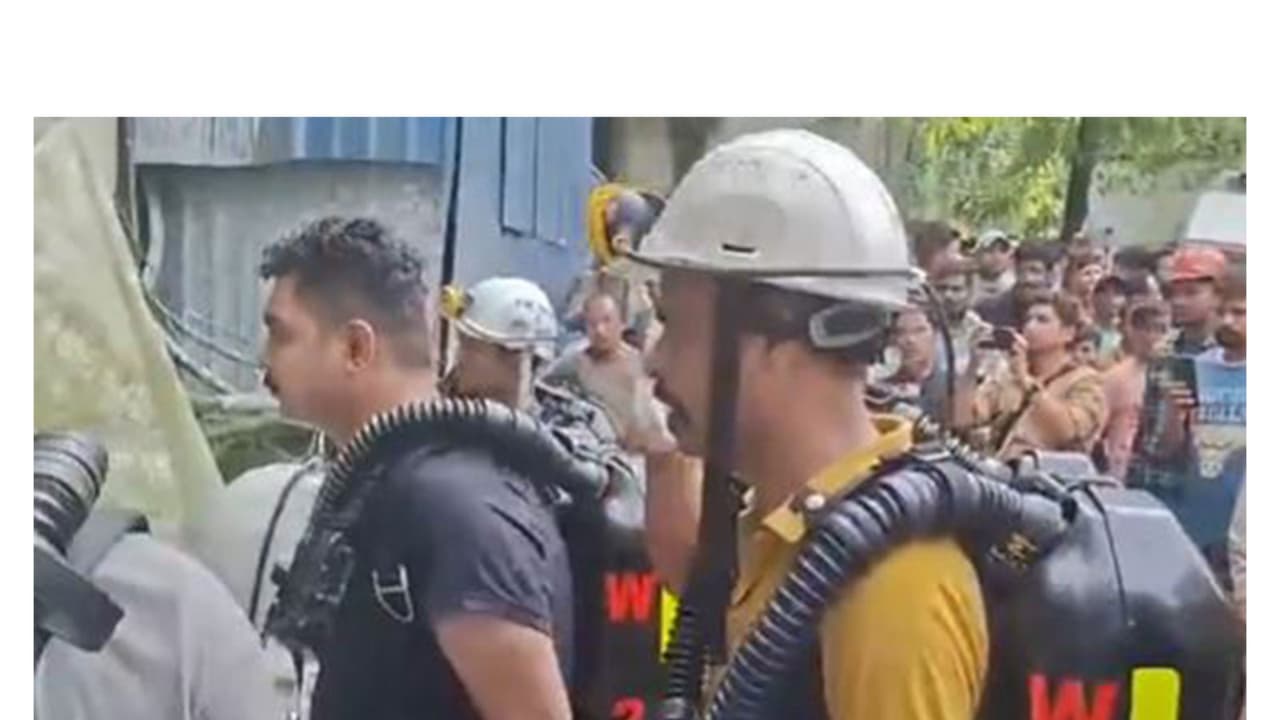
The rescue efforts have been severely hampered by the hazardous environment inside the tunnel, primarily due to the presence of toxic methane gas, dense smoke, and unstable debris from the collapse. Rescue personnel are utilizing specialized equipment and gas masks to navigate the dangerous conditions, with some reports indicating that several rescue workers experienced dizziness and temporary loss of consciousness due to the noxious fumes.
Sikkim Chief Minister Prem Singh Tamang-Golay visited the accident site to oversee the rescue operations and expressed his deep condolences to the families of the deceased. He announced an ex-gratia payment of ₹4 lakh (approximately USD 4,800) for the next of kin of each deceased worker and ₹50,000 for the injured. Prime Minister Narendra Modi also spoke with the Chief Minister, taking stock of the situation and assuring all possible assistance from the central government. The Prime Minister announced an additional ex-gratia of ₹2 lakh for the families of the deceased and ₹50,000 for the injured. The Chief Minister has also stated that a Special Investigation Team (SIT) will be constituted to thoroughly probe the cause of the methane gas blast and tunnel collapse, and appropriate action will be taken if any negligence is found. Sikkim Governor Om Prakash Mathur also visited the site to review the ongoing operations.
The incident underscores the inherent risks associated with large-scale infrastructure projects, especially in challenging geological terrains like the Himalayas, which are prone to landslides and natural gas pockets. Both NHPC and Patel Engineering have affirmed their commitment to supporting the rescue efforts and assisting the affected families during this difficult time.
Frequently Asked Questions
What caused the tunnel collapse in Sikkim?
The tunnel collapse is suspected to have been caused by a methane gas explosion within the rock formations, leading to dense smoke and toxic gases, and subsequently triggering a landslide.
How many casualties have been reported in the Sikkim tunnel collapse?
As of the latest reports, 20 workers have been confirmed dead, and 5 individuals are still feared trapped inside the tunnel. Several bodies have been recovered, and rescue operations are ongoing.
Which project and companies are involved in the Sikkim tunnel collapse?
The incident occurred at an under-construction Head Race Tunnel (ADIT-3) of the NHPC Teesta Stage-VI Hydroelectric Project. The project owner is National Hydroelectric Power Corporation (NHPC), and the civil construction contractor is Patel Engineering Ltd (PEL).
What is being done to rescue those trapped and assist affected families?
A massive rescue operation is underway involving NDRF, SDRF, Sikkim Police, Fire and Emergency Services, Health Department, and district administration. Sikkim CM Prem Singh Tamang and PM Narendra Modi have announced ex-gratia payments for the deceased and injured. A Special Investigation Team (SIT) will also be formed to probe the incident.
What are the challenges faced by the rescue teams?
Rescue efforts are significantly challenged by the presence of toxic methane gas and dense smoke inside the tunnel, as well as the instability of the debris caused by the explosion and landslide.