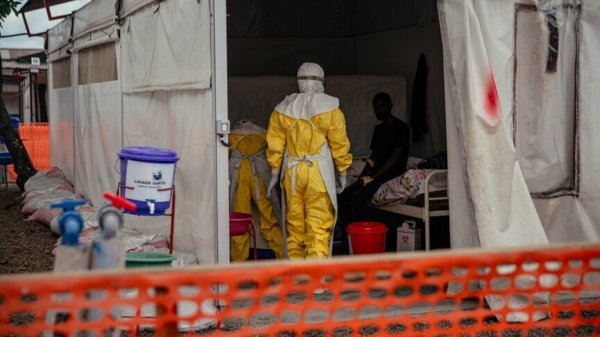
WHO: DRC Ebola Outbreak Still Outpacing Containment Efforts
The World Health Organization warns that the Ebola outbreak in the Democratic Republic of Congo continues to spread faster than containment efforts. Declared a Public Health Emergency of International Concern, this Bundibugyo strain outbreak is one of the largest on record, complicated by insecurity, community mistrust, and lack of specific treatments.
Key Highlights
- DRC Ebola outbreak declared Public Health Emergency in May 2026.
- Outbreak caused by Bundibugyo virus, lacks specific vaccine or treatment.
- Thousands of cases and deaths reported in DRC, spreading rapidly.
- Containment hindered by conflict, displacement, and community mistrust.
- Ebola has spread to Uganda; cases treated in Germany, France.
- India has sent medical aid to strengthen Africa's Ebola response.
The World Health Organization (WHO) and United Nations officials have repeatedly warned that the ongoing Ebola outbreak in the Democratic Republic of Congo (DRC) is spreading faster than current containment efforts. This critical health crisis, primarily affecting the DRC's northeastern Ituri province, was declared a Public Health Emergency of International Concern (PHEIC) by the WHO on May 17, 2026, underscoring its severe threat to global health security.
The outbreak, which began with the first suspected case detected on April 24, 2026, is caused by the Bundibugyo strain of the Ebola virus, a particularly challenging factor as there is currently no approved vaccine or specific treatment for this species, though clinical trials are underway. This absence of targeted interventions significantly complicates response efforts, forcing health authorities to rely heavily on traditional containment strategies such as surveillance, contact tracing, and safe burial practices.
By late August 2026, the epidemic had escalated dramatically, with cumulative confirmed cases reaching over 5,794 and deaths surpassing 2,786 in the DRC alone, making it the fastest-growing and second-largest Ebola outbreak on record. These alarming figures highlight the immense scale and rapid progression of the disease. The WHO Director-General, Tedros Adhanom Ghebreyesus, has consistently stated that the virus remains 'ahead of us' and that the outbreak is 'far from being under control,' emphasizing the urgent need for accelerated action.
Compounding the public health challenge are significant humanitarian and operational obstacles. The outbreak is occurring in a region plagued by active armed conflict, insecurity, and widespread population displacement, with reports of Ebola cases in at least 16 displacement sites hosting over 270,000 people. These conditions hinder responders' access to affected communities, disrupt contact tracing, and make it difficult to implement consistent response measures. Furthermore, community mistrust and misinformation, with some residents believing the illness to be a 'mystic disease' or a curse rather than Ebola, have led to resistance to aid efforts and even attacks on health workers and ambulances, further impeding containment.
The outbreak has not been confined to the DRC's borders. It quickly spread to neighboring Uganda, which shares a porous border with the DRC, reporting 20 confirmed cases and two deaths. While Uganda successfully completed its 42-day enhanced monitoring period and declared its outbreak over on August 27, 2026, the WHO warned that the situation in the DRC remains critical, underscoring the ongoing risk of cross-border transmission. Beyond Africa, the disease has shown signs of wider international spread; an American who tested positive for Ebola while working in the DRC was treated in Germany, and a case was reported in France. Additionally, authorities in Italy and Brazil have investigated suspected Ebola cases linked to travelers returning from the DRC or Uganda, demonstrating the global concern and the potential for the virus to cross continents through travel.
In response to this escalating crisis, international efforts are being scaled up. The WHO is working to strengthen surveillance, contact tracing, clinical preparedness, and community engagement in the DRC and Uganda. India has also contributed to the global response, dispatching a second consignment of medical assistance to the Africa Centres for Disease Control and Prevention (Africa CDC) in June 2026, comprising protective gear, diagnostic equipment, medicines, and nutritional supplements. Despite these concerted efforts, the UN Secretary-General, Antonio Guterres, highlighted a significant funding gap, with approximately $30 million needed to sustain essential containment activities, calling for urgent international support to bring the outbreak under control.
The current Ebola crisis in the DRC represents an unprecedented challenge due to its rapid spread, the specific viral strain involved, and the complex humanitarian context. Without sustained and effective international cooperation, robust funding, and successful community engagement, the risk of further national, regional, and international spread remains high, posing a serious threat to global public health.
Frequently Asked Questions
What is the current status of the Ebola outbreak in the Democratic Republic of Congo?
As of late August 2026, the Ebola outbreak in the Democratic Republic of Congo is considered one of the largest and fastest-spreading in history, with thousands of confirmed cases and deaths. The World Health Organization warns it is still outpacing containment efforts due to various challenges.
What makes this particular Ebola outbreak so difficult to contain?
This outbreak is challenging to contain because it is caused by the Bundibugyo strain of the Ebola virus, for which there is no approved vaccine or specific treatment. Furthermore, the response is hampered by ongoing armed conflict, widespread population displacement, inadequate health infrastructure, and significant community mistrust and misinformation.
Has the Ebola outbreak spread beyond the Democratic Republic of Congo?
Yes, the Ebola outbreak has spread to neighboring Uganda, with confirmed cases. Additionally, cases have been treated in Germany and France, and suspected cases investigated in Italy and Brazil, indicating the potential for international spread through travel.
What is being done to address the Ebola crisis in the DRC?
International efforts led by the WHO and UN are scaling up surveillance, contact tracing, clinical management, and community engagement. India has also contributed medical aid. However, significant funding gaps and ongoing challenges like insecurity continue to complicate the response.