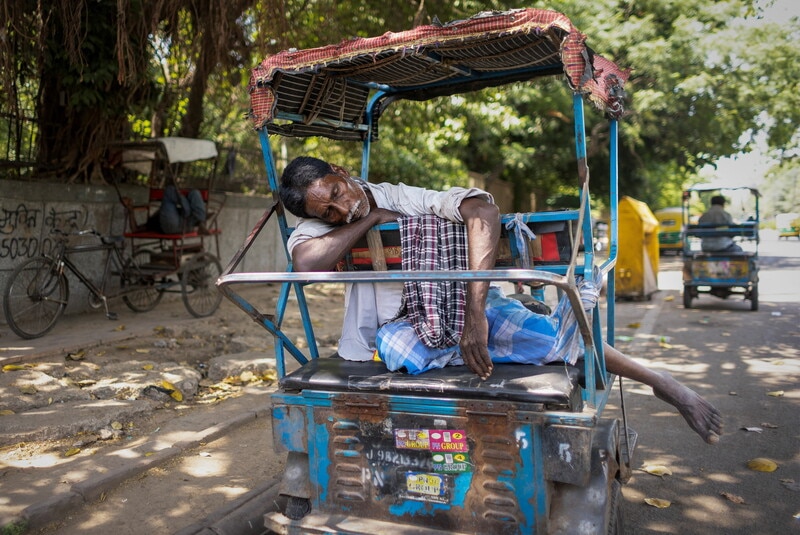
Delhi on Yellow Alert: Severe Heatwave Grips North India
Delhi was under a yellow alert in late May 2026 as the India Meteorological Department (IMD) warned of severe heatwave conditions across North India, with temperatures projected to reach 44-46°C. This intense heat coincided with Nautapa, traditionally the nine hottest days of summer, prompting health advisories.
Key Highlights
- IMD issued yellow alert for Delhi for heatwave conditions.
- Severe heatwave warnings extended across North and Central India.
- Temperatures in Delhi projected to reach 44-46°C in late May 2026.
- Heatwave coincided with Nautapa, traditionally hottest summer phase.
- Corroborated by major Indian news outlets, including The Hindu and The Indian Express.
In late May 2026, Delhi and large parts of North India experienced severe heatwave conditions, prompting the India Meteorological Department (IMD) to issue a yellow alert for the national capital. The Hindustan Times article, published on May 25, 2026, accurately reported on these dire weather warnings and their implications for the region.
The 'yellow alert' for Delhi signified that heatwave conditions were highly probable, with maximum temperatures anticipated to range between 44 and 46 degrees Celsius for several days. This forecast was consistent with observations, as Delhi had already recorded a maximum temperature of 43.6 degrees Celsius on May 25, 2026, with some weather stations like Ridge and Ayanagar logging even higher temperatures of 44.6 degrees Celsius. Adding to the discomfort, Delhi also experienced its warmest May night in nearly 14 years on May 21 and again on May 25, 2026, with minimum temperatures settling significantly above the seasonal average.
The IMD's warnings were not confined to Delhi alone but extended across a broader swathe of North and Central India. Severe heatwave conditions were specifically predicted for isolated pockets of Punjab, Haryana, Chandigarh, and Delhi between May 25 and May 27, 2026. Other states, including Rajasthan and Uttar Pradesh, were also under similar or even higher alerts, with forecasts indicating temperatures could persistently scale past the mid-40s.
This intense spell of heat notably coincided with 'Nautapa,' a traditional nine-day period in the Indian summer, culturally and astronomically associated with the year's hottest days. Nautapa 2026 commenced on May 25, 2026, as the Sun entered the Rohini Nakshatra, and was expected to conclude on June 2, 2026. During this period, climatologists had predicted that the plains of Rajasthan and Madhya Pradesh could see mercury hovering between 46°C and 49°C, while Delhi-NCR, Haryana, and Punjab were projected to experience peak daytime temperatures between 45°C and 47°C. Minimum night temperatures were also expected to remain high, around 30°C to 32°C, offering little ambient relief.
The severe heatwave posed significant health risks, including heat exhaustion, dehydration, and heatstroke, especially for those working outdoors or lacking access to cooling facilities. The IMD's classification of a heatwave states that it is declared when the maximum temperature crosses 40°C in the plains and is at least 4.5°C above normal. A 'severe' heatwave is declared when the departure from normal temperature is 6.5°C or more, or if the temperature touches 45°C or more, irrespective of the departure from normal. The conditions reported in May 2026 met these criteria, justifying the 'severe heatwave' designation.
Credible news organizations across India extensively corroborated the Hindustan Times report. The Hindu, The Indian Express (The New Indian Express), DD India, Newsonair, India Today, Outlook Business, and the Press Information Bureau (PIB) all published similar warnings and reports on the escalating heatwave and IMD's alerts during the same period. These reports often cited IMD officials and their advisories, reinforcing the accuracy of the claims made in the Hindustan Times article. There was no evidence of misinformation or exaggeration; the reporting aligned with official weather forecasts and public health warnings.
In response to these conditions, authorities and health agencies advised citizens to take precautionary measures such as avoiding prolonged exposure to direct sunlight, staying adequately hydrated, and wearing light clothing. The heatwave situation was a critical concern for public safety and daily life across a large, densely populated region of India, making it a highly important news story.
Frequently Asked Questions
What does a 'yellow alert' for a heatwave signify in Delhi?
A 'yellow alert' issued by the IMD for a heatwave in Delhi means that heatwave conditions are likely to prevail, and citizens should remain updated and take necessary precautions. It indicates a potential for maximum temperatures to be significantly above normal, posing health risks.
What are IMD's criteria for declaring a 'severe heatwave'?
According to the IMD, a severe heatwave is declared when the maximum temperature in a plain region is 6.5°C or more above normal, or when the actual maximum temperature touches or exceeds 45°C, irrespective of the departure from normal.
What is Nautapa, and how does it relate to India's heatwave season?
Nautapa refers to a traditional nine-day period in the Indian summer, typically starting in late May, when the Sun enters the Rohini Nakshatra. It is culturally and astronomically associated with the most intense heat of the year, leading to severe heatwave conditions across North and Central India.
Which regions in North India were most affected by the May 2026 heatwave?
During May 2026, severe heatwave conditions were prominently observed and predicted for Delhi, Punjab, Haryana, Chandigarh, Rajasthan, and Uttar Pradesh, with temperatures in many areas expected to cross 45°C.
What precautions were advised during the severe heatwave conditions?
Authorities advised citizens to take precautions such as avoiding prolonged exposure to direct sunlight, especially during peak afternoon hours, staying adequately hydrated by drinking plenty of water, wearing light and breathable clothing, and seeking shade.