Trump-Netanyahu Tensions Escalate Amid Iran War; Hormuz Strait Sees Ship Passage
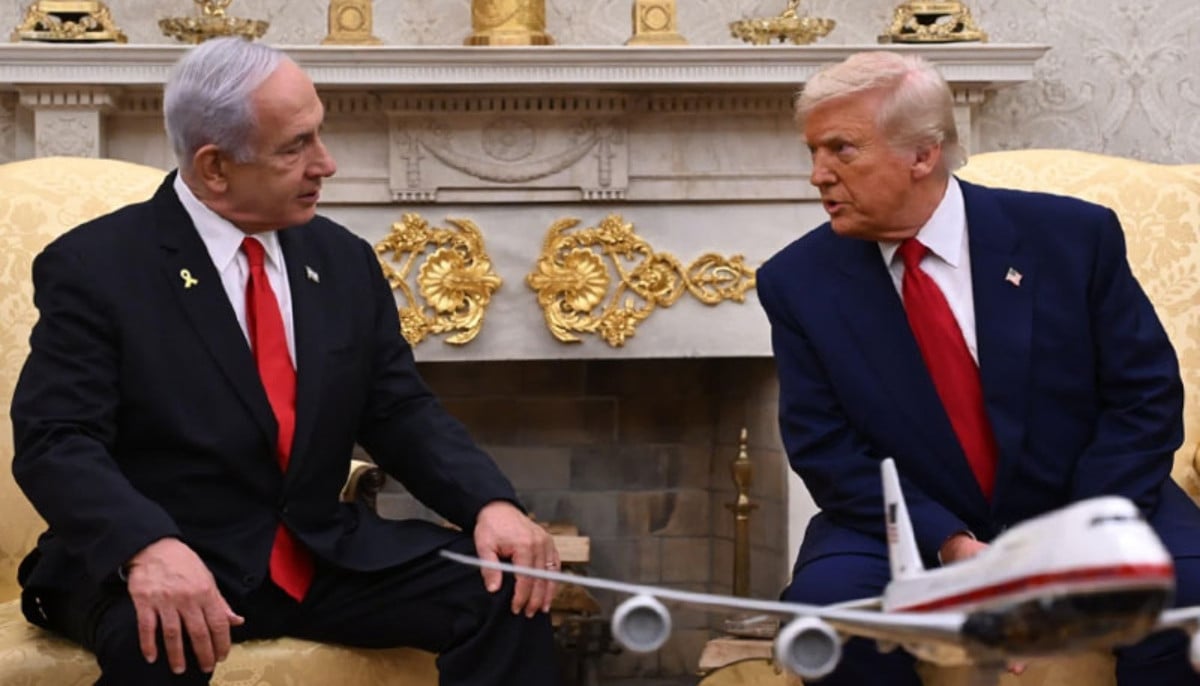
US President Donald Trump reportedly engaged in a heated exchange with Israeli Prime Minister Benjamin Netanyahu regarding the escalation in Lebanon. Simultaneously, Iran's Revolutionary Guard stated that 24 ships were permitted to pass through the Strait of Hormuz within a 24-hour period, indicating a controlled resumption of maritime traffic.
Key Highlights
- Trump criticized Netanyahu for escalating conflict in Lebanon.
- Netanyahu reportedly agreed to halt planned Beirut strikes.
- Iran's IRGC allowed 24 ships passage through Hormuz Strait.
- Hormuz Strait traffic resuming under Iranian control.
- US-Iran talks on ceasefire and nuclear program ongoing.
- Middle East conflict continues with exchanges between Israel and Hezbollah.
The ongoing Middle East conflict has seen significant diplomatic and military developments, including a tense phone call between US President Donald Trump and Israeli Prime Minister Benjamin Netanyahu concerning Israel's military actions in Lebanon. According to reports, Trump lashed out at Netanyahu, calling him "crazy" and accusing him of jeopardizing ongoing US-Iran negotiations. Sources indicate that Trump's intervention may have led to Israel halting planned strikes on Beirut. This diplomatic pressure comes as Iran's Islamic Revolutionary Guard Corps (IRGC) reported allowing 24 commercial vessels to pass through the Strait of Hormuz in a 24-hour period, signaling a controlled and regulated resumption of traffic through the vital waterway.
The events highlight the complex geopolitical landscape, with the US attempting to mediate a de-escalation while Iran asserts its control over strategic maritime chokepoints. The IRGC's announcement about ship passage through the Strait of Hormuz suggests a normalization of sorts for some commercial traffic, albeit under strict Iranian oversight. This development is significant given the Strait's critical role in global energy trade. Reports indicate that vessels from "friendly nations" may be prioritized, with potential security fees involved. This selective allowance of passage underscores Iran's leverage and its intent to maintain control over this strategic chokepoint amidst the broader regional conflict.
Simultaneously, the conflict between Israel and Hezbollah in Lebanon continues, with reports of ongoing clashes despite the apparent ceasefire brokered by the US. The US has been actively involved in pursuing a deal with Iran to end the wider war, which includes reopening the Strait of Hormuz and addressing Iran's nuclear program. However, Iran has reiterated its stance that no nuclear negotiations will occur until Israel halts its offensive in Lebanon. This diplomatic entanglement, coupled with the ongoing hostilities on the ground, paints a picture of a volatile and interconnected regional crisis.
The credibility of the news sources reporting these events varies. Hindustan Times, the original source, is rated as Center-biased with Mixed factual reporting by some aggregators, while others give it a "Somewhat Left" bias. Al Jazeera is generally rated as Left-Center to Lean Left, with Mixed to Mostly Factual reporting. ThePrint is rated as Right-Center with Mostly Factual reporting. These ratings suggest that while the core events are corroborated across multiple credible outlets, a reader should be aware of potential biases in the framing and selection of information.
The implications of these events are far-reaching. The potential for a wider regional conflict remains a significant concern, and the control over the Strait of Hormuz has global economic ramifications. The interplay between the US, Iran, and Israel, along with regional actors like Hezbollah, continues to shape the dynamics of the Middle East. The effectiveness of US diplomacy in achieving a lasting ceasefire and resolving the underlying issues will be crucial in determining the future trajectory of the conflict. The reported exchange between Trump and Netanyahu, if accurate, underscores the personal nature of high-stakes diplomacy in this volatile region. The continuation of ship passage through the Strait of Hormuz, even if regulated, offers a glimmer of economic stability amidst the ongoing turmoil. However, the underlying tensions and the potential for renewed escalation remain significant. The US's dual strategy of diplomatic engagement and military posturing, alongside Iran's assertion of control over maritime routes, defines the current state of affairs. The role of various international bodies, such as the UN Security Council, in condemning or mediating these actions further complicates the regional picture. The interconnectedness of the conflicts in Lebanon, the Red Sea, and the broader Iran-US tensions is evident, with any de-escalation in one area potentially impacting others. The ongoing US-Iran negotiations, though facing challenges, represent a critical avenue for potential resolution, but are contingent on de-escalation in Lebanon and progress on nuclear issues. The situation remains fluid, with continuous developments requiring close monitoring.
Frequently Asked Questions
What was the nature of the exchange between Donald Trump and Benjamin Netanyahu?
Reports indicate that US President Donald Trump had a "heated" phone call with Israeli Prime Minister Benjamin Netanyahu, criticizing Israel's escalation in Lebanon and accusing Netanyahu of jeopardizing US-Iran negotiations. Trump reportedly called Netanyahu "crazy" and suggested he would be in prison without US support.
What is the situation regarding the Strait of Hormuz?
Iran's Revolutionary Guard Corps (IRGC) has stated that 24 ships were allowed to pass through the Strait of Hormuz in the preceding 24 hours. This indicates a controlled resumption of maritime traffic through the strategic waterway, with passage being granted after obtaining permission from the IRGC.
How does the conflict in Lebanon tie into US-Iran relations?
Israel's military actions in Lebanon have been a point of contention, with Iran threatening to halt its own negotiations with the US if Israel's offensive continued. Trump's intervention appears aimed at de-escalating the Lebanon conflict to facilitate progress in US-Iran talks, which include a ceasefire and Iran's nuclear program.