Pakistan Hosts Regional Powers for Iran War & Hormuz Talks
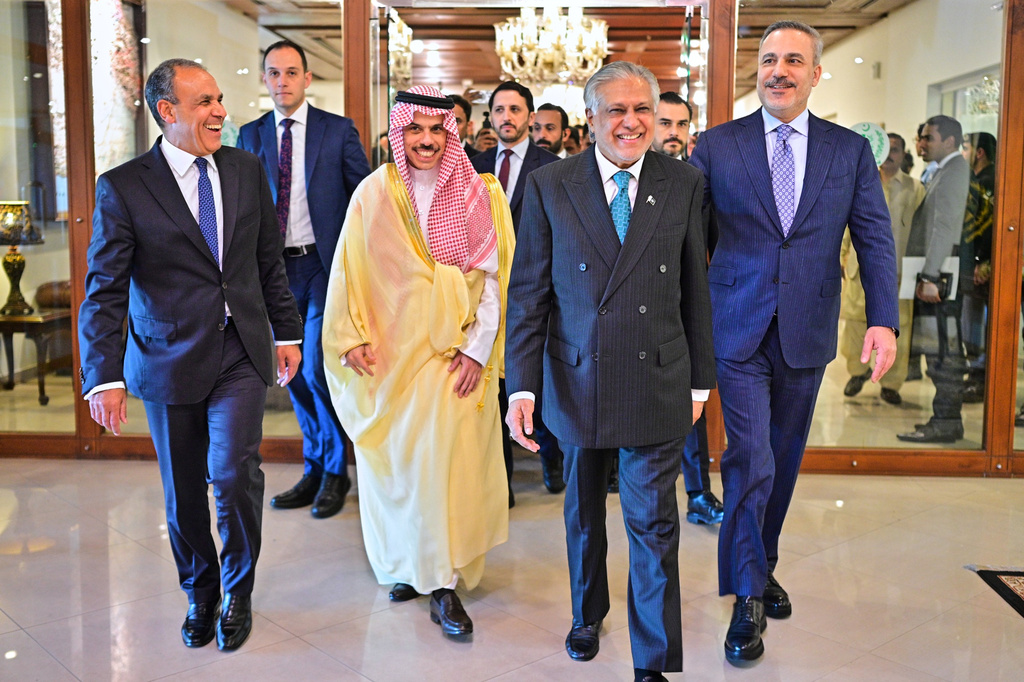
Pakistan recently hosted foreign ministers from Turkey, Egypt, and Saudi Arabia to discuss de-escalating the ongoing Iran war and proposals to reopen the Strait of Hormuz. These critical talks, held in Islamabad, aimed to stabilize global oil flows amidst soaring prices and Iran's halt on shipping through the vital waterway.
Key Highlights
- Pakistan mediated talks with Turkey, Egypt, Saudi Arabia on Iran war.
- Key focus was reopening the crucial Strait of Hormuz for shipping.
- Proposals, including Suez Canal-style fees, sent to White House.
- Iran halted Hormuz shipping due to US-Israel airstrikes.
- Global oil prices surged amid ongoing conflict and shipping disruption.
- Consortium of regional powers proposed to manage Hormuz oil flows.
In a significant diplomatic initiative, Pakistan convened talks with the foreign ministers of Turkey, Egypt, and Saudi Arabia on March 29, 2026, in Islamabad. The primary objective of these high-level discussions was to explore avenues for brokering an end to the escalating 'Iran war,' a conflict involving Iran, the United States, and Israel. A central focus of these initial discussions revolved around crucial proposals aimed at reopening the Strait of Hormuz to international shipping.
The Strait of Hormuz, a narrow waterway, is strategically vital as it traditionally serves as a conduit for approximately one-fifth of global oil and liquefied natural gas supplies. However, Iran had effectively halted shipping flows through the strait in response to recent U.S. and Israeli airstrikes that commenced roughly a month prior, in late February 2026. This disruption significantly impacted global energy markets, leading to a surge in international oil prices.
During the talks, foreign ministers from these three regional powers landed in Islamabad. The discussions took place against a backdrop of heightened tensions, with Iran issuing warnings against any potential U.S. ground attack, which further contributed to the global surge in oil prices. The countries participating in the Islamabad meeting – Pakistan, Turkey, Egypt, and Saudi Arabia – have collaboratively floated various proposals to Washington. These proposals are specifically tied to ensuring stable maritime traffic and facilitating the reopening of the Strait of Hormuz, as part of broader efforts to stabilize global shipping flows.
One of the notable suggestions discussed was the implementation of Suez Canal-style fee structures for transit through the Strait of Hormuz. A Pakistani source indicated that such proposals, originating partly from Egypt, had been forwarded to the White House even before the March 29 meeting. Furthermore, other Pakistani sources revealed discussions about the potential formation of a consortium comprising Turkey, Egypt, and Saudi Arabia to manage oil flows through the waterway, with Pakistan being asked to participate in this initiative. The proposal for this management consortium had reportedly been discussed with both the U.S. and Iran.
Pakistan, sharing a border with Iran (similar to Turkey), has strategically positioned itself as a crucial diplomatic channel in the ongoing conflict, leveraging its close ties with both Tehran and Washington. Turkey and Egypt have also played active roles in these diplomatic efforts. Ahead of the broader discussions, Pakistan's Foreign Minister Ishaq Dar held separate one-on-one meetings with his Turkish and Egyptian counterparts, emphasizing the importance of dialogue and sustained diplomatic engagement to resolve the crisis.
In a related development, Foreign Minister Dar also announced via a post on social media platform X that Iran had agreed to allow an additional 20 Pakistani-flagged ships to transit through the Strait of Hormuz. This agreement, while specific to Pakistani vessels, signals a degree of cooperation amidst the broader blockade and diplomatic efforts. The ongoing nature of the conflict and its widespread economic implications underscore the critical importance of these diplomatic interventions. The involvement of Pakistan's army chief, Field Marshal Asim Munir, who has been in regular contact with U.S. Vice President J.D. Vance, highlights the high-level engagement and coordination involved in these efforts to de-escalate the regional crisis and ensure global energy security. Turkey's diplomatic sources indicated that Ankara's primary objective in these discussions was to secure a ceasefire, viewing the safe passage of ships as an important confidence-building measure. These multifaceted diplomatic engagements aim for a comprehensive and lasting settlement to the conflict that has gripped the region.
Frequently Asked Questions
What was the main purpose of the talks hosted by Pakistan?
The main purpose of the talks hosted by Pakistan was to broker an end to the ongoing conflict involving Iran, the United States, and Israel, and to discuss proposals for reopening the Strait of Hormuz to international shipping.
Which regional powers participated in the discussions?
Foreign ministers from Turkey, Egypt, and Saudi Arabia participated in the discussions hosted by Pakistan in Islamabad.
Why is the Strait of Hormuz crucial, and why were talks focused on it?
The Strait of Hormuz is crucial because it is a vital choke point for global oil and liquefied natural gas supplies. Talks focused on it because Iran had halted shipping flows through the strait in response to US and Israeli airstrikes, leading to soaring global oil prices and disruption to international maritime trade.
What kinds of proposals were made regarding the Strait of Hormuz?
Proposals included the implementation of Suez Canal-style fee structures for transit and the potential formation of a consortium involving Turkey, Egypt, and Saudi Arabia (with Pakistan's possible participation) to manage oil flows through the waterway. These proposals were also shared with the White House.
How does this news impact India?
This news is highly relevant to India as disruptions in the Strait of Hormuz directly impact global oil prices and energy supplies. India is a major importer of crude oil, and stability in this region is crucial for its energy security and economic stability. Diplomatic efforts to de-escalate the conflict and ensure free passage through the strait are thus of significant interest to India.