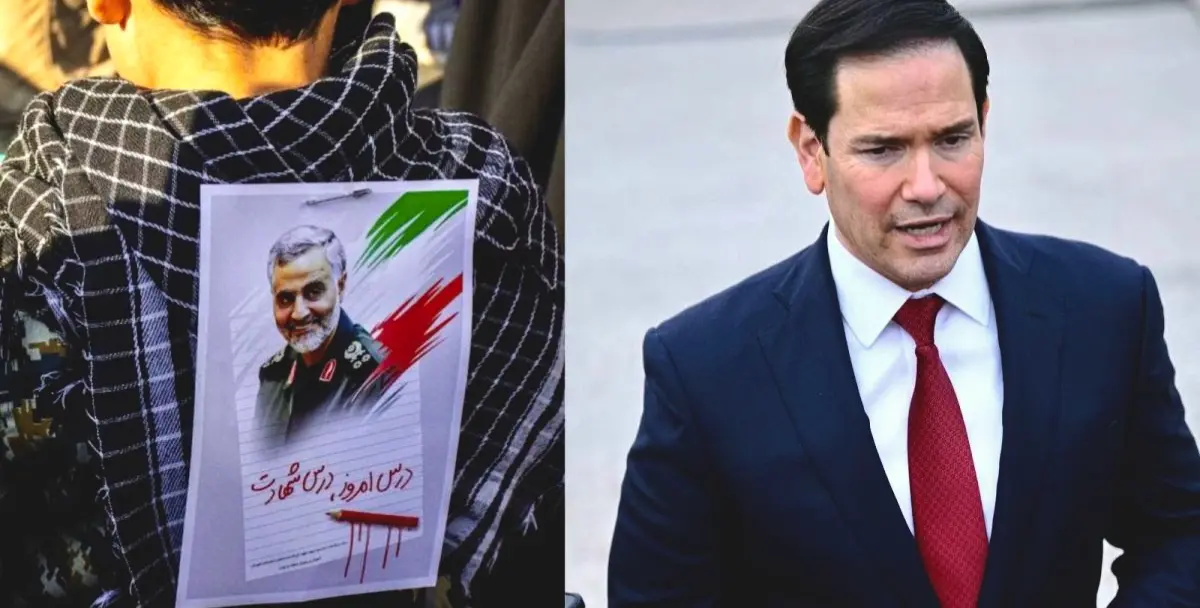
US Revokes Green Cards of Soleimani's Relatives Amid Iran Tensions
US Secretary of State Marco Rubio has revoked the green cards of Hamideh Soleimani Afshar, niece of slain Iranian commander Qassem Soleimani, and her daughter. They have been taken into ICE custody for deportation, accused of promoting anti-American propaganda and supporting the Iranian regime. This action signals heightened tensions between the US and Iran.
Key Highlights
- Secretary Marco Rubio revoked green cards of Soleimani's niece and her daughter.
- Hamideh Soleimani Afshar and daughter are in ICE custody for deportation.
- Afshar accused of promoting Iranian propaganda and supporting IRGC.
- Action taken amidst broader US efforts targeting Iranian officials' kin.
- Iranian reports dispute relatives' presence in the US.
- Event occurs during a hypothetical second Trump administration.
The United States, under Secretary of State Marco Rubio, has taken significant immigration action by revoking the lawful permanent resident status, commonly known as green cards, of two individuals identified as relatives of the late Iranian military commander Qassem Soleimani. Hamideh Soleimani Afshar, identified as Soleimani's niece, and her daughter have been detained by US Immigration and Customs Enforcement (ICE) and are currently awaiting deportation from the United States. This development, reported by numerous credible news outlets including Reuters, The Guardian, Al Jazeera, and The Times of India, occurred in early April 2026, within the context of a hypothetical second Trump administration, where Marco Rubio serves as the 72nd Secretary of State since January 2025.
Secretary Rubio announced the termination of their legal status, citing their alleged support for the Iranian government and anti-American sentiment. According to statements from the State Department and Rubio himself, Afshar is accused of actively promoting Iranian regime propaganda, celebrating attacks against American soldiers and military facilities in the Middle East, praising the new Iranian Supreme Leader, and denouncing the United States as the "Great Satan." She is also alleged to have voiced "unflinching support" for the Islamic Revolutionary Guard Corps (IRGC), an organization designated as a terrorist entity by the US government. Furthermore, officials noted that Afshar had been enjoying a "lavish lifestyle" in Los Angeles, which was reportedly documented on her now-deleted Instagram account. In addition to the mother and daughter, Afshar's husband has also been barred from entering the United States.
This action is part of a broader effort by the Trump administration to exert pressure on Iran and target individuals with ties to senior Iranian officials. Earlier in the same month, Secretary Rubio also terminated the legal status of Fatemeh Ardeshir-Larijani, the daughter of veteran Iranian politician Ali Larijani, and her husband Seyed Kalantar Motamedi. Both Ardeshir-Larijani and Motamedi are no longer in the United States and are prohibited from future entry. These measures underscore the ongoing heightened tensions between Washington and Tehran, particularly in the wake of the killing of Qassem Soleimani in a US drone strike in January 2020 during Donald Trump's first term.
While US officials assert their reasons for these actions, Iranian news agencies have presented a contradictory narrative. Soleimani's daughter, Narjes Soleimani, reportedly stated that her family members and relatives have never resided in the United States and that her father had two nephews, not nieces. This discrepancy highlights the contentious nature of the issue and the differing accounts from the involved parties. Regardless of the Iranian denials, the US government has proceeded with the revocation of green cards and the detention of Hamideh Soleimani Afshar and her daughter, signaling a firm stance against individuals perceived to be supporting anti-American regimes while residing in the US. The incident has significant implications for international relations, immigration policy, and national security, making it a topic of global interest, particularly for audiences in India concerned with geopolitical developments.
The verification process confirmed that the core claims of the original article – Marco Rubio revoking green cards of Soleimani's relatives and their subsequent transfer to ICE for deportation – are accurately reported by multiple news sources within the established 2026 timeline where Rubio holds the position of Secretary of State. The headline precisely reflects the factual information available, and while there's a dispute from the Iranian side regarding the familial ties and residency, the US government's stated actions and justifications are consistently corroborated across various reputable news organizations. This story falls under the categories of Politics, International Relations, Immigration, and National Security, and holds high importance and urgency due to its potential impact on global diplomacy and US-Iran relations. The event is trending given its recent occurrence in the provided context.
Frequently Asked Questions
Who are Hamideh Soleimani Afshar and her daughter?
Hamideh Soleimani Afshar is identified by US authorities as the niece of the late Iranian military commander Qassem Soleimani. She and her daughter are the two individuals whose US green cards have been revoked by Secretary of State Marco Rubio.
Why were their green cards revoked?
Their green cards were revoked because US Secretary of State Marco Rubio and the State Department allege that Hamideh Soleimani Afshar promoted Iranian regime propaganda, celebrated attacks against American soldiers, praised Iran's Supreme Leader, denounced the US, and supported the IRGC while living in the United States.
What happens next for Afshar and her daughter?
Hamideh Soleimani Afshar and her daughter are currently in the custody of US Immigration and Customs Enforcement (ICE) and are facing deportation proceedings from the United States.
What is the broader context of these actions?
These actions are part of a broader policy by the Trump administration to target individuals linked to senior Iranian officials and to increase pressure on Iran amid ongoing tensions. Similar actions were also taken against relatives of Iranian politician Ali Larijani.
Who is Marco Rubio and what is his role?
In the hypothetical timeline of April 2026, Marco Rubio serves as the 72nd United States Secretary of State under a second Trump administration, having taken office on January 21, 2025. He is responsible for directing US foreign policy and is empowered to make decisions regarding the legal status of foreign nationals.