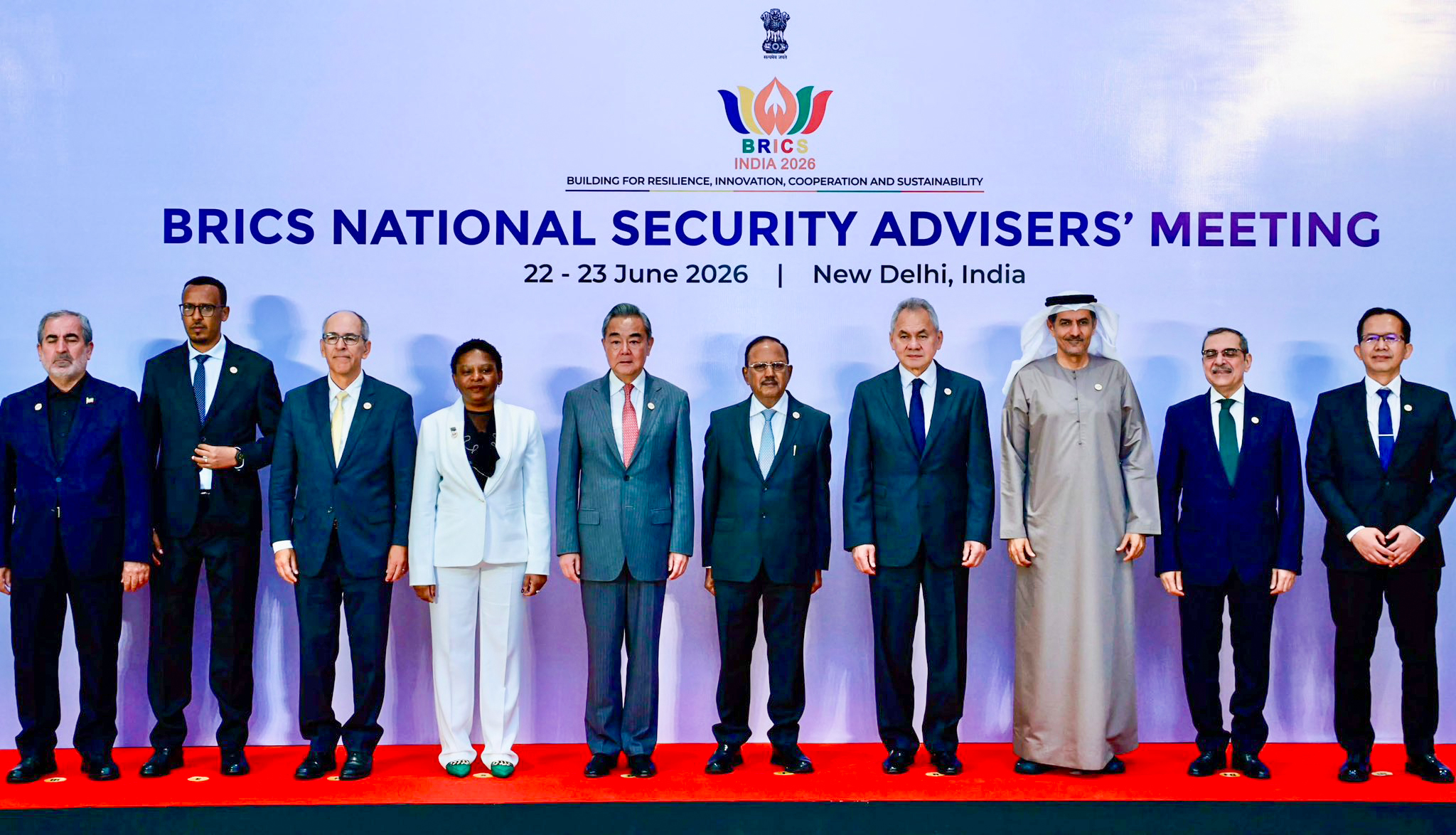
NSA Doval Meets Iran Security Chief Amid Regional Tensions
National Security Advisor Ajit Doval held discussions with Iran's Supreme National Security Council Secretary Ali Akbar Ahmadian in Tehran. The talks focused on bilateral cooperation and regional security issues amidst heightened Middle East tensions.
Key Highlights
- India's NSA Ajit Doval held talks with Iran's top security official.
- Discussions focused on bilateral security cooperation and regional dynamics.
- The meeting occurred amid escalating tensions in the Middle East.
- This high-level engagement underscores India's diplomatic outreach.
- Both nations emphasized maintaining stability in the region.
National Security Advisor Ajit Doval engaged in high-level security talks with Ali Akbar Ahmadian, the Secretary of Iran's Supreme National Security Council, in Tehran. This crucial meeting, occurring against the backdrop of escalating tensions in the Middle East, underscores India's proactive diplomatic engagement in the region. The discussions were centered on strengthening bilateral security cooperation and addressing the complex regional security landscape.
The visit highlighted the importance both India and Iran place on maintaining dialogue and strategic communication, especially during periods of heightened geopolitical instability. NSA Doval's trip signals India's commitment to fostering stability and peace in West Asia, a region critical to India's energy security and economic interests. The talks likely encompassed a range of security concerns, including counter-terrorism efforts, maritime security in the Persian Gulf and Indian Ocean, and the broader implications of ongoing conflicts and political realignments in the Middle East.
India has consistently advocated for de-escalation and a diplomatic resolution to regional conflicts. Its engagement with Iran, a significant regional player, is a key component of this strategy. The meeting also provided an opportunity to discuss shared challenges and explore avenues for enhanced collaboration on issues of mutual concern. The specific details of the security agenda remain confidential, but given the current geopolitical climate, discussions on the security of vital sea lanes, the fight against extremist ideologies, and the impact of international sanctions on regional stability were likely prominent.
The presence of China's Foreign Minister at a concurrent BRICS meet, as reported by Deccan Chronicle, places this bilateral security dialogue within a larger context of evolving global alliances and power dynamics. India's multi-aligned approach seeks to balance its relationships with various global powers while pursuing its national interests, particularly in ensuring regional security and economic prosperity. NSA Doval's visit to Tehran is a testament to this diplomatic flexibility.
Furthermore, the discussions may have touched upon the Chabahar port development and its potential role in regional connectivity and trade, an area where both India and Iran have significant stakes. The ongoing efforts to ensure the safety of Indian citizens residing or traveling in the region and the protection of India's economic assets were also likely points of discussion. The meeting reaffirms India's stance on constructive engagement with regional partners to navigate complex geopolitical challenges and promote a stable, secure environment. The Times of India report emphasizes the significance of such high-level exchanges in reinforcing diplomatic ties and addressing critical security imperatives. The commitment to continue such dialogues signals a long-term approach to managing regional security challenges. The importance of this meeting is amplified by the fact that it involves direct, high-level security consultations between two key Asian nations amidst a period of significant global geopolitical flux.
The dialogue between NSA Doval and Secretary Ahmadian serves as a crucial diplomatic maneuver, reflecting India's strategic foresight in engaging directly with influential nations to shape regional security outcomes. It is a clear indication of India's growing assertiveness and its willingness to play a more significant role in global and regional security architecture. The focus on bilateral cooperation within the broader context of regional stability highlights India's nuanced approach to foreign policy, prioritizing dialogue and strategic partnerships to mitigate threats and foster a peaceful international order. The comprehensive nature of the discussions, spanning counter-terrorism to maritime security and economic ties, showcases the depth of the India-Iran relationship and its strategic importance in the current global dispensation. The ongoing engagement underscores the dynamic nature of international relations and India's commitment to proactive diplomacy.
Frequently Asked Questions
Who is NSA Ajit Doval?
Ajit Doval is the National Security Advisor (NSA) to the Prime Minister of India. He is a retired Indian Police Service (IPS) officer and a key figure in India's national security apparatus.
Who is Ali Akbar Ahmadian?
Ali Akbar Ahmadian is the Secretary of Iran's Supreme National Security Council (SNSC), a significant body that advises the Supreme Leader on national security and foreign policy matters.
Why are Middle East tensions a concern?
The Middle East is a strategically vital region for global energy supplies, international trade routes, and geopolitical stability. Tensions can lead to conflicts, disrupt economies, impact oil prices, and affect international relations.
What is the significance of India's engagement with Iran?
Iran is a crucial neighbor and a major player in the Middle East. India's engagement with Iran is important for its energy security, regional connectivity (e.g., Chabahar Port), counter-terrorism efforts, and maintaining a stable geopolitical balance in the region.