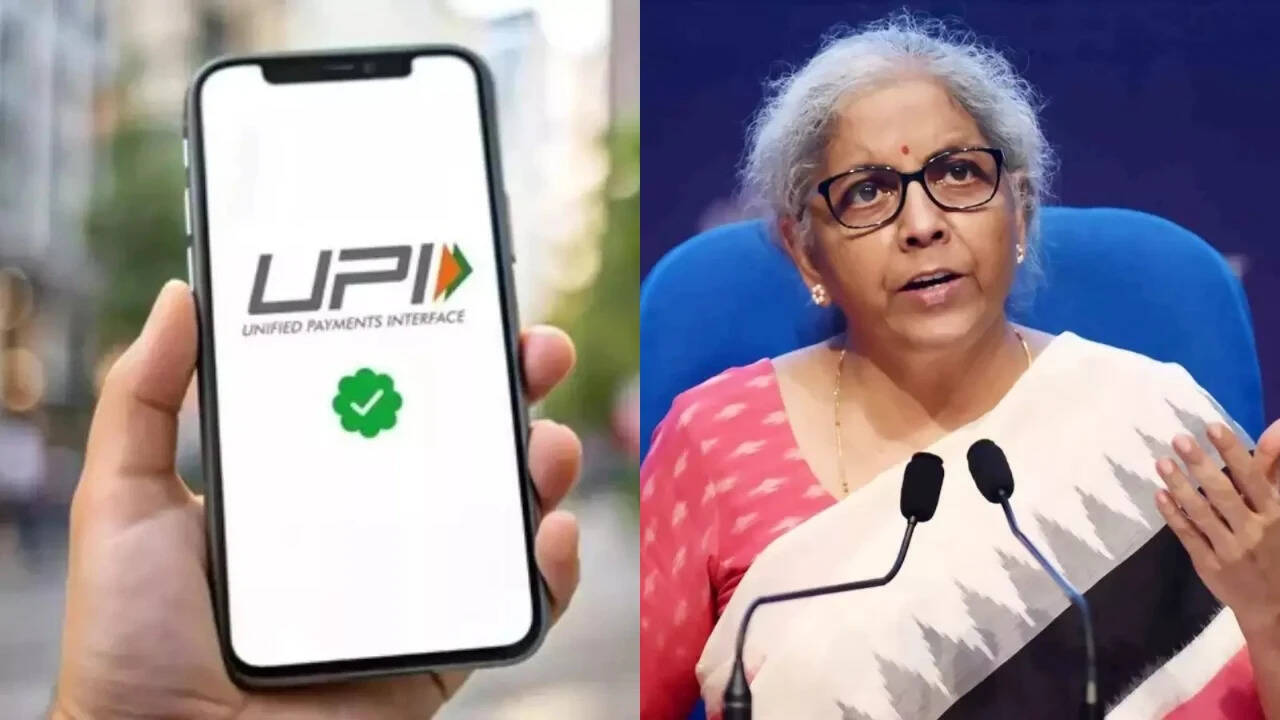
UPI Remains Free: No Transaction Charges for Consumers, Small Merchants
The Payments Council of India (PCI) and the government have clarified that UPI transactions will continue to be free for consumers and small merchants. This assurance comes amidst public discussions regarding Merchant Discount Rate (MDR) and recent amendments to payment laws. Any potential nominal charges will only apply to a limited set of larger merchant transactions, not individuals or small businesses.
Key Highlights
- Consumers face no charges for UPI transactions.
- Small merchants remain exempt from UPI transaction fees.
- PCI and government issued clarifications on UPI charges.
- MDR, if applied, is nominal for select large merchant transactions.
- P2P transactions will continue to be free.
- Clarification addresses concerns from recent payment law amendments.
The Unified Payments Interface (UPI) will continue to remain free for consumers and small merchants in India, the Payments Council of India (PCI) and the government have unequivocally clarified. This comes amidst growing public discussion and speculation regarding potential transaction charges, particularly following recent amendments to India's payment laws. The News On AIR article accurately reports on these clarifications, stating that UPI transactions will not incur any fees for individuals or small businesses.
The Payments Council of India, an industry body, confirmed on Friday, August 7, 2026, that UPI has been free for consumers since its launch in 2016 and there is no proposal to levy transaction charges on individuals using the platform. This stance was echoed across numerous credible news outlets, including The Economic Times, BusinessToday, The Tribune, The Statesman, and NDTV Profit, all publishing between August 7 and August 9, 2026. The PCI emphasized that every Indian can continue to make instant digital payments without paying any transaction charges.
Furthermore, the clarification specifically addresses concerns for small merchants, including kirana stores. The PCI stated that small merchants are not required to pay any charges, such as Merchant Discount Rate (MDR), for accepting UPI payments. This is crucial for India's inclusive digital growth strategy, as UPI was designed to make digital payments accessible and affordable for even the smallest businesses across the country.
The broader debate surrounding UPI charges stems from discussions on the sustainability of India's rapidly expanding digital payments infrastructure and the recent passage of the Taxation and Other Laws (Amendment) Bill, 2026, in the Lok Sabha. This legislation empowers the government to levy an MDR on select electronic payment modes. However, both the PCI and the government have been swift to clarify the implications of this amendment.
The government's position, as communicated by the Ministry of Finance, reinforces that any Merchant Discount Rate (MDR), if introduced, would apply only to a limited set of merchant transactions above a certain threshold, and at a nominal rate. This rate would be significantly lower than the MDR typically associated with debit or credit card transactions. Crucially, person-to-person (P2P) transactions will also continue to be entirely free of charge. The vast majority of merchant transactions are also expected to remain free.
The government also refuted media reports suggesting that external influences were driving these policy changes, terming such reports as "unfounded, completely false and misleading." It highlighted that if external pressure were a factor, UPI would not have been introduced as a free service in 2016, nor would it have been kept free for both merchants and citizens since January 2020, leading to its status as the world's largest real-time interoperable payment system.
The industry bodies, including PCI, stress the importance of continued investment in UPI's infrastructure, security, innovation, and fraud prevention to ensure its long-term reliability and resilience, especially as transaction volumes continue to surge. The recent legislative changes are framed as an enabling provision to ensure the long-term sustainability and technological robustness of the UPI ecosystem, without burdening everyday users or small businesses with transaction fees.
In essence, the news confirms that the fundamental principle of free UPI transactions for consumers and small merchants remains intact, assuaging widespread public concerns that arose from policy discussions and legislative amendments regarding the funding model of the digital payment infrastructure.
Frequently Asked Questions
Will I have to pay charges for making UPI transactions as a consumer?
No, the Payments Council of India (PCI) and the government have clarified that UPI transactions will continue to be completely free for consumers.
Will small merchants be charged for accepting UPI payments?
No, small merchants, including kirana stores, are not required to pay any charges, such as Merchant Discount Rate (MDR), for accepting UPI payments.
What is the Merchant Discount Rate (MDR) and how does it relate to UPI?
MDR is a fee merchants typically pay to banks/payment providers for processing digital transactions. While there have been discussions and recent legislative amendments regarding MDR for UPI, the government has clarified that any MDR, if applied, would be nominal, threshold-based, and only for a limited set of larger merchant transactions, not for consumers or small businesses.
Does the recent amendment to payment laws mean UPI will become chargeable?
The recent amendment to the Payment and Settlement Systems Act, 2007, empowers the government to levy MDR on select electronic payment modes, but official clarifications state this is an enabling provision for ecosystem sustainability and does not mean charges for consumers or small merchants.
Are person-to-person (P2P) UPI transactions still free?
Yes, all person-to-person (P2P) UPI transactions will continue to remain free of charge.