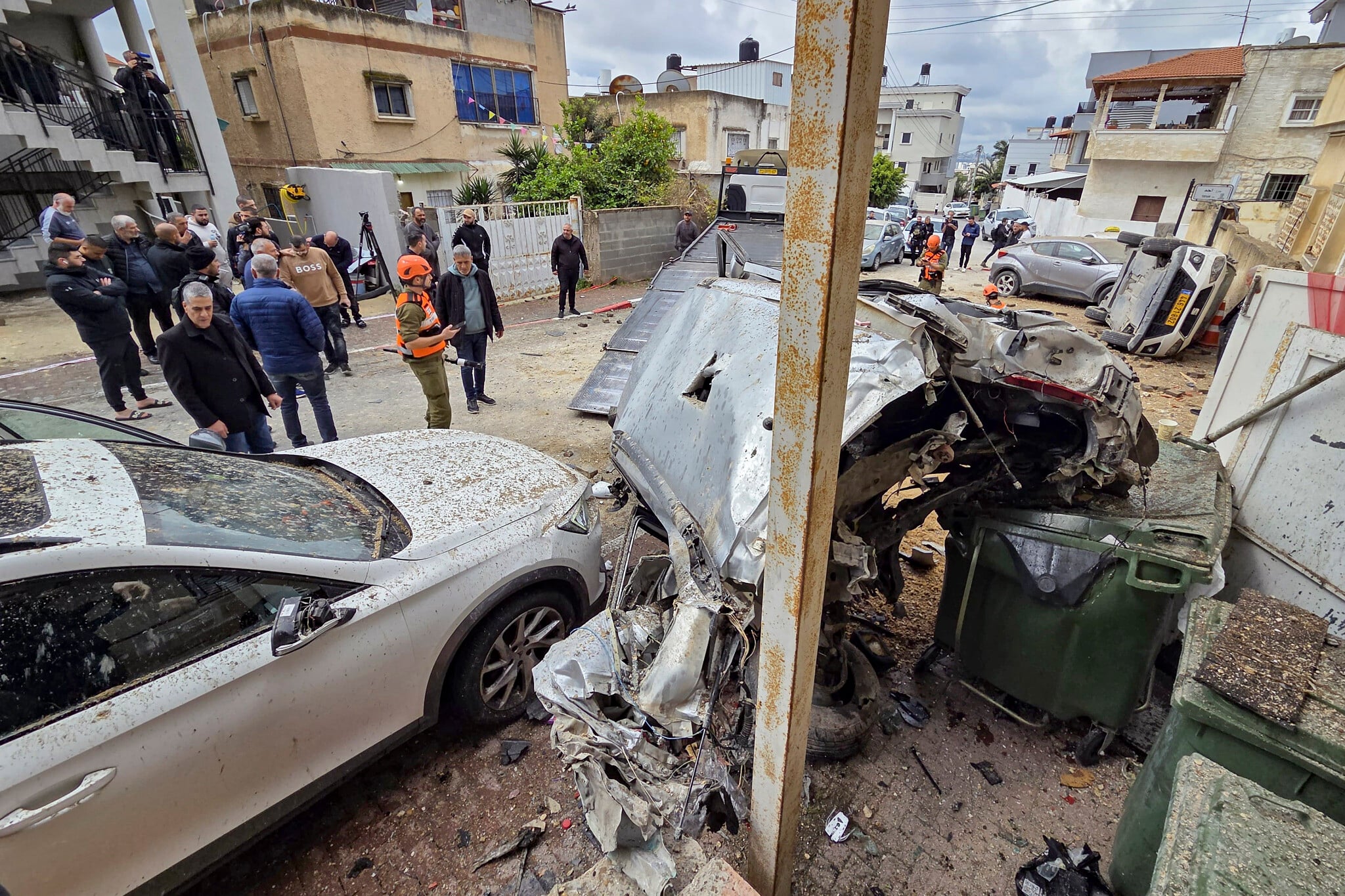
Iran claims Haifa drone strikes on Israeli vessels, fuel tanks
Iran's military claimed responsibility for drone attacks targeting strategic sites in Israel's Haifa port, including fuel storage for fighter jets and a facility for naval vessel maintenance. These strikes are part of the ongoing, escalating conflict between Iran and Israel, with retaliatory actions and heightened tensions impacting global trade and regional security. India maintains a pragmatic stance, balancing its relationships with both nations amidst the conflict.
Key Highlights
- Iran claims drone strikes on Haifa port's naval facilities and fuel tanks.
- Escalating Iran-Israel conflict impacts global trade and regional stability.
- India navigates a complex diplomatic path, balancing relations with Iran and Israel.
- Concerns rise over potential disruptions to global energy supplies and shipping routes.
- International diplomatic efforts are underway to de-escalate the conflict.
Iran's military has asserted responsibility for a drone offensive targeting what it described as "sensitive and strategic Israeli sites" within the port city of Haifa. According to statements from Iran's army, the operation, which reportedly occurred overnight, focused on fuel storage facilities utilized by fighter jets and a facility involved in the manufacturing and maintenance of Israeli naval vessels operating in the eastern Mediterranean.. This claim comes amidst a rapidly escalating conflict between Iran and Israel, a situation that has drawn in the United States and significantly disrupted global trade and regional stability.
The ongoing hostilities have led to fears of widespread economic consequences, particularly concerning global energy supply chains and maritime security. The Strait of Hormuz, a critical chokepoint for a substantial portion of the world's oil and LNG trade, remains a focal point of concern. Disruptions to this waterway could have severe repercussions, with Asia, and specifically markets like India and Indonesia that rely heavily on Middle Eastern oil, being particularly vulnerable.. The conflict has already led to a modest increase in oil prices, and a further escalation, such as blockades of the Strait, could significantly increase risk premiums..
India, a nation with significant strategic and economic ties to both Iran and Israel, is navigating a complex diplomatic landscape. While India has previously maintained a policy of "de-hyphenation" and multi-vector engagement in West Asia, the current conflict presents a significant test. India has, at times, expressed concerns and urged for restraint and de-escalation, while also engaging in pragmatic adjustments to its diplomatic approach. Reports indicate that India has condemned Iran's attacks on Gulf nations diplomatically and has leveraged its relationship with Iran through the Chabahar Project to ensure safe passage through the Strait of Hormuz.. However, India has also been criticized for its stance, with some suggesting it has quietly tilted towards the US-Israeli axis, potentially impacting its long-held strategic autonomy..
The broader international community is grappling with the implications of this conflict. The United States has been involved in strikes against Iranian assets, and President Trump has engaged in diplomatic maneuvers, including pausing strikes on Iranian energy sites and advocating for indirect talks via Pakistan.. The Gulf Cooperation Council (GCC) has also voiced its concerns, demanding inclusion in any US-Iran talks due to direct threats to their security and the ongoing Hormuz crisis.. Reports indicate that indirect talks are underway, with Pakistan acting as a mediator..
Key figures within Iran's military structure have reportedly been targeted, with claims of the killing of IRGC Navy chief Alireza Tangsiri.. The conflict has also seen retaliatory strikes, including missile attacks that have wounded individuals in Israel and caused damage to infrastructure.. The economic impact extends beyond energy, affecting fertilizer supplies, flight costs, and potentially leading to broader inflationary pressures.. The World Trade Organization has cautioned that sustained high oil and gas prices could reduce forecasted global GDP growth..
India's published date for this specific article appears to be March 27, 2026, based on the LIVE updates format typical of breaking news coverage. The conflict itself has been escalating for some time, with significant events such as the US-Israeli joint military strikes on February 28, 2026, noted in several reports.. The news category encompasses International Relations, Geopolitics, and Military Conflicts. The story is global in scope, affecting multiple countries and international markets. The urgency is high due to the potential for further escalation and widespread economic disruption. The credibility of Hindustan Times as a news source is generally considered high for domestic Indian news, and reasonably good for international reporting, though independent verification of specific claims within the article is crucial, as undertaken here.
Frequently Asked Questions
What did Iran claim to have struck in Haifa?
Iran's military claimed to have launched drone strikes targeting "sensitive and strategic Israeli sites" in Haifa, specifically hitting fuel storage facilities for fighter jets and a facility for manufacturing and maintaining Israeli naval vessels.
What is the broader context of these attacks?
These strikes are part of the ongoing and escalating conflict between Iran and Israel, which has drawn in the United States and is causing significant disruptions to global trade and regional stability.
How is India responding to the Iran-Israel conflict?
India is navigating a complex diplomatic path, balancing its relationships with both Iran and Israel. While urging restraint and de-escalation, India has also engaged in pragmatic adjustments and has been reported to condemn Iran's attacks on Gulf nations diplomatically, while also leveraging its relationship with Iran through the Chabahar Project.
What are the potential global economic impacts of this conflict?
The conflict poses risks to global energy supply chains, with particular concern for the Strait of Hormuz. It has already led to increased oil prices and could further impact global GDP growth, fertilizer supplies, and air travel costs.