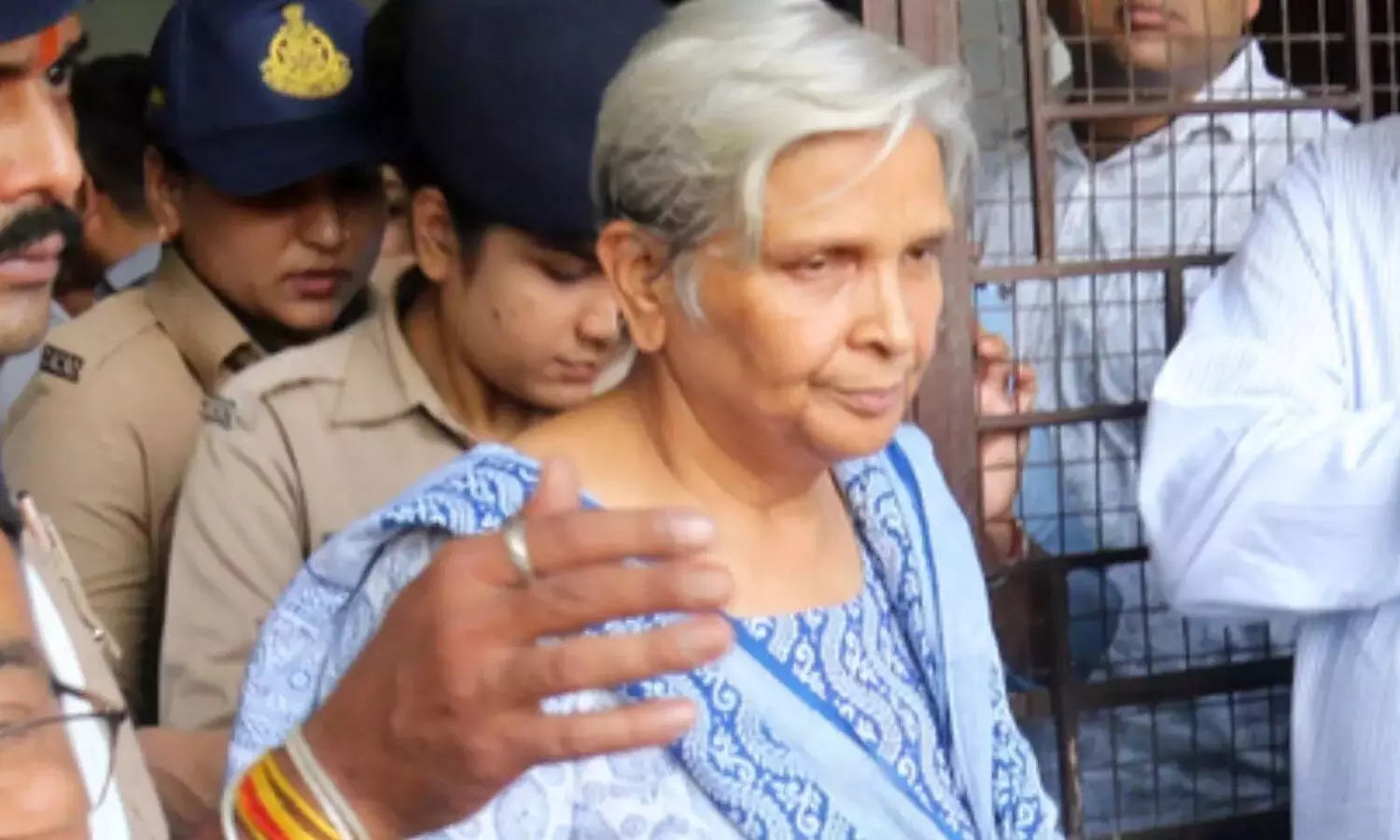
Twisha Sharma Case: CBI Takes Over Probe, SC Urges Media Restraint
The Supreme Court has directed the CBI to take over the probe into the Twisha Sharma death case, following allegations of institutional bias. The Court also urged the media and families to exercise restraint in publishing statements, emphasizing a fair and impartial investigation into the dowry death allegations. The Solicitor General notably stated, 'Better to have a divorced daughter than a dead one.'
Key Highlights
- CBI assumes control of Twisha Sharma dowry death investigation.
- Supreme Court mandates media restraint on witness/accused statements.
- Court took suo motu cognizance over institutional bias concerns.
- Solicitor General stresses 'divorced daughter better than dead' principle.
- Twisha Sharma, 33, found dead five months into marriage.
- Husband, mother-in-law face dowry harassment, abetment charges.
The high-profile Twisha Sharma death case, which involves allegations of dowry harassment and abetment to suicide, has been officially handed over to the Central Bureau of Investigation (CBI). This development comes after the Supreme Court of India took suo motu cognizance of the matter, expressing concern over a 'narrative' suggesting institutional bias and procedural discrepancies in the initial stages of the investigation.
Twisha Sharma, a 33-year-old former Miss Pune winner, was tragically found dead at her matrimonial home in Bhopal's Katara Hills on May 12, 2026, merely five months after her marriage. Her family swiftly alleged persistent domestic violence, dowry harassment, and abetment to suicide against her husband, Samarth Singh, and her mother-in-law, Giribala Singh. Notably, Samarth Singh is a practicing advocate, and Giribala Singh is a former district judge. These professional backgrounds led to public and media concerns about potential undue influence on the investigation, sparking the aforementioned 'judiciary shielding accused' narrative that ultimately prompted the Supreme Court's intervention.
During a crucial hearing on May 24, 2026, the Supreme Court bench, led by Chief Justice of India Surya Kant and including Justice Joymalya Bagchi, addressed these concerns. Solicitor General of India Tushar Mehta, representing the Madhya Pradesh government, informed the Apex Court that the CBI would indeed take over the investigation, assuring that all necessary administrative steps would be implemented immediately. This move aims to ensure a fair, independent, and impartial probe, alleviating fears of potential bias given the accused's judicial connections.
In a powerful statement during the proceedings, Solicitor General Tushar Mehta remarked, 'For parents, it is better to have a divorced daughter than to have a dead one.' This observation underscored the immense societal pressure faced by women in unhappy marriages and the tragic consequences when such situations escalate. Mehta elaborated on the victim's distress, stating, 'She was living in hell,' referencing messages Twisha had reportedly sent to her mother. The remark has resonated widely, prompting discussions on social stigma surrounding divorce versus the endurance of marital suffering in Indian society.
A significant aspect of the Supreme Court's directive was an earnest appeal to the media to exercise restraint in its reporting. The Court specifically requested that media outlets avoid publishing statements of potential witnesses or accused, and refrain from speculation, as such actions could potentially prejudge issues and impede the ongoing investigation. Chief Justice Surya Kant emphasized that the judiciary was 'pained' by the narrative suggesting a lack of a fair trial and reiterated the importance of allowing the law and due procedure to take their course. The bench also urged the public to place their trust and faith in the CBI, the country's premier investigating agency, to bring the investigation to a just conclusion.
Prior to the Supreme Court's intervention, a second autopsy on Twisha Sharma's body was conducted by a team from AIIMS Bhopal. This step was taken following the family's doubts regarding the initial findings and their demand for a fresh examination to ascertain the exact cause of death. An FIR had been registered against Samarth Singh and his mother under sections 80(2), 85, and 3(5) of the Bharatiya Nyaya Sanhita, 2023 (corresponding to Sections 304-B, 498-A, and 34 of the Indian Penal Code), along with relevant provisions of the Dowry Prohibition Act, alleging dowry harassment and abetment to suicide. In a related development, the Bar Council of India has also suspended Samarth Singh from legal practice with immediate effect, pending the ongoing investigation.
The case has garnered significant national attention, not only due to the tragic circumstances of Twisha Sharma's death but also because it highlights critical issues within the legal system, media ethics, and societal norms concerning marriage and divorce in India. Further court proceedings related to bail applications and custody of the accused have continued in the months following the Supreme Court's initial directives, indicating the ongoing nature and complexity of the case.
Frequently Asked Questions
What is the Twisha Sharma death case about?
The Twisha Sharma death case involves the unnatural death of 33-year-old former model Twisha Sharma in her matrimonial home in Bhopal on May 12, 2026. Her family has accused her husband, Samarth Singh, and mother-in-law, Giribala Singh, of dowry harassment and abetment to suicide.
Why did the Supreme Court get involved in the Twisha Sharma case?
The Supreme Court took suo motu cognizance of the case due to concerns about institutional bias and procedural discrepancies in the initial investigation. These concerns arose because the accused, Twisha's husband, is a lawyer, and her mother-in-law is a former district judge, leading to a narrative that the judiciary was shielding the accused.
What role is the CBI playing in the investigation?
The Central Bureau of Investigation (CBI) has taken over the probe into Twisha Sharma's death. This was confirmed by Solicitor General Tushar Mehta to the Supreme Court, ensuring an independent and impartial investigation into the serious allegations.
What did the Supreme Court say about media reporting in this case?
The Supreme Court urged the media to exercise restraint in reporting on the Twisha Sharma case. It specifically requested media outlets to avoid publishing statements of potential witnesses or accused individuals and to refrain from speculation, emphasizing the need to prevent prejudicing the investigation.
What is the significance of the 'Divorced Daughter Better Than Dead' remark?
The remark 'For parents, it is better to have a divorced daughter than to have a dead one,' made by Solicitor General Tushar Mehta, highlights the severe societal pressure on women in India to remain in unhappy or abusive marriages. It serves as a stark commentary on the tragic consequences that can arise when the stigma of divorce outweighs concerns for a woman's well-being and safety.