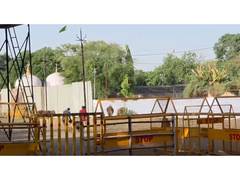
MP High Court rules Bhojshala complex is a Hindu temple
The Madhya Pradesh High Court has declared the disputed Bhojshala complex in Dhar a temple dedicated to Goddess Saraswati. The court quashed a 2003 ASI order regulating worship and suggested the Muslim community seek alternative land for a mosque. The ruling cited historical and archaeological evidence, emphasizing the continuity of Hindu worship at the site.
Key Highlights
- MP High Court declared Bhojshala complex a Hindu temple.
- Muslim community can seek alternative land for mosque construction.
- Court quashed the 2003 ASI order on worship regulations.
- Ruling based on historical, archaeological evidence and continuity of worship.
- Idol of Goddess Saraswati from London Museum to be pursued.
In a landmark judgment, the Madhya Pradesh High Court, Indore bench, declared the disputed Bhojshala-Kamal Maula Mosque complex in Dhar as a temple dedicated to Goddess Vagdevi (Saraswati). The court's decision on May 15, 2026, quashed a 2003 order by the Archaeological Survey of India (ASI) that had regulated worship at the site, allowing Muslims to offer prayers on Fridays and Hindus on Tuesdays. The High Court stated that the religious character of the site is that of Bhojshala, a temple of Goddess Saraswati, and an ancient center of Sanskrit learning associated with King Bhoj of the Paramara dynasty. The ruling was based on extensive historical literature, architectural references, and findings from an ASI-ordered scientific survey. The court noted the continuity of Hindu worship at the site, stating it had 'never been extinguished.'
The court suggested that the Muslim community could approach the state government for allotment of suitable land in Dhar district for the construction of a mosque. This move aims to secure the religious rights of the Muslim community while resolving the long-standing dispute. The judgment also directed the Union government and the ASI to make decisions regarding the administration and management of the Bhojshala temple and Sanskrit learning center, with the ASI retaining overall control of the protected monument. Furthermore, the court recommended that the Union government pursue efforts to repatriate an idol of Goddess Saraswati from the London Museum to the Bhojshala complex.
The Bhojshala complex, located in Dhar, Madhya Pradesh, is an 11th-century monument with a complex history. It was founded by King Raja Bhoja in 1034 AD and served as a university for Sanskrit learning, music, astronomy, yoga, and Ayurveda. The site has been a subject of contention between Hindu and Muslim communities for centuries, with claims also made by a Jain community representative. Historical accounts suggest attacks and conversion attempts on the complex during the medieval period, with the structure being partially transformed into the Kamal Maula Mosque. The dispute gained renewed attention after the demolition of the Babri Masjid in 1992, leading to fresh petitions and a court-ordered ASI survey in 2024.
The court's decision appears to have drawn upon principles from the Supreme Court's 2019 Ayodhya judgment, particularly regarding the standard of proof, scope of judicial inquiry, and the weight given to ASI reports. The Places of Worship (Special Provisions) Act, 1991, was invoked by respondents, but the court ruled that it excludes monuments covered by the Ancient Monuments and Archaeological Sites and Remains Act, 1958, making it inapplicable here as Bhojshala is a protected monument. The Madhya Pradesh High Court Bar Association had previously raised concerns about bail hearings and criminal matters, but this specific case involves a civil dispute over religious site status.
The Muslim side has indicated that they will review the verdict and may challenge it in the Supreme Court. The ruling is seen as a landmark judgment with significant religious, legal, and political implications across India.
Frequently Asked Questions
What is the Bhojshala complex?
The Bhojshala complex in Dhar, Madhya Pradesh, is an 11th-century monument historically believed to be a center of Sanskrit learning founded by King Raja Bhoja, dedicated to Goddess Saraswati. It has been a site of religious dispute between Hindu and Muslim communities.
What did the Madhya Pradesh High Court rule regarding Bhojshala?
The Madhya Pradesh High Court declared the Bhojshala complex a temple dedicated to Goddess Saraswati, quashed a 2003 ASI order regulating worship, and suggested the Muslim community seek alternative land for a mosque.
On what basis was the court's decision made?
The court's ruling was based on historical literature, architectural references, evidence from an ASI-ordered scientific survey, and the noted continuity of Hindu worship at the site.
What is the significance of the idol of Goddess Saraswati from London?
The court directed the Union government to consider efforts to repatriate an idol of Goddess Saraswati from the London Museum to the Bhojshala complex, acknowledging its historical significance.
What are the next steps for the Muslim community?
The Muslim community can approach the state government for suitable land to construct a mosque. They have indicated they will review the verdict and may challenge it in the Supreme Court.