Iran Warns US of 'Lost Decade' as Gulf Tensions Escalate
Iran has issued a stark warning to the United States, predicting a 'lost decade' for its economy if Washington targets Iranian energy infrastructure. This threat from Iran's Parliament Speaker comes amid escalating US-Iran tensions in the Gulf and fresh strikes on oil tankers, driving global oil prices higher and raising concerns over the vital Strait of Hormuz.
Key Highlights
- Iran warns of a 'lost decade' for the US economy.
- Warning follows US strikes on Iranian oil tankers.
- Iran threatens retaliation against US energy assets.
- Strait of Hormuz shipping traffic hits new lows.
- Oil prices climb amid escalating US-Iran conflict.
- Tehran plans an 'exclusion zone' near the Strait of Hormuz.
Tensions between Iran and the United States have sharply escalated, with Iran issuing a severe economic warning to Washington following recent military confrontations in the Gulf. On Monday, September 7, 2026, Iranian Parliament Speaker Mohammad Bagher Ghalibaf warned that a 'lost decade' for the U.S. economy is imminent if Washington continues to target Iran's energy infrastructure. This ominous prediction was conveyed through a post on X (formerly Twitter), where Ghalibaf shared an image featuring oil pipelines and the message: 'The lost decade of the US Economy is coming, because some clowns at D.O. [I]. W. decided so.'
Ghalibaf's remarks came as a direct response to warnings from U.S. Secretary of War Pete Hegseth, who had claimed Iran's oil tanker fleet was 'defenseless' and threatened to destroy it if Iran attacked American ships. Hegseth's statements, in turn, followed U.S. strikes on Iranian oil tankers, which the U.S. justified as retaliation for Iranian ballistic missile attacks on U.S. warships.
The Iranian Parliament Speaker underscored the vulnerability of oil and gas infrastructure across the Gulf region, explicitly stating that American energy interests could be exposed to Iranian retaliation. He warned, 'It's simple: the oil and gas production chain here is sprawling, accessible, and exposed. American oil and gas companies across these waters and facilities share that exposure. Strike our assets and you get struck. We've already proven it. Ask the bases that are no longer viable.'
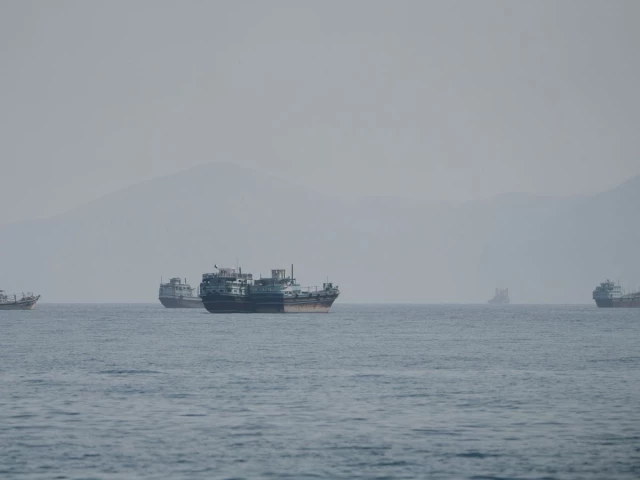
This latest exchange of threats and military actions has significantly heightened concerns over shipping through the Strait of Hormuz, a crucial chokepoint for global energy supplies. The Strait, through which a substantial portion of the world's seaborne oil and liquefied natural gas (LNG) passes, has seen its traffic hit the lowest levels since May due to the ongoing strikes and heightened risks. Maritime intelligence firms like Marisks have assessed the risk as 'extreme for Iranian/Iran-linked tonnage and materially elevated for U.S.-linked or U.S.-escorted shipping' in the Strait of Hormuz and Gulf of Oman.
Oil prices have reacted sharply to the escalating conflict, with Brent crude nearing $97 a barrel, marking a six-week high, amidst fears of supply disruptions from the Gulf. The '2026 Iran war,' which commenced on February 28, 2026, with U.S. and Israeli strikes, has profoundly impacted global travel and trade, leading to acute supply shortages, currency volatility, inflation, and increased risks of stagflation and recession.
Further complicating the situation, Iran's Supreme National Security Council Secretary Mohsen Rezaei announced that Tehran plans to establish an 'exclusion zone' outside the Strait of Hormuz, targeting vessels believed to be attempting to transit the waterway. Iran has also maintained that it will keep the Strait of Hormuz open only if the U.S. ceases threatening or attacking Iran.
The conflict has extended beyond direct U.S.-Iran skirmishes, with reports of Israeli strikes in southern Lebanon killing civilians, and Houthi rebel attacks on Saudi Arabia further destabilizing the broader West Asia region. The United Arab Emirates (UAE) has responded by building alternative routes for its energy exports and trade, aiming to ensure they are not 'held hostage' by the conflict.
Economically, the war has already cost U.S. consumers an estimated additional $100 billion in energy costs, a figure continuously rising. Iran's First Vice President Mohammad Reza Aref had previously warned of 'dark months' for the U.S. economy, advising Americans to stockpile gasoline and fuel. The U.S. has also intensified its 'economic D-Day' sanctions against Iran, attempting to further isolate Tehran financially, which Iran has pledged to counter with its own 'economic attack.' Iran's economy faces severe challenges, including a collapsing currency, spiraling inflation, and low petrol stocks, exacerbated by the U.S. blockade on its oil exports.
Despite the military and economic pressures, Iranian officials, including President Masoud Pezeshkian, have vowed continued resistance, stating that Iran would fight with 'full strength' against aggressors. Diplomatic efforts to de-escalate tensions, such as talks between Iran and Oman regarding a temporary transit route through the Strait of Hormuz, are ongoing, with Japan also calling for 'maximum restraint.'
Frequently Asked Questions
What is Iran's recent warning regarding the U.S. economy?
Iran's Parliament Speaker Mohammad Bagher Ghalibaf warned of a 'lost decade' for the U.S. economy if Washington targets Iranian energy infrastructure, following recent military escalation in the Gulf.
What prompted Iran's warning and threats of retaliation?
Iran's warning came in response to U.S. Secretary of War Pete Hegseth's threats against Iran's oil tanker fleet, which followed U.S. strikes on Iranian oil tankers, themselves a response to Iranian attacks on U.S. warships.
How has the conflict impacted the Strait of Hormuz?
The escalating U.S.-Iran conflict has led to a significant drop in shipping traffic through the Strait of Hormuz, a critical global energy chokepoint, reaching its lowest levels since May 2026 and driving up global oil prices. Iran has also threatened to establish an 'exclusion zone' in the area.
What are the broader economic implications of the U.S.-Iran conflict?
The ongoing conflict, dubbed the '2026 Iran war,' has resulted in significant global economic disruption, including higher energy costs for U.S. consumers, acute supply shortages, currency volatility, and increased risks of stagflation and recession worldwide.
Are there any diplomatic efforts to de-escalate tensions?
Yes, diplomatic efforts are underway, including discussions between Iran and Oman regarding a temporary transit route through the Strait of Hormuz, and calls from countries like Japan for maximum restraint from both sides.