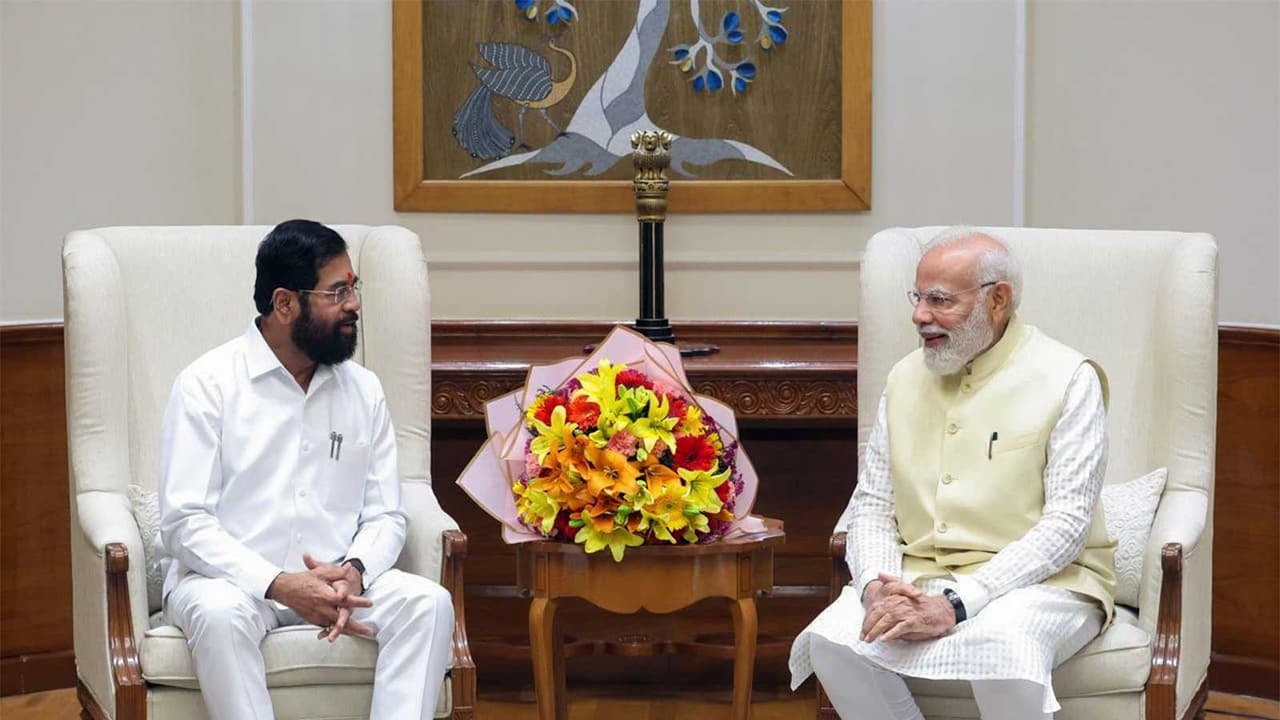
Shinde's Strategy: Engineering Shiv Sena Split and Political Maneuvers
This article details Eknath Shinde's strategic moves to engineer a split within the Shiv Sena party. It examines the political machinations and alliances that led to the division, highlighting Shinde's role in consolidating power. The analysis delves into the aftermath and implications for Maharashtra's political landscape.
Key Highlights
- Eknath Shinde's calculated strategy behind the Shiv Sena split.
- Key political alliances and power plays involved.
- The consolidation of power and its consequences.
- Analysis of Maharashtra's shifting political dynamics.
- Understanding the 'Operation Tiger' moniker and its significance.
- Impact of the split on the Shiv Sena party structure.
The political landscape of Maharashtra witnessed a significant upheaval with the engineered split within the Shiv Sena, spearheaded by Eknath Shinde. Dubbed 'Operation Tiger' by some media outlets, this political maneuver was the culmination of growing discontent and strategic realignments within the party. Shinde, leveraging his position and support base, initiated a decisive move that fundamentally altered the state's political narrative.
The genesis of the split can be traced back to a complex interplay of factors, including ideological differences, power struggles, and perceived marginalization within the Uddhav Thackeray-led faction. Shinde's faction argued for a return to the 'original' Hindutva ideology and a more pragmatic approach to governance, positioning themselves as the true inheritors of Balasaheb Thackeray's legacy. This narrative resonated with a significant portion of the party's cadre and elected representatives, who felt alienated by the perceived shift in the party's direction under Thackeray's leadership.
'Operation Tiger' was meticulously planned, involving the coordination of a large number of Shiv Sena MLAs who subsequently pledged their support to Shinde. The defection was strategically timed to maximize political impact and create a fait accompli for the Thackeray camp. The ensuing political crisis led to a dramatic shift in power, with Shinde eventually forming a government with the support of the Bharatiya Janata Party (BJP), effectively sidelining the Shiv Sena (UBT).
The article likely explores the intricate negotiations and backroom deals that paved the way for this alliance. The BJP's role in facilitating the split and forming the new government is a crucial aspect of the story, indicating a broader political strategy at play in the region. Shinde's ability to garner support from a majority of Shiv Sena MLAs was instrumental in challenging Thackeray's leadership and staking claim to the party's name and symbol.
Furthermore, the analysis delves into the legal and constitutional battles that ensued, as both factions vied for legitimacy. The Election Commission of India's eventual decision to recognize the Shinde-led faction as the 'real' Shiv Sena, along with its reserved symbol, marked a significant victory for Shinde's camp and a major setback for Thackeray. This decision, however, did not fully resolve the political animosity and continued to fuel the ongoing political discourse.
The broader implications of this split extend beyond the Shiv Sena itself. It has had a ripple effect on the Maha Vikas Aghadi (MVA) alliance, weakening its cohesion and altering the balance of power in Maharashtra. The events have also been interpreted as a reflection of broader national political trends, with implications for federalism and inter-party dynamics. Shinde's successful maneuver underscores the fluid nature of political alliances and the constant re-calibration of power in Indian politics. The narrative of 'Operation Tiger' is not just about a party split; it's a case study in strategic political maneuvering, coalition building, and the enduring quest for power in one of India's most politically significant states.
The fallout of 'Operation Tiger' also involves a deep dive into the socio-political underpinnings of Maharashtra. The Shiv Sena, historically a party rooted in Marathi identity and Hindutva, has seen its ideological core challenged and redefined through this split. Shinde's faction has sought to project an image of being more aligned with traditional Shiv Sena values, while also embracing a more inclusive political approach to broaden their appeal. This ideological contestation is a key element in understanding the long-term consequences of the split.
Moreover, the media's framing of 'Operation Tiger' itself is noteworthy. The use of such a moniker often signifies a well-orchestrated and decisive action, reflecting the perceived efficiency and stealth with which the political maneuvering was executed. Analyzing the media's language and narrative construction provides further insight into how these political events are perceived and communicated to the public. The Hindustan Times, as a prominent Indian news outlet, would typically aim to provide a comprehensive and balanced account, contextualizing the events within the broader political history and current affairs of India. The verification process aims to ensure that such reporting is grounded in factual accuracy and provides a clear understanding of the complex political dynamics at play. The enduring legacy of Balasaheb Thackeray and the ongoing debate over his true political heir continue to be central to this narrative.
Frequently Asked Questions
What was 'Operation Tiger' in the context of the Shiv Sena split?
'Operation Tiger' is a media-coined term referring to the strategic and well-coordinated move by Eknath Shinde and a faction of Shiv Sena MLAs to split from the party led by Uddhav Thackeray, ultimately leading to a change in the Maharashtra government.
Who is Eknath Shinde and what was his role in the Shiv Sena split?
Eknath Shinde is a prominent leader who was formerly a senior minister in the Maharashtra government. He led the faction that split from the Shiv Sena (Uddhav Balasaheb Thackeray), becoming the Chief Minister of Maharashtra with the support of the Bharatiya Janata Party.
What were the main reasons cited for the Shiv Sena split?
The reasons cited for the split were complex and multifaceted, including alleged ideological differences, a desire to return to the 'original' Hindutva principles of Shiv Sena, power struggles within the party, and a feeling of marginalization among certain leaders and cadres.
What was the outcome of the Shiv Sena split regarding party leadership and symbol?
Following the split, both factions claimed to be the 'real' Shiv Sena. Ultimately, the Election Commission of India recognized the Eknath Shinde-led faction as the legitimate Shiv Sena and awarded them the party's symbol, the 'bow and arrow'.