PM Modi to G7: World Needs Trust, Not Just Resources, for Global Partnerships
Prime Minister Narendra Modi, at the 52nd G7 Summit in Evian, France, emphasized that the world suffers from a shortage of trust, not resources. He called for equal partnerships over a 'donor-recipient mindset' to address global challenges and rebuild international solidarity. India actively participated as a partner nation, advocating for the Global South's aspirations.
Key Highlights
- PM Modi highlighted a global 'shortage of trust' at G7 Summit.
- Advocated for equal partnerships over 'donor-recipient' dynamics.
- Emphasized India's 'Vasudhaiva Kutumbakam' ethos for global cooperation.
- G7 discussions covered Ukraine, West Asia, and global economic issues.
- India represented the aspirations and voice of the Global South.
- Bilateral meetings held, including with Canada, amid evolving international ties.
Prime Minister Narendra Modi delivered a significant address at the 52nd G7 Summit in Evian, France, on June 16, 2026, articulating a critical message that the world is suffering from a "shortage of trust" rather than a scarcity of resources. Participating in the Outreach Session titled 'Forging New Partnerships and Rebuilding International Solidarity,' PM Modi underscored the vital importance of mutual trust as the most crucial strategic asset in an increasingly interconnected and interdependent global landscape. He stated that the success and future of international partnerships hinge on actively rebuilding this trust.
During his intervention, Prime Minister Modi urged global leaders to transcend the traditional 'donor-recipient mindset' and instead foster relationships based on equality and mutual respect. He championed India's foundational philosophy of 'Vasudhaiva Kutumbakam' (the world as one family) and its unwavering commitment to a 'humanity first' approach in all its international engagements. This ethos, he explained, underpins India's extensive development partnerships, which prioritize capacity building and skill development in partner countries.
Modi specifically highlighted India's proactive efforts in Africa, where its initiatives focus on critical sectors such as training, water resources, agriculture, and energy. These collaborations are designed not merely to provide aid but to strengthen the capacities of African nations, enabling them to generate their own sustainable solutions to pressing global challenges. He reiterated that the Global South holds immense expectations from the international community, seeking genuine partnerships rather than mere support or dependency. India, in this context, aims to walk alongside nations as equal partners, promoting dignity and collective progress.
The G7 Summit, held from June 15 to 17, 2026, brought together leaders of the world's major industrialized nations to address a wide array of pressing global issues. The agenda included discussions on the ongoing conflict in Ukraine, the volatile crises in West Asia, efforts towards a US-Iran peace deal, challenges in global supply chains, and coordinated international responses to health security risks, such as the re-emerging Ebola outbreak in the Democratic Republic of Congo and Uganda. PM Modi's participation is notable, marking his seventh consecutive appearance at the G7 Summit and India's thirteenth time as a partner nation. This consistent invitation underscores India's rising global stature and the confidence international partners place in its role, particularly as a voice for the aspirations of the Global South.
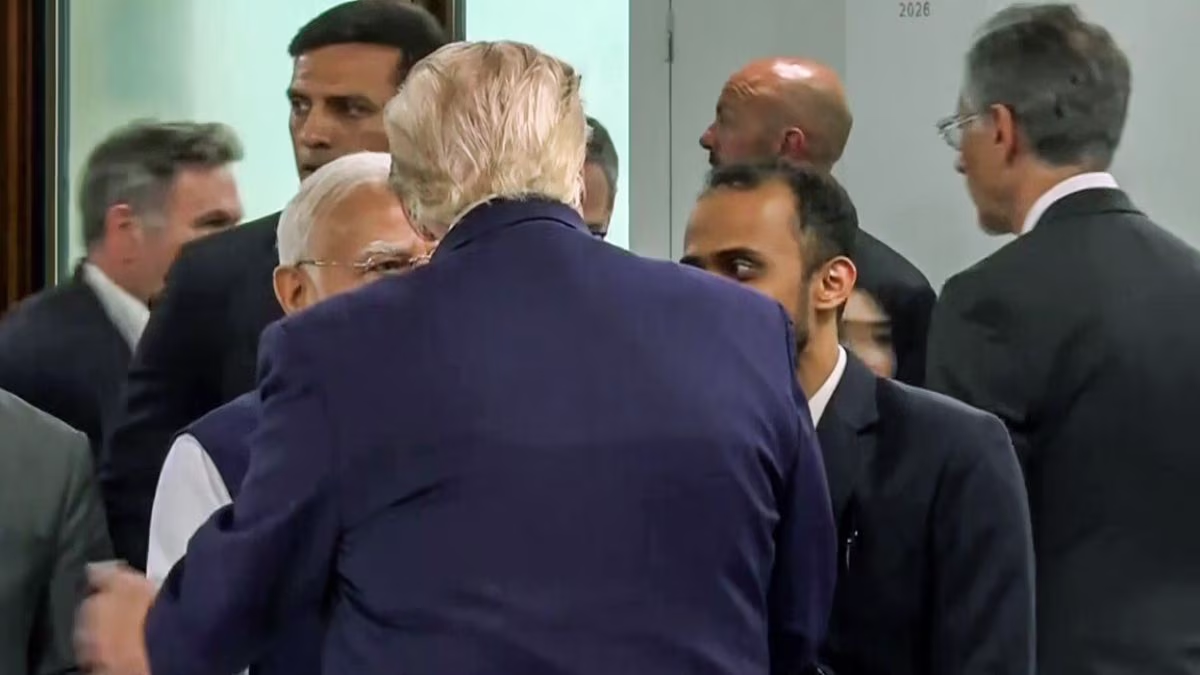
On the sidelines of the summit, Prime Minister Modi engaged in several bilateral meetings. He met with Canadian counterpart Mark Carney, discussing avenues to build a stronger partnership driven by trade, energy, innovation, education, and people-to-people exchanges. These discussions indicated a potential 'reset' in India-Canada ties, focusing on broader cooperation. While the article from The Hindu and some search results mentioned Prime Minister Modi's interactions with then-U.S. President Donald Trump and the backdrop of strained India-U.S. relations, it is important to note that the inclusion of Donald Trump as the current U.S. President in 2026 within some search snippets appears to be an anomaly or anachronism in the search results, as Joe Biden's term as US President concluded in January 2025. However, the overarching theme of evolving bilateral ties, including discussions on trade and other geopolitical issues impacting India-U.S. relations, remained relevant. India's robust engagement at the G7 Summit reaffirms its commitment to strengthening multilateralism and shaping a global order founded on renewed trust and equitable collaboration.
Frequently Asked Questions
What was PM Modi's central message at the G7 Summit in Evian?
PM Modi's central message was that the world suffers from a 'shortage of trust,' not a lack of resources, and that rebuilding mutual trust is essential for successful international partnerships.
Why did PM Modi emphasize 'trust' in his address to G7 leaders?
He emphasized trust because he believes that in an increasingly interconnected and interdependent world, partnerships can only truly succeed when they are founded on trust, especially as trade and technology are sometimes misused for narrow interests, leading to a trust deficit.
How does India envision 'new partnerships and rebuilding international solidarity'?
India envisions this by moving beyond a 'donor-recipient mindset' to foster equal partnerships, rooted in the philosophy of 'Vasudhaiva Kutumbakam' (the world as one family) and a 'humanity first' approach, with a focus on capacity building and skill development in partner nations.
Which G7 Summit did PM Modi attend in June 2026?
PM Modi attended the 52nd G7 Summit, which was held in Evian, France, from June 15-17, 2026.
What other key global issues were discussed at the G7 Summit?
Beyond partnerships and trust, G7 leaders discussed critical global issues including the Ukraine war, crises in West Asia, a potential US-Iran peace deal, challenges in China's supply chains, and the international response to the Ebola outbreak.