Iran Warns US of 'Crushing' Response Amid Ceasefire Tensions
Iran's chief negotiator, Mohammad Bagher Ghalibaf, has warned of a "crushing" response if the US resumes attacks, stating Iran has rebuilt its military during a fragile ceasefire. This comes amid US considerations for renewed strikes and intense diplomatic efforts, including mediation by Pakistan, to secure a lasting peace deal for the conflict that began in February.
Key Highlights
- Iran's chief negotiator warns US against renewing attacks.
- Tehran asserts its armed forces have rebuilt during the ceasefire period.
- US is reportedly considering renewed military strikes against Iran.
- Pakistan's army chief is actively mediating peace efforts in Tehran.
- Negotiations aim for a permanent deal to end the US-Israel-Iran conflict.
- Strait of Hormuz control and Iran's uranium enrichment remain key sticking points.
Iran's chief negotiator and Parliament Speaker, Mohammad Bagher Ghalibaf, issued a stark warning on Saturday, May 23, 2026, stating that Iran would deliver a "crushing" response if the United States were to resume hostilities. This declaration comes amidst a fragile six-week ceasefire in the Middle East war, which commenced after US and Israeli attacks on Iran on February 28, followed by Iranian retaliation. Ghalibaf emphasized that Iran's armed forces have significantly rebuilt their capabilities during this ceasefire period, making any renewed US military action "more crushing and bitter" than the initial phase of the conflict.
The warning from Tehran's top negotiator follows reports from US media outlets like Axios and CBS News, indicating that the White House is contemplating fresh military strikes against Iran. This possibility injects significant tension into ongoing diplomatic efforts to convert the April 8 ceasefire into a permanent peace settlement.
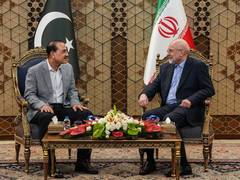
Central to these diplomatic endeavors is the mediation role played by Pakistan. Pakistan's powerful army chief, Field Marshal Asim Munir, arrived in Tehran on Friday, May 22, and engaged in talks with high-ranking Iranian officials, including Foreign Minister Abbas Araghchi and Parliament Speaker Ghalibaf. Munir's visit, described as "short but highly productive" by Pakistani officials, aims to broker a peace deal and prevent further escalation of the conflict.
Iranian Foreign Minister Abbas Araghchi has also been actively engaged in diplomatic calls with his counterparts from Turkey, Iraq, Qatar, and Oman, discussing efforts to de-escalate tensions and bring an end to the war. Iranian foreign ministry spokesman Esmaeil Baqaei stated that Tehran is in the final stages of drafting a framework for a deal to end the war, with details expected to be finalized within 30 to 60 days. He noted that positions have moved closer in recent days, with a trend toward narrowing differences.
Despite this guarded optimism, significant obstacles remain. Iranian officials have accused the US of making "excessive demands" in the negotiations. Key sticking points reportedly include Iran's highly enriched uranium program and the issue of control over the strategically vital Strait of Hormuz. Iran has maintained a naval blockade in the Strait of Hormuz since April 13, impacting global oil supplies and using it as leverage in negotiations. US officials, including Secretary of State Marco Rubio, have repeatedly stressed that Iran cannot have a nuclear weapon and that the Strait of Hormuz must remain open.
Secretary of State Marco Rubio, while on a visit to India, acknowledged that "some progress" had been made in talks with Iran and hinted at potential news regarding a deal in the coming days. However, he also reiterated that the US has "other options" if diplomacy fails, a veiled reference to potential military action. The ongoing tensions and the threat of renewed conflict have a global impact, particularly on energy markets due to the importance of the Strait of Hormuz for oil transit.
The relevance of this unfolding crisis to India is significant. During his visit, Secretary Rubio discussed the Middle East crisis and its implications for energy costs with Indian Prime Minister Narendra Modi. Rubio emphasized the US commitment to preventing Iran from holding the global energy market hostage and highlighted the potential of US energy products to diversify India's energy supply. India, a major energy importer, is highly vulnerable to disruptions in global oil supplies, making stability in the Middle East crucial for its economic security. The potential for escalation of the conflict could have severe repercussions for India's energy prices and overall economic stability. Furthermore, India maintains diplomatic ties with both the US and Iran, placing it in a delicate position amidst the escalating tensions.
The current situation is characterized by a precarious balance between diplomatic efforts and the looming threat of renewed military conflict. While some progress in negotiations has been reported, the deep differences, particularly concerning Iran's nuclear program and control over key waterways, continue to challenge the path to a lasting resolution. The statements from Iran's chief negotiator underscore Tehran's resolve and its readiness to respond forcefully to any further aggression, keeping the international community on edge regarding the future of peace in the region.
Frequently Asked Questions
Who is Mohammad Bagher Ghalibaf and what is his role in these statements?
Mohammad Bagher Ghalibaf is Iran's chief negotiator and Parliament Speaker. He issued the warning about a 'crushing response' if the US resumes hostilities, playing a central role in Iran's diplomatic and security posturing amidst the ongoing tensions with the United States.
What is the current status of the conflict between the US, Israel, and Iran?
A fragile ceasefire has been in place since April 8, 2026, following a war that began on February 28, 2026, with US and Israeli attacks on Iran. Diplomatic efforts are intensely underway, mediated largely by Pakistan, to secure a permanent peace deal, but the situation remains highly volatile with the US reportedly considering renewed strikes.
What are the main obstacles to a peace deal between Iran and the US?
Key sticking points in the negotiations reportedly include Iran's highly enriched uranium program and the issue of control over the Strait of Hormuz. Iran has also accused the US of making "excessive demands" in the talks, further complicating efforts to reach a comprehensive agreement.
How does this conflict affect India?
The conflict has significant implications for India, particularly regarding energy security. The Strait of Hormuz is a crucial global oil transit route, and disruptions can lead to increased energy costs. US Secretary of State Marco Rubio discussed these concerns with Indian Prime Minister Narendra Modi, highlighting the potential for US energy exports to diversify India's supply.
What role is Pakistan playing in the US-Iran situation?
Pakistan is acting as a key mediator in diplomatic efforts to de-escalate tensions and facilitate a peace deal between Iran and the United States. Pakistan's army chief, Field Marshal Asim Munir, held meetings with Iranian officials to advance these negotiations.