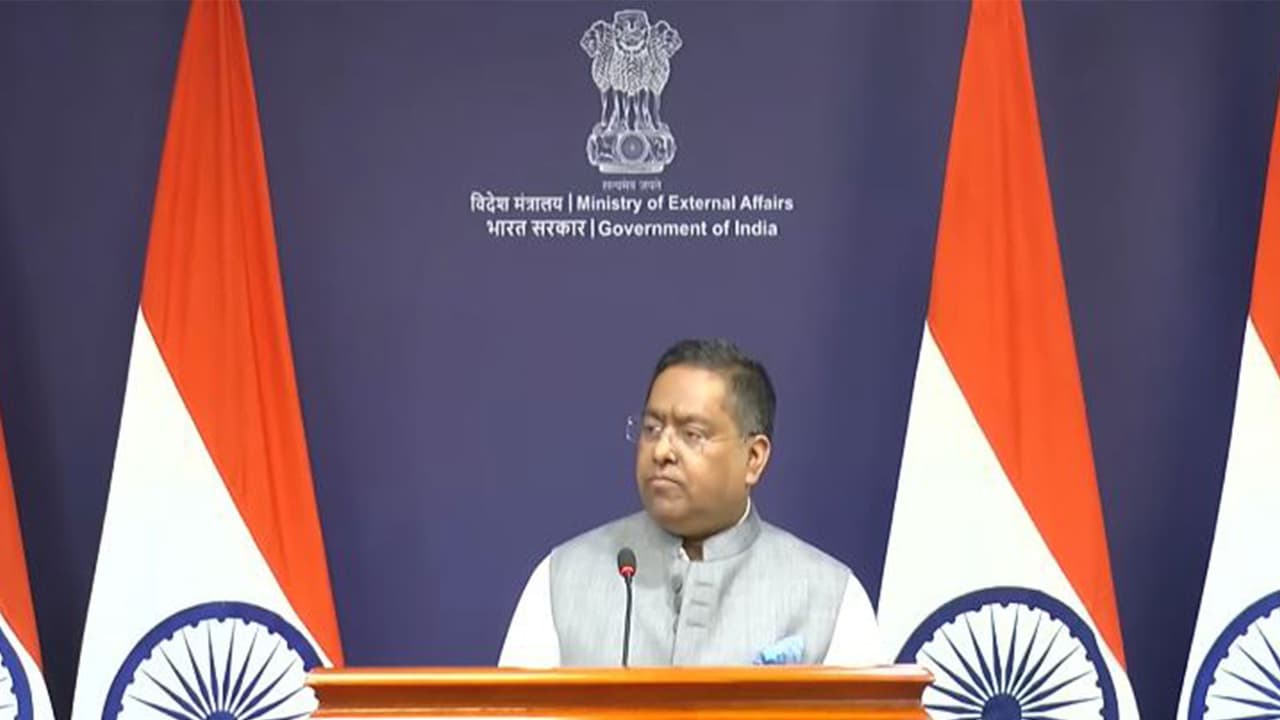
India Examining Fuel Requests Amid West Asia Energy Crisis
India's Ministry of External Affairs confirms receiving requests for petroleum supplies from Maldives, Sri Lanka, and Bangladesh. These requests are being examined amidst an energy crisis caused by the ongoing West Asia conflict, highlighting India's role as a key regional energy provider.
Key Highlights
- Maldives requested short and long-term petroleum supplies.
- Sri Lanka recently received 38,000 metric tons of fuel from India.
- Bangladesh continues to receive energy, sought additional diesel.
- West Asia conflict disrupted global oil flows, Strait of Hormuz.
- India assessing requests based on domestic availability and needs.
- India positions itself as a crucial energy partner for neighbours.
In a significant development reflecting the evolving geopolitical landscape and the impact of global conflicts on regional energy security, India's Ministry of External Affairs (MEA) has confirmed that several neighboring countries, including the Maldives, Sri Lanka, and Bangladesh, have approached New Delhi seeking petroleum supplies. These requests come amid a deepening energy crisis primarily triggered by the ongoing West Asia conflict, which has severely disrupted global oil flows and impacted critical transit points like the Strait of Hormuz.
MEA spokesperson Randhir Jaiswal, in recent briefings on March 12, 13, and April 2, 2026, highlighted India's proactive engagement in addressing the energy needs of its South Asian neighbors. He stated that the government of the Maldives has formally reached out for petroleum products on both a short-term and long-term basis. New Delhi is currently examining these requests, taking into careful consideration India's own domestic availability and energy requirements.
Sri Lanka, which has faced acute economic challenges and fuel shortages in recent times, has already benefited from India's assistance. India recently supplied 38,000 metric tonnes of petroleum products to the island nation following a direct request. This shipment underscores India's commitment to supporting its neighbors during periods of distress.
Bangladesh has been a consistent recipient of energy supplies from India since 2007, a testament to the long-standing energy cooperation between the two countries. The MEA also noted that Bangladesh has specifically requested additional diesel supplies, a request that is currently under examination. Furthermore, India maintains ongoing energy engagements with Nepal and Bhutan, ensuring their continued energy security.
The broader context for these increased requests is the significant disruption to global energy markets caused by the conflict in West Asia. This conflict has led to volatility in global oil and gas prices and has particularly affected crude supplies through the Strait of Hormuz, a crucial transit point for a substantial portion of the world's oil. As a result, countries in the region are actively seeking alternative and reliable sources of fuel, turning to India due to its robust refining capacity.
India, recognized as the world's fourth-largest refiner, is strategically positioned to act as a crucial energy partner for its neighborhood. Its large refining capabilities, supported by major players like Indian Oil Corporation, allow it to export refined petroleum products, especially to countries in its vicinity. This 'fuel diplomacy' not only addresses immediate energy needs but also strengthens India's regional influence and reinforces its image as a stable and dependable partner in South Asia.
While examining the requests, India's decision-making process involves balancing its diplomatic commitments with its own domestic consumption and strategic reserves. The government's approach emphasizes a "people-centric and development-oriented" engagement with its neighbors, as exemplified by the India-Bangladesh Friendship Pipeline, which has facilitated diesel supplies since 2017.
The energy crisis has forced several nations to take drastic measures; for instance, Sri Lanka and Pakistan have implemented fuel rationing and shifted to four-day work weeks, while Bangladesh has introduced rotational power cuts and closed universities to manage shortages. Countries like South Korea and Japan are even releasing record amounts from strategic oil reserves due to their high dependence on Middle Eastern crude, and the Philippines declared a State of National Energy Emergency in March 2026. These global examples underscore the severity of the current energy landscape and the importance of India's role in regional stability.
Beyond the immediate requests, India also remains engaged with governments in Mauritius and the Seychelles, monitoring their energy situations to anticipate potential shortages before they escalate into full-blown crises, although no formal requests have been received from them yet. This proactive stance further solidifies India's commitment to regional energy security and cooperation.
Frequently Asked Questions
Why are Maldives and Sri Lanka seeking energy supplies from India?
Maldives and Sri Lanka, along with other neighboring nations, are seeking energy supplies from India due to an ongoing energy crisis. This crisis is largely attributed to disruptions in global oil flows caused by the conflict in West Asia, which has particularly impacted the Strait of Hormuz, a key energy transit route.
What is India's role in addressing the regional energy crisis?
India is playing a crucial role as a regional energy provider. With its significant refining capacity, India is examining requests for petroleum products from its neighbors, like Maldives and Bangladesh, and has already supplied fuel to Sri Lanka. This effort strengthens India's diplomatic ties and ensures regional energy security.
Has India supplied energy to other countries recently?
Yes, India has a long-standing arrangement to supply energy to Bangladesh since 2007 and has recently sent 38,000 metric tonnes of petroleum products to Sri Lanka. India also maintains ongoing energy engagements with Nepal and Bhutan.
What is the primary cause of the current energy crisis in the region?
The primary cause of the current energy crisis is the ongoing conflict in West Asia. This conflict has led to significant disruptions in global oil supply chains and heightened volatility in international oil and gas prices, affecting countries that rely on these routes for their energy imports.
How is India evaluating these energy supply requests?
India's Ministry of External Affairs is examining these requests for energy supplies carefully. The decisions will be made keeping in mind India's own domestic availability of petroleum products and its national energy requirements.