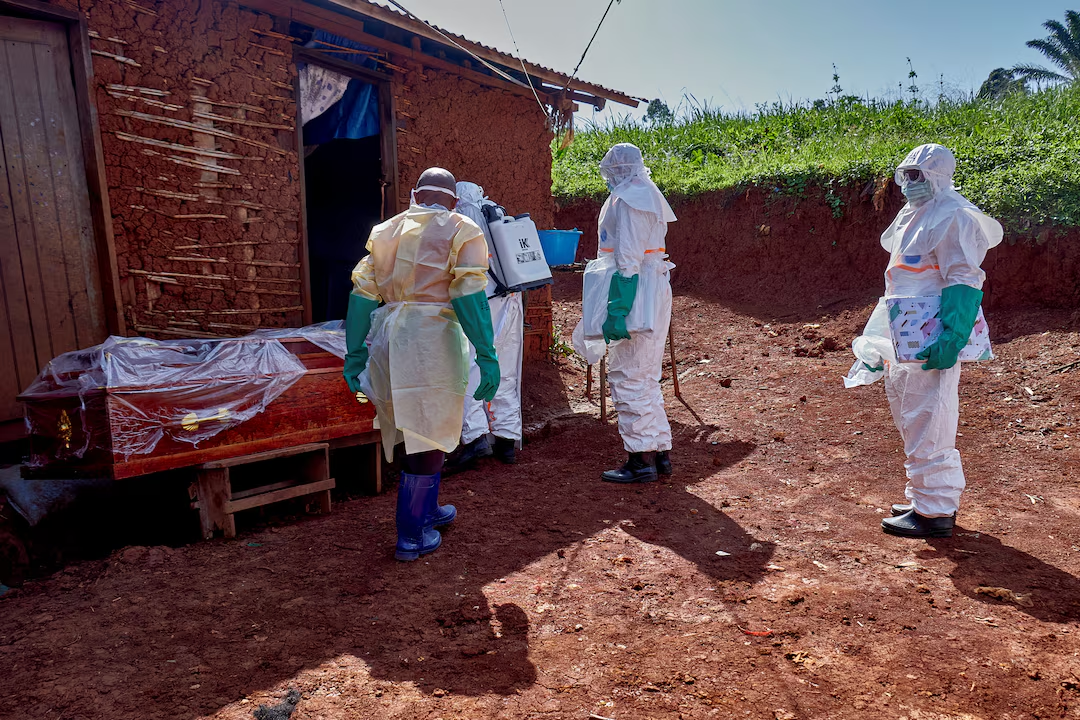
UN Warns of Rising Ebola Risk in DR Congo Displacement Camps
The United Nations has issued a grave warning regarding the escalating risk of Ebola spread in overcrowded displacement camps across eastern Democratic Republic of Congo. Confirmed cases of the highly contagious Bundibugyo strain have been reported in at least 16 sites in Ituri province, exacerbating an already dire humanitarian crisis compounded by conflict and limited resources.
Key Highlights
- UN warns of Ebola spread risk in 16+ displacement camps.
- Over 270,000 displaced people at risk in Ituri province, DRC.
- Current Ebola outbreak caused by Bundibugyo virus, no approved vaccine.
- Death toll exceeds 960 with over 2,400 confirmed cases in DRC.
- Armed conflict and insecurity severely hamper Ebola response efforts.
- WHO declared the outbreak a Public Health Emergency of International Concern.
The United Nations has voiced serious concerns over the escalating risk of Ebola spreading rapidly through overcrowded displacement camps in the eastern Democratic Republic of Congo (DRC). The UN aid agency OCHA confirmed that Ebola cases have been identified in at least 16 displacement sites across Ituri province, which is the epicenter of the current outbreak. These camps house more than 270,000 displaced individuals, where severe overcrowding and inadequate access to essential services like sanitation significantly heighten the risk of disease transmission.
This is the DRC's 17th recorded Ebola outbreak, declared on May 15, 2026, and it is caused by the Bundibugyo virus, a strain for which there are currently no approved vaccines or specific treatments. The World Health Organization (WHO) designated this outbreak a Public Health Emergency of International Concern (PHEIC) on May 17, 2026.
The humanitarian situation is critical, with the latest figures indicating a rapidly rising death toll. As of July 19, 2026, the Democratic Republic of Congo has reported a cumulative total of 2,423 confirmed cases and 967 deaths. Earlier reports from July 18, 2026, cited 2,344 confirmed cases and 930 deaths. Uganda, a neighboring country, has also reported confirmed cases, though its last confirmed case was on June 21, 2026, and the country is now in a 42-day surveillance period before declaring the end of its outbreak. Cases linked to the outbreak have also been medically evacuated and treated in countries like Germany and France.
The response to the Ebola crisis is severely hampered by ongoing armed conflict and insecurity in eastern DRC, a region long plagued by various armed groups. These hostilities frequently disrupt efforts by health workers and humanitarian organizations. For instance, on July 15, 2026, medical personnel from the WHO, Africa CDC, and Samaritan's Purse were forced to evacuate an Ebola Treatment Center (ETC) in Nyankunde, Ituri province, due to gunfire between armed groups. Such incidents lead to the suspension of critical activities like contact tracing, alert investigations, and safe burials, further accelerating the disease's spread. Community mistrust towards health interventions, often fueled by misinformation and the context of insecurity, also poses a significant challenge.
The UN and its partners are actively working to mitigate the spread, including installing handwashing stations and conducting community awareness campaigns on Ebola prevention measures. However, humanitarian needs continue to outstrip available resources, necessitating increased international support to sustain the Ebola response and provide life-saving assistance to displaced communities who have endured years of conflict and deteriorating living conditions. Ituri province remains the most affected, accounting for over 90 percent of cases and 80 percent of deaths. The situation is particularly concerning for children and adolescents, with UNICEF estimating that some 3 million are vulnerable to the disease and its secondary impacts, with children experiencing higher fatality rates than adults. The current outbreak is considered the fastest-spreading and third-largest Ebola outbreak on record, making the need for urgent and collective action paramount.
Frequently Asked Questions
What is the current status of the Ebola outbreak in the Democratic Republic of Congo?
As of July 19, 2026, the Democratic Republic of Congo has reported 2,423 confirmed cases of Ebola and 967 deaths. The outbreak, caused by the Bundibugyo virus, is considered the fastest-spreading and third-largest Ebola outbreak on record.
Why is the United Nations concerned about Ebola spreading in displacement camps?
The United Nations Office for the Coordination of Humanitarian Affairs (OCHA) is concerned because confirmed Ebola cases have been reported in at least 16 displacement sites in Ituri province, hosting over 270,000 people. Overcrowding and limited access to basic services in these camps create ideal conditions for rapid disease transmission.
What challenges are humanitarian workers facing in responding to the Ebola outbreak?
Humanitarian workers face significant challenges including armed conflict, insecurity, and community mistrust. Recent incidents, such as the evacuation of health workers from an Ebola Treatment Center due to gunfire, disrupt critical response activities like contact tracing and safe burials, making containment efforts more difficult.
Is there a vaccine or treatment for the current Ebola strain in the DRC?
The current Ebola outbreak in the DRC is caused by the Bundibugyo virus. Unfortunately, there are currently no approved vaccines or specific treatments available for this particular strain, complicating containment and patient care efforts.
Which areas are most affected by the Ebola outbreak in the DRC?
Ituri province in eastern Democratic Republic of Congo remains the epicenter and most severely affected area, accounting for over 90 percent of confirmed cases and 80 percent of deaths. Other affected provinces include North Kivu, South Kivu, Haut-Uele, and Tshopo.