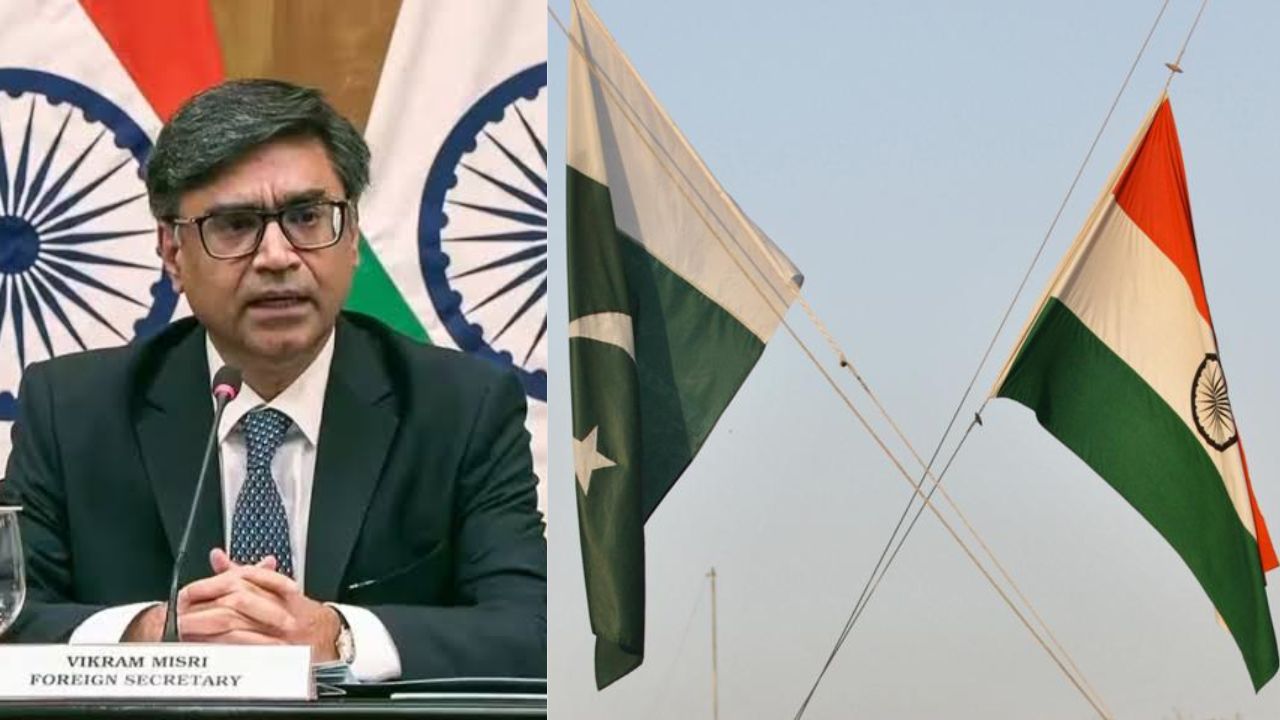
India Dismisses Unofficial Track-II Talks with Pakistan in Sri Lanka
India has officially dismissed recent Track-II diplomatic talks between retired Indian and Pakistani officials in Sri Lanka, stating these private events hold no official value for New Delhi. Foreign Secretary Vikram Misri clarified that the Indian government had no involvement, support, or cognisance of such engagements.
Key Highlights
- Track-II dialogue held in Colombo, Sri Lanka, between Indian and Pakistani personalities.
- Retired generals, diplomats, and politicians reportedly participated in the unofficial talks.
- India's Foreign Secretary Vikram Misri rejected any official involvement or support.
- Misri stated these private events 'hold no value' for the Government of India.
- Discussions reportedly covered terrorism, water sharing, and de-escalation of tensions.
- Several credible Indian news outlets corroborated the reports and India's official stance.
Reports emerged recently of a Track-II dialogue held in Colombo, Sri Lanka, involving prominent retired military generals, diplomats, and politicians from both India and Pakistan. This unofficial diplomatic engagement, reportedly taking place on the sidelines of a regional security conference organised by the International Institute for Strategic Studies (IISS), garnered significant media attention across the region.
According to various credible news sources, the Indian delegation at these talks reportedly included former Army chief General M.M. Naravane, India Foundation president and former BJP national general secretary Ram Madhav, and former diplomat Ruchi Ghanashyam. The Pakistani participants were said to include Senator Sherry Rehman, a former minister, serving diplomat Sajjad Haidar Khan, and retired general Isfandyar Ali Khan Pataudi. The informal discussions were spread over a day and a half, with the Hilton Colombo mentioned as one of the venues.
However, the Indian government swiftly and unequivocally distanced itself from these discussions. Foreign Secretary Vikram Misri, speaking to the media in Victoria, Seychelles, emphatically stated that these events were private, organised by private parties, and that the Government of India had no official participation, support, or involvement in them. Misri clarified that individuals participating in such events, whether retired diplomats, military officials, or civil society members, speak purely in their personal capacities and do not represent the official views of the Government of India.
Critically, Misri added that New Delhi does not take cognisance of these private deliberations and asserted that "they really don't hold much value, as far as we are concerned." This firm stance from India's Ministry of External Affairs came amidst suggestions of a potential thaw in relations or back-channel engagement between the two countries, which have seen bilateral ties remain largely frozen, especially after the April 2025 Pahalgam terrorist attack and India's subsequent military action, 'Operation Sindoor', in May 2025.
Reports suggested that the discussions in Colombo, though not yielding significant outcomes, touched upon sensitive issues such as cross-border terrorism, the sharing of waters of cross-border rivers, strengthening communication channels during crises, and exploring possible steps to manage and prevent escalation of tensions. The presence of such high-profile retired officials and politicians at these talks highlights the continued interest in exploring avenues for dialogue, even if unofficial, between the two nations. Some reports even referred to these as 'Track-1.5' dialogue, implying the presence of serving officials, a claim specifically refuted by the Indian government's statements.
The timing of these reports also followed earlier comments from senior RSS functionaries, including Dattatreya Hosabale, who in May suggested that India should remain open to dialogue with Pakistan while protecting its security and dignity. Former Army Chief General M.M. Naravane, a reported participant in the Colombo talks, had also previously supported people-to-people connections and dialogue.
Overall, the news confirms that while informal, Track-II discussions between Indian and Pakistani personalities did take place in Sri Lanka, India has officially dismissed them as having any governmental endorsement or significance. This unequivocally reinforces India's current diplomatic position of not engaging in official dialogue with Pakistan, maintaining that any such private interactions do not reflect New Delhi's foreign policy stance. The report is factually accurate and corroborated by multiple reputable sources.
Frequently Asked Questions
What was the 'Track-II' meeting about?
The 'Track-II' meeting was an unofficial dialogue involving retired military officials, diplomats, and politicians from India and Pakistan, held in Colombo, Sri Lanka, on the sidelines of a regional security conference. They reportedly discussed issues like terrorism, water sharing, and de-escalation of tensions.
What is India's official stance on these talks?
India's Foreign Secretary Vikram Misri stated unequivocally that the Indian government had no official participation, support, or involvement in these private events. He further clarified that India does not take cognisance of such deliberations and they hold 'no value' for the Government of India.
Who were some of the key participants in the talks?
The Indian delegation reportedly included former Army chief General M.M. Naravane, India Foundation president Ram Madhav, and former diplomat Ruchi Ghanashyam. Pakistani participants included Senator Sherry Rehman and retired General Isfandyar Ali Khan Pataudi.
Why is this news significant for India and Pakistan?
The news is significant as it highlights ongoing, albeit unofficial, attempts at dialogue between the two nuclear-armed neighbours despite frozen official relations. India's strong dismissal of these talks reinforces its official policy of no direct engagement, especially in the wake of recent cross-border incidents.
What is 'Track-II diplomacy'?
Track-II diplomacy refers to informal, non-governmental dialogues involving academics, retired officials, think tank experts, and civil society representatives. These discussions are held in personal capacities to explore sensitive issues, build confidence, and potentially inform formal government positions, without official endorsement.