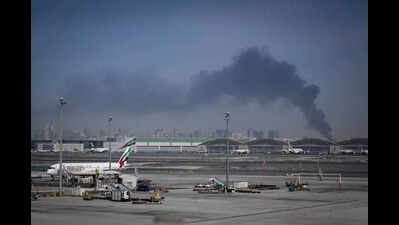
Indian Stocks Plunge Amid Escalating US-Israel-Iran War, Rs 6.5 Lakh Crore Wiped Out
The Indian stock market witnessed a significant downturn on March 2, 2026, with the Sensex plummeting over 1,000 points and Nifty falling below 24,900. This sharp decline, wiping out approximately Rs 6.5 lakh crore of investor wealth, was primarily attributed to the escalating US-Israel war on Iran and soaring crude oil prices.
Key Highlights
- Sensex plummeted over 1,000 points, closing at 80,239.
- Nifty 50 dropped below 24,900, closing at 24,866.
- Market capitalization saw a reduction of approximately Rs 6.5 lakh crore.
- Escalating US-Israel war on Iran triggered global market instability.
- Surging crude oil prices and a weakening Rupee exacerbated investor concerns.
- Defence and energy sectors showed some resilience amidst the broader market sell-off.
The Indian stock market experienced a substantial sell-off on Monday, March 2, 2026, as geopolitical tensions in the Middle East intensified, with an active US-Israel war on Iran sending shockwaves across global financial markets. The benchmark Sensex, after plunging by as much as 2,743 points at the open, ultimately closed 1,048.34 points (1.29%) lower at 80,238.85, marking its lowest level since September 2025. Similarly, the Nifty 50, which opened with a significant dip of 519 points, settled at 24,865.70, down 312.95 points (1.24%), falling below the crucial 24,900 mark. During intraday trading, Nifty 50 even touched a low of 24,645.10.
The market downturn resulted in a significant erosion of investor wealth, with the total market capitalization of all BSE-listed companies shrinking by more than Rs 6.5 lakh crore. This widespread selling pressure was a direct consequence of the escalating conflict, which included US-Israeli missile strikes on Iran and the reported death of Iran's Supreme Leader Ayatollah Ali Khamenei. The conflict also saw Iran retaliate with missile and drone attacks across multiple Gulf nations.
Foreign institutional investors (FIIs) played a role in dampening sentiment, with reports indicating strong FII selling. The escalating Middle East conflict led to a sharp increase in global crude oil prices, which is a major concern for India, as the country imports over 80% of its crude oil needs. A surge in oil prices directly impacts India's inflation, fiscal balance, and corporate earnings. Concurrently, the Indian Rupee weakened, slipping to approximately 91.2 per dollar in early trade and later 91.47 per U.S. dollar, its lowest in a month.
The market's reaction was broad-based, with almost all sectoral indices trading in the red. Nifty Midcap and Smallcap indices also plunged by about 2% each. Sectors such as auto, oil and gas, and banking stocks were particularly affected. Heavyweights like Larsen & Toubro, Reliance Industries, HDFC Bank, Adani Ports, Asian Paints, Maruti Suzuki, and Ultratech Cements were among the top losers. However, some resilience was observed in defence-related stocks, with Bharat Electronics Limited (BEL) emerging as a key gainer due to increased investor optimism in the sector amidst geopolitical risks. Energy and IT firms, along with export-driven companies, were also noted as potential relative beneficiaries in such a volatile environment.
Analysts have cautioned investors to avoid panic selling, emphasizing that historically, markets tend to recover from such geopolitical crises within a few months. Experts suggested that market weakness could present an opportunity to accumulate high-quality stocks in domestic consumption themes, including banking, automobiles, capital goods, and defence.
This event underscores the significant impact of global geopolitical events on the interconnected Indian financial markets, particularly through channels like crude oil price volatility and global risk aversion. The situation requires strategic policymaking to navigate uncertainties and maintain investor confidence.
Frequently Asked Questions
What caused the Indian stock market to fall sharply on March 2, 2026?
The Indian stock market experienced a sharp decline primarily due to the escalating US-Israel war on Iran, which led to heightened geopolitical tensions and a significant surge in global crude oil prices.
How much wealth did Indian investors lose during this market downturn?
On March 2, 2026, the total market capitalization of all companies listed on the BSE saw a reduction of more than Rs 6.5 lakh crore due to the market sell-off.
Which stock market indices were most affected?
Both benchmark indices, the Sensex and Nifty 50, were significantly affected. Sensex plunged over 1,000 points, closing at 80,239, while Nifty 50 fell below 24,900 to end at 24,866.
What was the impact of the conflict on crude oil prices and the Indian Rupee?
The conflict caused global crude oil prices to surge significantly, which is a major concern for India as a large oil importer. Concurrently, the Indian Rupee weakened to its lowest level in a month, trading around 91.47 per U.S. dollar.
Which sectors or stocks showed resilience amidst the market fall?
Despite broad-based selling, defence-related stocks, particularly Bharat Electronics Limited (BEL), showed resilience due to investor optimism amid geopolitical risks. Energy and IT firms were also identified as potential relative beneficiaries.