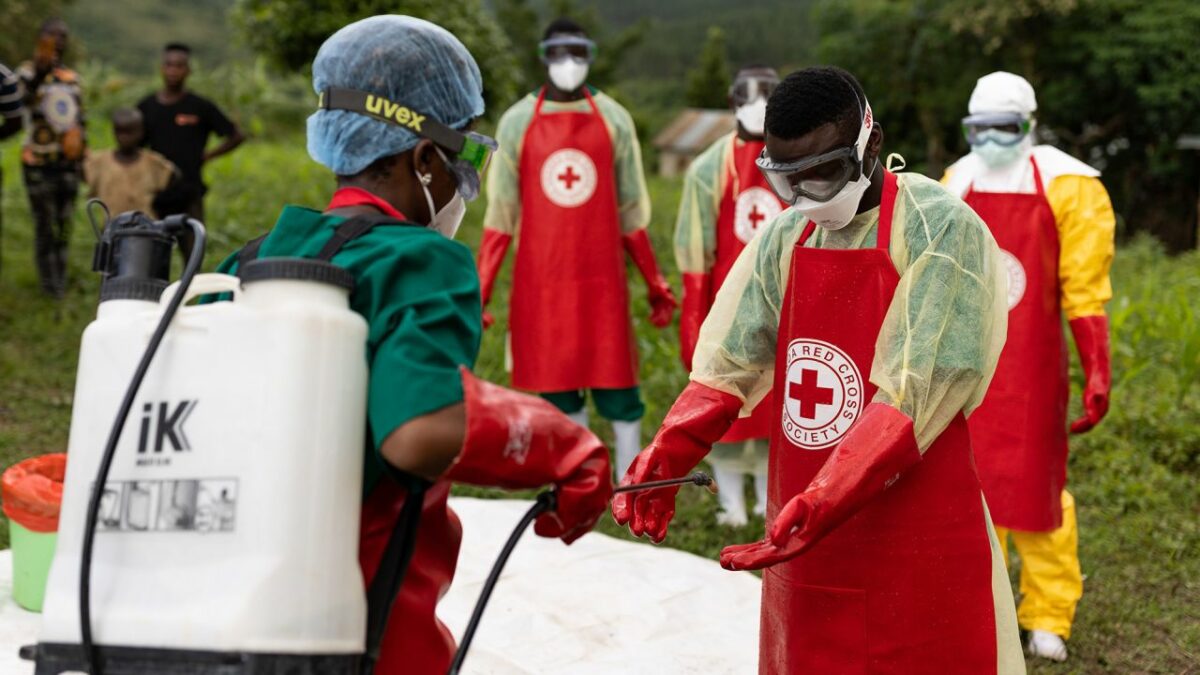
DRC Ebola Outbreak Highlights Critical Community Health Gaps
A severe Ebola outbreak in the Democratic Republic of Congo, caused by the Bundibugyo virus, has exposed significant gaps in community health surveillance and response. The outbreak, which has also spread to Uganda, is further complicated by insecurity and difficult terrain. Gavi, the Vaccine Alliance, is closely monitoring the situation and emphasizing the critical need for investment in community health infrastructure to prevent future health crises.
Key Highlights
- DRC grapples with a severe Ebola outbreak caused by the Bundibugyo virus.
- Insecurity and challenging terrain hinder containment efforts in the affected regions.
- Gavi, the Vaccine Alliance, stresses the need for enhanced community health surveillance.
- No licensed vaccines or therapeutics are currently available for the Bundibugyo virus strain.
- The World Health Organization has declared the outbreak a Public Health Emergency of International Concern.
The Democratic Republic of Congo (DRC) is currently battling a significant Ebola outbreak, primarily caused by the Bundibugyo virus. This outbreak has underscored critical deficiencies in the region's community health surveillance and response mechanisms, prompting Gavi, the Vaccine Alliance, to highlight the urgent need for increased investment in these areas [14]. The situation has escalated to the point where the World Health Organization (WHO) declared it a Public Health Emergency of International Concern (PHEIC) on May 17, 2026 [3, 10, 15, 17].
The outbreak, which began in May 2026, has not been confined to the DRC, with cases also reported in Uganda [2, 3, 10, 11]. The Bundibugyo virus strain presents a particular challenge as there are no licensed vaccines or specific treatments available for it, unlike some other Ebola strains [3, 4, 5, 16, 17]. This lack of direct medical countermeasures makes robust public health interventions, such as rapid case identification, contact tracing, and effective community engagement, even more crucial [3, 5].
Compounding the difficulties in controlling the outbreak are the challenging conditions in the affected regions. The DRC's Ituri Province, the epicenter of the crisis, is characterized by insecurity, ongoing conflict with armed groups, population displacement, and extensive mining activities that contribute to high population mobility [2, 3, 4, 17]. These factors create a volatile environment that severely impedes the efforts of health workers to conduct contact tracing, implement containment measures, and access remote communities [4, 9, 17]. Health facilities have been attacked, and many are either non-functional or operating under severe constraints due to the ongoing violence and poor road conditions, which also restrict the movement of essential supplies and humanitarian aid [4, 12].
As of late May 2026, the numbers of cases and deaths have been substantial, though reporting figures vary slightly across different sources. By May 27, 2026, the DRC had reported approximately 977 suspected cases with 228 suspected deaths, and Uganda had reported seven confirmed cases including one death [4]. Other reports indicate figures such as 1,077 suspected cases with 246 deaths in the DRC by May 27 [3], and over 900 suspected cases, 105 confirmed cases, and 10 confirmed deaths in the DRC by May 28 [12]. The case fatality rate (CFR) has also been a significant concern, with estimates varying between 14.3% and 22.8% for suspected cases and around 14% for confirmed cases in some reports [2, 3, 4]. However, the WHO has also stated that the death rate for this specific outbreak could be between 30% and 50% of confirmed cases, emphasizing its severity [9].
Gavi, the Vaccine Alliance, is actively monitoring the situation and collaborating with various international partners, including the WHO, Africa CDC, UNICEF, and the World Bank, to support outbreak response efforts [15, 16]. While Gavi funds a global stockpile of Ebola vaccines, these are licensed for the Zaire species of Ebola and their efficacy against the Bundibugyo strain is limited, requiring further assessment and community consent for any potential use [15]. The organization emphasizes that strengthening community health systems and investing in community health surveillance are critical not only for responding to the current outbreak but also for building resilience against future health emergencies [14]. The complexity of this outbreak, occurring in a conflict-ridden and hard-to-reach area with a rare virus strain, underscores the interconnectedness of health security, humanitarian aid, and peace-building efforts.
The article from Gavi, the Vaccine Alliance, published on May 29, 2026, points to the need for sustained investment in community health workers and infrastructure. These individuals are often the first line of defense in identifying and reporting potential cases, especially in remote areas where formal healthcare access is limited. The current outbreak demonstrates that these systems were not adequately prepared or resourced to handle such a crisis effectively. The article implicitly argues that the gaps exposed by this Ebola outbreak necessitate a long-term commitment to strengthening primary healthcare at the community level to prevent similar crises in the future.
Frequently Asked Questions
What is the Bundibugyo virus causing the current Ebola outbreak?
The Bundibugyo virus is a species of Orthoebolavirus that causes Ebola disease. It is a less common strain, and unlike some other Ebola strains, there are currently no licensed vaccines or specific treatments available for it.
Why is the Ebola outbreak in the DRC particularly challenging to contain?
The outbreak is occurring in a region affected by insecurity, armed conflict, population displacement, and challenging terrain, which hinders the efforts of health workers to trace contacts, implement containment measures, and access affected communities. Poor infrastructure and non-functional health facilities further exacerbate these challenges.
What role does Gavi, the Vaccine Alliance, play in the Ebola response?
Gavi is closely monitoring the outbreak and coordinating with international partners to support response efforts. While Gavi funds a global stockpile of Ebola vaccines, these are primarily for the Zaire species and their effectiveness against the Bundibugyo strain is limited. Gavi emphasizes the critical need for investment in community health surveillance and infrastructure.
Has the World Health Organization declared the Ebola outbreak an emergency?
Yes, the World Health Organization (WHO) declared the Ebola outbreak caused by the Bundibugyo virus in the Democratic Republic of the Congo and Uganda a Public Health Emergency of International Concern (PHEIC) on May 17, 2026.